Products
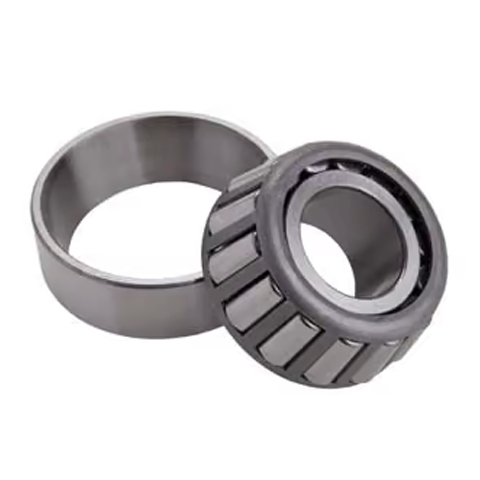
NTN NTN 32028XU Single Row Tapered Roller Bearing, D=140mm
NTN 32028XU Single Row Tapered Roller Bearing (Inside Dia - 140mm, Outside Dia - 210mm) SPECIFICATIONS Type of Product : Single Row Tapered Roller Bearing Inside Diameter (d) (mm) : 140 Outside Diameter D (mm) : 210 Width Dia mm : 45 Model No : 32028XU 1. Types, design features, and characteristics Tapered roller bearings are designed so the tapered vertex of the raceway surfaces of the inner and outer rings and rollers converge at one point on the centerline of the bearing (see Fig. 1).The tapered rollers are guided by the compound force of the inner and outer raceway surfaces which keep the rollers pressed up against the large rib on the inner ring.A large variety of these bearings, including single, double, and four row arrangements, are available in both metric and inch series. Each type and associated characteristics are shown in Table 1. For four-row tapered roller bearings, see section “C. Special application bearings.” Table 1 Tapered roller bearing types and characteristics Type Characteristics Single row taperedroller bearings (1) There are both metric and inch series adhering to the standards shown in the following table. Dimension series *Dimension series previously not covered by 3XX are regulated under JIS B 1512; dimensions previously missing from 3XX will henceforth use the bearing number. (2) In addition to the standard design, there are also medium contact angle and large contact angle types, denoted by the contact angle codes at the end of the part numbers (C and D, respectively). (3) Subunits Tapered roller bearings can be disassembled into parts: the inner ring, rollers, and cage (collectively known as the “CONE”) and the outer ring (known as the “CUP”). These are the bearing’s “subunits”. Subunit dimensions are standardized under ISO or ABMA standards, and unified subunits are interchangeable within each dimensional standard. However, high precision grade bearings are generally not interchangeable, and these subunits must be used by assembling only subunits with identical manufacturing numbers.Aside from any cautionary notes that may appear, the single row tapered roller bearings listed in the dimension tables have subunits standardized for both metric and inch systems (including J series). (Refer to Fig. 2) Single row taperedroller bearings (4) These bearings are constructed to have a high capacity for radial loads, axial loads, and combined loads. The larger the contact angle, the greater the axial load capacity. When a pure radial load is applied to a tapered roller bearing, an induced load in the axial direction is also generated, so these bearings are generally used in pairs.(5) Single row tapered roller bearings are separable, so both the inner and outer rings can be used with tight fits. (6) Tapered roller bearings are also manufactured with flanges attached to the outer rings. For more details, contact NTN Engineering. (Refer to Fig. 3) Duplex tapered roller bearings (1) When two single-row tapered roller bearings are to be used in combination, the bearing clearance and preload are adjusted by the inner ring spacer or the outer ring spacer (see Fig. 4).(2) A product number and a combination code are indicated on inner rings, outer rings, and spacers. Parts displaying the same number and code must be used in combination.(3) See A-96 Table 8.14 for the axial internal clearance. Double row taperedroller bearings (1) Back-to-back arrangement (using double row outer rings) and face-to-face arrangement (using double row inner rings) are both available. The assemblies have been adjusted so that each type's internal clearance values are fixed. Only parts with identical manufacturing numbers can be used and they must be assembled according to their code numbers. (Refer to Fig. 5)(2) See A-96 Table 8.14 for the axial internal clearance of double-row and duplex bearings. 2. Standard cage type In general, pressed cages (see Fig. 6) are used in tapered roller bearings. For large sized bearings, machined or pin type cages may also be used, while resin cages may also be used for smaller sized bearings. 3. Allowable misalignment In order to avoid edge loading and potential for premature failure, the maximum allowable misalignment based on bearing series can be found below.The allowable misalignment of combined bearings is influenced by the load center position, so please consult NTN Engineering.• Single row (standard) …………… 1/ 2 000• Single row (ULTAGE) …………… 1/ 600 4. Precautions If bearing load is light during operation, or if the ratio of axial to radial load for duplex and double row bearings exceeds the value of e, slipping may develop between the rollers and raceway surface, sometimes resulting in smearing. The mass of rollers and cages particularly tends to be large for large tapered roller bearings. For additional details, please contact NTN Engineering.In tapered roller bearings, the cage may protrude beyond the inner and/or outer ring side faces. Care should be taken when designing the housing and shaft to ensure contact with the cage does not occur.
$294.18
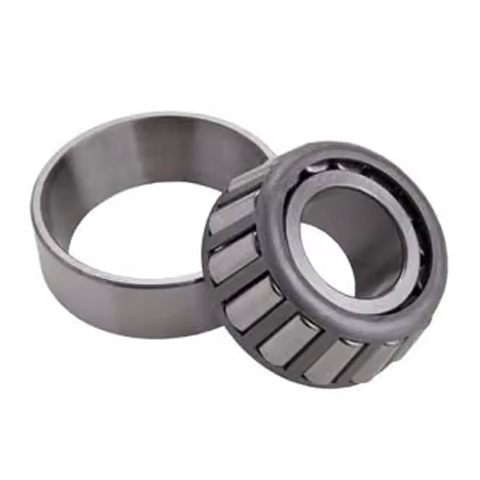
NTN NTN 32034XU Single Row Tapered Roller Bearing, D=170mm
NTN 32034XU Single Row Tapered Roller Bearing (Inside Dia - 170mm, Outside Dia - 260mm) SPECIFICATIONS Type of Product : Single Row Tapered Roller Bearing Inside Diameter (d) (mm) : 170 Outside Diameter D (mm) : 260 Width Dia mm : 57 Model No : 32034XU 1. Types, design features, and characteristics Tapered roller bearings are designed so the tapered vertex of the raceway surfaces of the inner and outer rings and rollers converge at one point on the centerline of the bearing (see Fig. 1).The tapered rollers are guided by the compound force of the inner and outer raceway surfaces which keep the rollers pressed up against the large rib on the inner ring.A large variety of these bearings, including single, double, and four row arrangements, are available in both metric and inch series. Each type and associated characteristics are shown in Table 1. For four-row tapered roller bearings, see section “C. Special application bearings.” Table 1 Tapered roller bearing types and characteristics Type Characteristics Single row taperedroller bearings (1) There are both metric and inch series adhering to the standards shown in the following table. Dimension series *Dimension series previously not covered by 3XX are regulated under JIS B 1512; dimensions previously missing from 3XX will henceforth use the bearing number. (2) In addition to the standard design, there are also medium contact angle and large contact angle types, denoted by the contact angle codes at the end of the part numbers (C and D, respectively). (3) Subunits Tapered roller bearings can be disassembled into parts: the inner ring, rollers, and cage (collectively known as the “CONE”) and the outer ring (known as the “CUP”). These are the bearing’s “subunits”. Subunit dimensions are standardized under ISO or ABMA standards, and unified subunits are interchangeable within each dimensional standard. However, high precision grade bearings are generally not interchangeable, and these subunits must be used by assembling only subunits with identical manufacturing numbers.Aside from any cautionary notes that may appear, the single row tapered roller bearings listed in the dimension tables have subunits standardized for both metric and inch systems (including J series). (Refer to Fig. 2) Single row taperedroller bearings (4) These bearings are constructed to have a high capacity for radial loads, axial loads, and combined loads. The larger the contact angle, the greater the axial load capacity. When a pure radial load is applied to a tapered roller bearing, an induced load in the axial direction is also generated, so these bearings are generally used in pairs.(5) Single row tapered roller bearings are separable, so both the inner and outer rings can be used with tight fits. (6) Tapered roller bearings are also manufactured with flanges attached to the outer rings. For more details, contact NTN Engineering. (Refer to Fig. 3) Duplex tapered roller bearings (1) When two single-row tapered roller bearings are to be used in combination, the bearing clearance and preload are adjusted by the inner ring spacer or the outer ring spacer (see Fig. 4).(2) A product number and a combination code are indicated on inner rings, outer rings, and spacers. Parts displaying the same number and code must be used in combination.(3) See A-96 Table 8.14 for the axial internal clearance. Double row taperedroller bearings (1) Back-to-back arrangement (using double row outer rings) and face-to-face arrangement (using double row inner rings) are both available. The assemblies have been adjusted so that each type's internal clearance values are fixed. Only parts with identical manufacturing numbers can be used and they must be assembled according to their code numbers. (Refer to Fig. 5)(2) See A-96 Table 8.14 for the axial internal clearance of double-row and duplex bearings. 2. Standard cage type In general, pressed cages (see Fig. 6) are used in tapered roller bearings. For large sized bearings, machined or pin type cages may also be used, while resin cages may also be used for smaller sized bearings. 3. Allowable misalignment In order to avoid edge loading and potential for premature failure, the maximum allowable misalignment based on bearing series can be found below.The allowable misalignment of combined bearings is influenced by the load center position, so please consult NTN Engineering.• Single row (standard) …………… 1/ 2 000• Single row (ULTAGE) …………… 1/ 600 4. Precautions If bearing load is light during operation, or if the ratio of axial to radial load for duplex and double row bearings exceeds the value of e, slipping may develop between the rollers and raceway surface, sometimes resulting in smearing. The mass of rollers and cages particularly tends to be large for large tapered roller bearings. For additional details, please contact NTN Engineering.In tapered roller bearings, the cage may protrude beyond the inner and/or outer ring side faces. Care should be taken when designing the housing and shaft to ensure contact with the cage does not occur.
$530.10
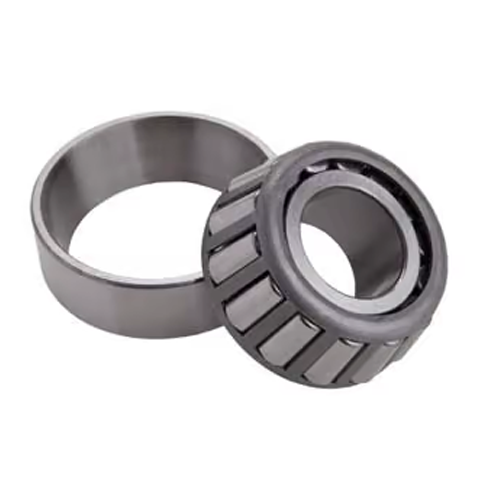
NTN NTN 32214U Single Row Tapered Roller Bearing, D=70mm
NTN 32214U Single Row Tapered Roller Bearing (Inside Dia - 70mm, Outside Dia - 125mm) SPECIFICATIONS Type of Product : Single Row Tapered Roller Bearing Inside Diameter (d) (mm) : 70 Outside Diameter D (mm) : 125 Width Dia mm : 31 Model No : 32214U 1. Types, design features, and characteristics Tapered roller bearings are designed so the tapered vertex of the raceway surfaces of the inner and outer rings and rollers converge at one point on the centerline of the bearing (see Fig. 1).The tapered rollers are guided by the compound force of the inner and outer raceway surfaces which keep the rollers pressed up against the large rib on the inner ring.A large variety of these bearings, including single, double, and four row arrangements, are available in both metric and inch series. Each type and associated characteristics are shown in Table 1. For four-row tapered roller bearings, see section “C. Special application bearings.” Table 1 Tapered roller bearing types and characteristics Type Characteristics Single row taperedroller bearings (1) There are both metric and inch series adhering to the standards shown in the following table. Dimension series *Dimension series previously not covered by 3XX are regulated under JIS B 1512; dimensions previously missing from 3XX will henceforth use the bearing number. (2) In addition to the standard design, there are also medium contact angle and large contact angle types, denoted by the contact angle codes at the end of the part numbers (C and D, respectively). (3) Subunits Tapered roller bearings can be disassembled into parts: the inner ring, rollers, and cage (collectively known as the “CONE”) and the outer ring (known as the “CUP”). These are the bearing’s “subunits”. Subunit dimensions are standardized under ISO or ABMA standards, and unified subunits are interchangeable within each dimensional standard. However, high precision grade bearings are generally not interchangeable, and these subunits must be used by assembling only subunits with identical manufacturing numbers.Aside from any cautionary notes that may appear, the single row tapered roller bearings listed in the dimension tables have subunits standardized for both metric and inch systems (including J series). (Refer to Fig. 2) Single row taperedroller bearings (4) These bearings are constructed to have a high capacity for radial loads, axial loads, and combined loads. The larger the contact angle, the greater the axial load capacity. When a pure radial load is applied to a tapered roller bearing, an induced load in the axial direction is also generated, so these bearings are generally used in pairs.(5) Single row tapered roller bearings are separable, so both the inner and outer rings can be used with tight fits. (6) Tapered roller bearings are also manufactured with flanges attached to the outer rings. For more details, contact NTN Engineering. (Refer to Fig. 3) Duplex tapered roller bearings (1) When two single-row tapered roller bearings are to be used in combination, the bearing clearance and preload are adjusted by the inner ring spacer or the outer ring spacer (see Fig. 4).(2) A product number and a combination code are indicated on inner rings, outer rings, and spacers. Parts displaying the same number and code must be used in combination.(3) See A-96 Table 8.14 for the axial internal clearance. Double row taperedroller bearings (1) Back-to-back arrangement (using double row outer rings) and face-to-face arrangement (using double row inner rings) are both available. The assemblies have been adjusted so that each type's internal clearance values are fixed. Only parts with identical manufacturing numbers can be used and they must be assembled according to their code numbers. (Refer to Fig. 5)(2) See A-96 Table 8.14 for the axial internal clearance of double-row and duplex bearings. 2. Standard cage type In general, pressed cages (see Fig. 6) are used in tapered roller bearings. For large sized bearings, machined or pin type cages may also be used, while resin cages may also be used for smaller sized bearings. 3. Allowable misalignment In order to avoid edge loading and potential for premature failure, the maximum allowable misalignment based on bearing series can be found below.The allowable misalignment of combined bearings is influenced by the load center position, so please consult NTN Engineering.• Single row (standard) …………… 1/ 2 000• Single row (ULTAGE) …………… 1/ 600 4. Precautions If bearing load is light during operation, or if the ratio of axial to radial load for duplex and double row bearings exceeds the value of e, slipping may develop between the rollers and raceway surface, sometimes resulting in smearing. The mass of rollers and cages particularly tends to be large for large tapered roller bearings. For additional details, please contact NTN Engineering.In tapered roller bearings, the cage may protrude beyond the inner and/or outer ring side faces. Care should be taken when designing the housing and shaft to ensure contact with the cage does not occur.
$53.80
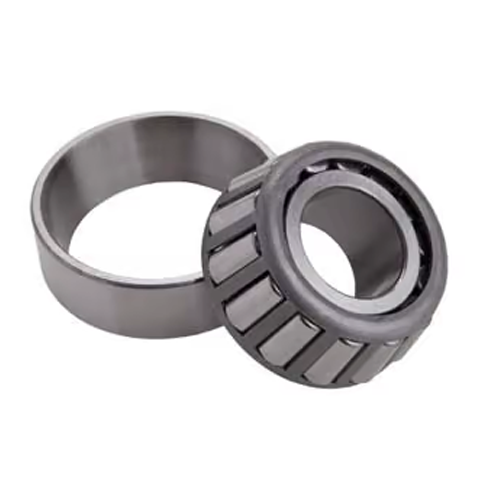
NTN NTN 32216U Single Row Tapered Roller Bearing, D=80mm
NTN 32216U Single Row Tapered Roller Bearing (Inside Dia - 80mm, Outside Dia - 140mm) SPECIFICATIONS Type of Product : Single Row Tapered Roller Bearing Inside Diameter (d) (mm) : 80 Outside Diameter D (mm) : 140 Width Dia mm : 33 Model No : 32216U 1. Types, design features, and characteristics Tapered roller bearings are designed so the tapered vertex of the raceway surfaces of the inner and outer rings and rollers converge at one point on the centerline of the bearing (see Fig. 1).The tapered rollers are guided by the compound force of the inner and outer raceway surfaces which keep the rollers pressed up against the large rib on the inner ring.A large variety of these bearings, including single, double, and four row arrangements, are available in both metric and inch series. Each type and associated characteristics are shown in Table 1. For four-row tapered roller bearings, see section “C. Special application bearings.” Table 1 Tapered roller bearing types and characteristics Type Characteristics Single row taperedroller bearings (1) There are both metric and inch series adhering to the standards shown in the following table. Dimension series *Dimension series previously not covered by 3XX are regulated under JIS B 1512; dimensions previously missing from 3XX will henceforth use the bearing number. (2) In addition to the standard design, there are also medium contact angle and large contact angle types, denoted by the contact angle codes at the end of the part numbers (C and D, respectively). (3) Subunits Tapered roller bearings can be disassembled into parts: the inner ring, rollers, and cage (collectively known as the “CONE”) and the outer ring (known as the “CUP”). These are the bearing’s “subunits”. Subunit dimensions are standardized under ISO or ABMA standards, and unified subunits are interchangeable within each dimensional standard. However, high precision grade bearings are generally not interchangeable, and these subunits must be used by assembling only subunits with identical manufacturing numbers.Aside from any cautionary notes that may appear, the single row tapered roller bearings listed in the dimension tables have subunits standardized for both metric and inch systems (including J series). (Refer to Fig. 2) Single row taperedroller bearings (4) These bearings are constructed to have a high capacity for radial loads, axial loads, and combined loads. The larger the contact angle, the greater the axial load capacity. When a pure radial load is applied to a tapered roller bearing, an induced load in the axial direction is also generated, so these bearings are generally used in pairs.(5) Single row tapered roller bearings are separable, so both the inner and outer rings can be used with tight fits. (6) Tapered roller bearings are also manufactured with flanges attached to the outer rings. For more details, contact NTN Engineering. (Refer to Fig. 3) Duplex tapered roller bearings (1) When two single-row tapered roller bearings are to be used in combination, the bearing clearance and preload are adjusted by the inner ring spacer or the outer ring spacer (see Fig. 4).(2) A product number and a combination code are indicated on inner rings, outer rings, and spacers. Parts displaying the same number and code must be used in combination.(3) See A-96 Table 8.14 for the axial internal clearance. Double row taperedroller bearings (1) Back-to-back arrangement (using double row outer rings) and face-to-face arrangement (using double row inner rings) are both available. The assemblies have been adjusted so that each type's internal clearance values are fixed. Only parts with identical manufacturing numbers can be used and they must be assembled according to their code numbers. (Refer to Fig. 5)(2) See A-96 Table 8.14 for the axial internal clearance of double-row and duplex bearings. 2. Standard cage type In general, pressed cages (see Fig. 6) are used in tapered roller bearings. For large sized bearings, machined or pin type cages may also be used, while resin cages may also be used for smaller sized bearings. 3. Allowable misalignment In order to avoid edge loading and potential for premature failure, the maximum allowable misalignment based on bearing series can be found below.The allowable misalignment of combined bearings is influenced by the load center position, so please consult NTN Engineering.• Single row (standard) …………… 1/ 2 000• Single row (ULTAGE) …………… 1/ 600 4. Precautions If bearing load is light during operation, or if the ratio of axial to radial load for duplex and double row bearings exceeds the value of e, slipping may develop between the rollers and raceway surface, sometimes resulting in smearing. The mass of rollers and cages particularly tends to be large for large tapered roller bearings. For additional details, please contact NTN Engineering.In tapered roller bearings, the cage may protrude beyond the inner and/or outer ring side faces. Care should be taken when designing the housing and shaft to ensure contact with the cage does not occur.
$55.00
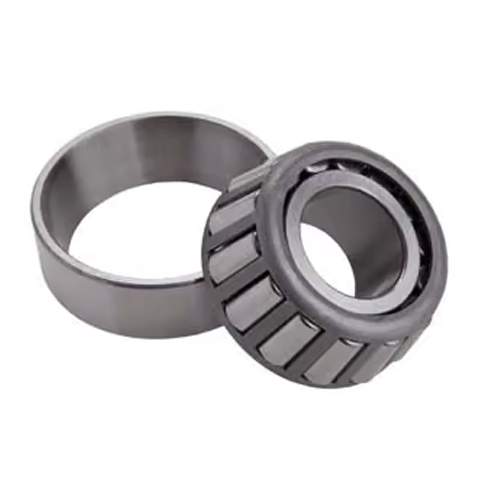
NTN NTN 32217U Single Row Tapered Roller Bearing, D=85mm
NTN 32217U Single Row Tapered Roller Bearing (Inside Dia - 85mm, Outside Dia - 150mm) SPECIFICATIONS Type of Product : Single Row Tapered Roller Bearing Inside Diameter (d) (mm) : 85 Outside Diameter D (mm) : 150 Width Dia mm : 36 Model No : 32217U 1. Types, design features, and characteristics Tapered roller bearings are designed so the tapered vertex of the raceway surfaces of the inner and outer rings and rollers converge at one point on the centerline of the bearing (see Fig. 1).The tapered rollers are guided by the compound force of the inner and outer raceway surfaces which keep the rollers pressed up against the large rib on the inner ring.A large variety of these bearings, including single, double, and four row arrangements, are available in both metric and inch series. Each type and associated characteristics are shown in Table 1. For four-row tapered roller bearings, see section “C. Special application bearings.” Table 1 Tapered roller bearing types and characteristics Type Characteristics Single row taperedroller bearings (1) There are both metric and inch series adhering to the standards shown in the following table. Dimension series *Dimension series previously not covered by 3XX are regulated under JIS B 1512; dimensions previously missing from 3XX will henceforth use the bearing number. (2) In addition to the standard design, there are also medium contact angle and large contact angle types, denoted by the contact angle codes at the end of the part numbers (C and D, respectively). (3) Subunits Tapered roller bearings can be disassembled into parts: the inner ring, rollers, and cage (collectively known as the “CONE”) and the outer ring (known as the “CUP”). These are the bearing’s “subunits”. Subunit dimensions are standardized under ISO or ABMA standards, and unified subunits are interchangeable within each dimensional standard. However, high precision grade bearings are generally not interchangeable, and these subunits must be used by assembling only subunits with identical manufacturing numbers.Aside from any cautionary notes that may appear, the single row tapered roller bearings listed in the dimension tables have subunits standardized for both metric and inch systems (including J series). (Refer to Fig. 2) Single row taperedroller bearings (4) These bearings are constructed to have a high capacity for radial loads, axial loads, and combined loads. The larger the contact angle, the greater the axial load capacity. When a pure radial load is applied to a tapered roller bearing, an induced load in the axial direction is also generated, so these bearings are generally used in pairs.(5) Single row tapered roller bearings are separable, so both the inner and outer rings can be used with tight fits. (6) Tapered roller bearings are also manufactured with flanges attached to the outer rings. For more details, contact NTN Engineering. (Refer to Fig. 3) Duplex tapered roller bearings (1) When two single-row tapered roller bearings are to be used in combination, the bearing clearance and preload are adjusted by the inner ring spacer or the outer ring spacer (see Fig. 4).(2) A product number and a combination code are indicated on inner rings, outer rings, and spacers. Parts displaying the same number and code must be used in combination.(3) See A-96 Table 8.14 for the axial internal clearance. Double row taperedroller bearings (1) Back-to-back arrangement (using double row outer rings) and face-to-face arrangement (using double row inner rings) are both available. The assemblies have been adjusted so that each type's internal clearance values are fixed. Only parts with identical manufacturing numbers can be used and they must be assembled according to their code numbers. (Refer to Fig. 5)(2) See A-96 Table 8.14 for the axial internal clearance of double-row and duplex bearings. 2. Standard cage type In general, pressed cages (see Fig. 6) are used in tapered roller bearings. For large sized bearings, machined or pin type cages may also be used, while resin cages may also be used for smaller sized bearings. 3. Allowable misalignment In order to avoid edge loading and potential for premature failure, the maximum allowable misalignment based on bearing series can be found below.The allowable misalignment of combined bearings is influenced by the load center position, so please consult NTN Engineering.• Single row (standard) …………… 1/ 2 000• Single row (ULTAGE) …………… 1/ 600 4. Precautions If bearing load is light during operation, or if the ratio of axial to radial load for duplex and double row bearings exceeds the value of e, slipping may develop between the rollers and raceway surface, sometimes resulting in smearing. The mass of rollers and cages particularly tends to be large for large tapered roller bearings. For additional details, please contact NTN Engineering.In tapered roller bearings, the cage may protrude beyond the inner and/or outer ring side faces. Care should be taken when designing the housing and shaft to ensure contact with the cage does not occur.
$68.91
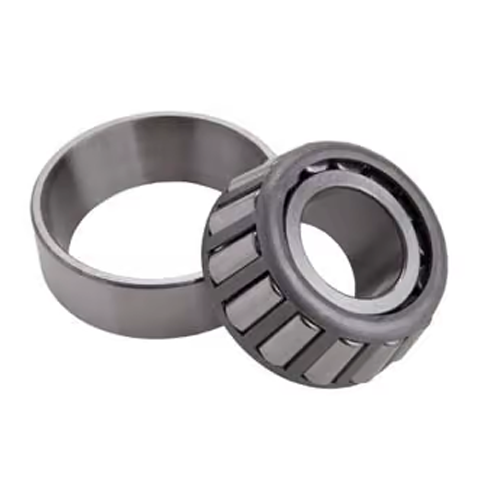
NTN NTN 32218U Single Row Tapered Roller Bearing, D=90mm
NTN 32218U Single Row Tapered Roller Bearing (Inside Dia - 90mm, Outside Dia - 160mm) SPECIFICATIONS Type of Product : Single Row Tapered Roller Bearing Inside Diameter (d) (mm) : 90 Outside Diameter D (mm) : 160 Width Dia mm : 40 Model No : 32218U 1. Types, design features, and characteristics Tapered roller bearings are designed so the tapered vertex of the raceway surfaces of the inner and outer rings and rollers converge at one point on the centerline of the bearing (see Fig. 1).The tapered rollers are guided by the compound force of the inner and outer raceway surfaces which keep the rollers pressed up against the large rib on the inner ring.A large variety of these bearings, including single, double, and four row arrangements, are available in both metric and inch series. Each type and associated characteristics are shown in Table 1. For four-row tapered roller bearings, see section “C. Special application bearings.” Table 1 Tapered roller bearing types and characteristics Type Characteristics Single row taperedroller bearings (1) There are both metric and inch series adhering to the standards shown in the following table. Dimension series *Dimension series previously not covered by 3XX are regulated under JIS B 1512; dimensions previously missing from 3XX will henceforth use the bearing number. (2) In addition to the standard design, there are also medium contact angle and large contact angle types, denoted by the contact angle codes at the end of the part numbers (C and D, respectively). (3) Subunits Tapered roller bearings can be disassembled into parts: the inner ring, rollers, and cage (collectively known as the “CONE”) and the outer ring (known as the “CUP”). These are the bearing’s “subunits”. Subunit dimensions are standardized under ISO or ABMA standards, and unified subunits are interchangeable within each dimensional standard. However, high precision grade bearings are generally not interchangeable, and these subunits must be used by assembling only subunits with identical manufacturing numbers.Aside from any cautionary notes that may appear, the single row tapered roller bearings listed in the dimension tables have subunits standardized for both metric and inch systems (including J series). (Refer to Fig. 2) Single row taperedroller bearings (4) These bearings are constructed to have a high capacity for radial loads, axial loads, and combined loads. The larger the contact angle, the greater the axial load capacity. When a pure radial load is applied to a tapered roller bearing, an induced load in the axial direction is also generated, so these bearings are generally used in pairs.(5) Single row tapered roller bearings are separable, so both the inner and outer rings can be used with tight fits. (6) Tapered roller bearings are also manufactured with flanges attached to the outer rings. For more details, contact NTN Engineering. (Refer to Fig. 3) Duplex tapered roller bearings (1) When two single-row tapered roller bearings are to be used in combination, the bearing clearance and preload are adjusted by the inner ring spacer or the outer ring spacer (see Fig. 4).(2) A product number and a combination code are indicated on inner rings, outer rings, and spacers. Parts displaying the same number and code must be used in combination.(3) See A-96 Table 8.14 for the axial internal clearance. Double row taperedroller bearings (1) Back-to-back arrangement (using double row outer rings) and face-to-face arrangement (using double row inner rings) are both available. The assemblies have been adjusted so that each type's internal clearance values are fixed. Only parts with identical manufacturing numbers can be used and they must be assembled according to their code numbers. (Refer to Fig. 5)(2) See A-96 Table 8.14 for the axial internal clearance of double-row and duplex bearings. 2. Standard cage type In general, pressed cages (see Fig. 6) are used in tapered roller bearings. For large sized bearings, machined or pin type cages may also be used, while resin cages may also be used for smaller sized bearings. 3. Allowable misalignment In order to avoid edge loading and potential for premature failure, the maximum allowable misalignment based on bearing series can be found below.The allowable misalignment of combined bearings is influenced by the load center position, so please consult NTN Engineering.• Single row (standard) …………… 1/ 2 000• Single row (ULTAGE) …………… 1/ 600 4. Precautions If bearing load is light during operation, or if the ratio of axial to radial load for duplex and double row bearings exceeds the value of e, slipping may develop between the rollers and raceway surface, sometimes resulting in smearing. The mass of rollers and cages particularly tends to be large for large tapered roller bearings. For additional details, please contact NTN Engineering.In tapered roller bearings, the cage may protrude beyond the inner and/or outer ring side faces. Care should be taken when designing the housing and shaft to ensure contact with the cage does not occur.
$87.95
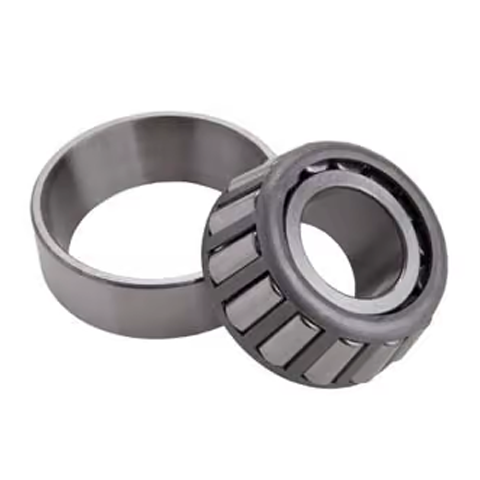
NTN NTN 32222U Single Row Tapered Roller Bearing, D=110mm
NTN 32222U Single Row Tapered Roller Bearing (Inside Dia - 110mm, Outside Dia - 200mm) SPECIFICATIONS Type of Product : Single Row Tapered Roller Bearing Inside Diameter (d) (mm) : 110 Outside Diameter D (mm) : 200 Width Dia mm : 53 Model No : 32222U 1. Types, design features, and characteristics Tapered roller bearings are designed so the tapered vertex of the raceway surfaces of the inner and outer rings and rollers converge at one point on the centerline of the bearing (see Fig. 1).The tapered rollers are guided by the compound force of the inner and outer raceway surfaces which keep the rollers pressed up against the large rib on the inner ring.A large variety of these bearings, including single, double, and four row arrangements, are available in both metric and inch series. Each type and associated characteristics are shown in Table 1. For four-row tapered roller bearings, see section “C. Special application bearings.” Table 1 Tapered roller bearing types and characteristics Type Characteristics Single row taperedroller bearings (1) There are both metric and inch series adhering to the standards shown in the following table. Dimension series *Dimension series previously not covered by 3XX are regulated under JIS B 1512; dimensions previously missing from 3XX will henceforth use the bearing number. (2) In addition to the standard design, there are also medium contact angle and large contact angle types, denoted by the contact angle codes at the end of the part numbers (C and D, respectively). (3) Subunits Tapered roller bearings can be disassembled into parts: the inner ring, rollers, and cage (collectively known as the “CONE”) and the outer ring (known as the “CUP”). These are the bearing’s “subunits”. Subunit dimensions are standardized under ISO or ABMA standards, and unified subunits are interchangeable within each dimensional standard. However, high precision grade bearings are generally not interchangeable, and these subunits must be used by assembling only subunits with identical manufacturing numbers.Aside from any cautionary notes that may appear, the single row tapered roller bearings listed in the dimension tables have subunits standardized for both metric and inch systems (including J series). (Refer to Fig. 2) Single row taperedroller bearings (4) These bearings are constructed to have a high capacity for radial loads, axial loads, and combined loads. The larger the contact angle, the greater the axial load capacity. When a pure radial load is applied to a tapered roller bearing, an induced load in the axial direction is also generated, so these bearings are generally used in pairs.(5) Single row tapered roller bearings are separable, so both the inner and outer rings can be used with tight fits. (6) Tapered roller bearings are also manufactured with flanges attached to the outer rings. For more details, contact NTN Engineering. (Refer to Fig. 3) Duplex tapered roller bearings (1) When two single-row tapered roller bearings are to be used in combination, the bearing clearance and preload are adjusted by the inner ring spacer or the outer ring spacer (see Fig. 4).(2) A product number and a combination code are indicated on inner rings, outer rings, and spacers. Parts displaying the same number and code must be used in combination.(3) See A-96 Table 8.14 for the axial internal clearance. Double row taperedroller bearings (1) Back-to-back arrangement (using double row outer rings) and face-to-face arrangement (using double row inner rings) are both available. The assemblies have been adjusted so that each type's internal clearance values are fixed. Only parts with identical manufacturing numbers can be used and they must be assembled according to their code numbers. (Refer to Fig. 5)(2) See A-96 Table 8.14 for the axial internal clearance of double-row and duplex bearings. 2. Standard cage type In general, pressed cages (see Fig. 6) are used in tapered roller bearings. For large sized bearings, machined or pin type cages may also be used, while resin cages may also be used for smaller sized bearings. 3. Allowable misalignment In order to avoid edge loading and potential for premature failure, the maximum allowable misalignment based on bearing series can be found below.The allowable misalignment of combined bearings is influenced by the load center position, so please consult NTN Engineering.• Single row (standard) …………… 1/ 2 000• Single row (ULTAGE) …………… 1/ 600 4. Precautions If bearing load is light during operation, or if the ratio of axial to radial load for duplex and double row bearings exceeds the value of e, slipping may develop between the rollers and raceway surface, sometimes resulting in smearing. The mass of rollers and cages particularly tends to be large for large tapered roller bearings. For additional details, please contact NTN Engineering.In tapered roller bearings, the cage may protrude beyond the inner and/or outer ring side faces. Care should be taken when designing the housing and shaft to ensure contact with the cage does not occur.
$243.59
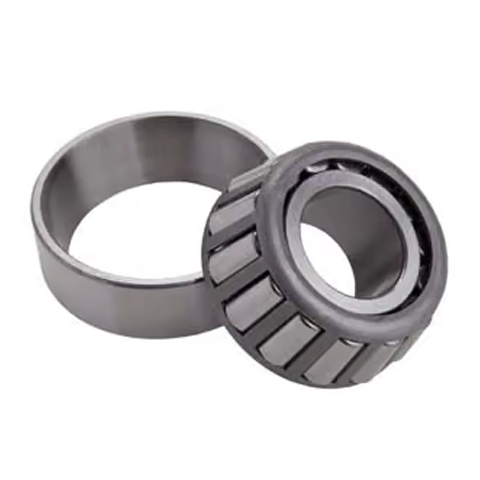
NTN NTN 32226U Single Row Tapered Roller Bearing, D=130mm
NTN 32226U Single Row Tapered Roller Bearing (Inside Dia - 130mm, Outside Dia - 230mm) SPECIFICATIONS Type of Product : Single Row Tapered Roller Bearing Inside Diameter (d) (mm) : 130 Outside Diameter D (mm) : 230 Width Dia mm : 64 Model No : 32226U 1. Types, design features, and characteristics Tapered roller bearings are designed so the tapered vertex of the raceway surfaces of the inner and outer rings and rollers converge at one point on the centerline of the bearing (see Fig. 1).The tapered rollers are guided by the compound force of the inner and outer raceway surfaces which keep the rollers pressed up against the large rib on the inner ring.A large variety of these bearings, including single, double, and four row arrangements, are available in both metric and inch series. Each type and associated characteristics are shown in Table 1. For four-row tapered roller bearings, see section “C. Special application bearings.” Table 1 Tapered roller bearing types and characteristics Type Characteristics Single row taperedroller bearings (1) There are both metric and inch series adhering to the standards shown in the following table. Dimension series *Dimension series previously not covered by 3XX are regulated under JIS B 1512; dimensions previously missing from 3XX will henceforth use the bearing number. (2) In addition to the standard design, there are also medium contact angle and large contact angle types, denoted by the contact angle codes at the end of the part numbers (C and D, respectively). (3) Subunits Tapered roller bearings can be disassembled into parts: the inner ring, rollers, and cage (collectively known as the “CONE”) and the outer ring (known as the “CUP”). These are the bearing’s “subunits”. Subunit dimensions are standardized under ISO or ABMA standards, and unified subunits are interchangeable within each dimensional standard. However, high precision grade bearings are generally not interchangeable, and these subunits must be used by assembling only subunits with identical manufacturing numbers.Aside from any cautionary notes that may appear, the single row tapered roller bearings listed in the dimension tables have subunits standardized for both metric and inch systems (including J series). (Refer to Fig. 2) Single row taperedroller bearings (4) These bearings are constructed to have a high capacity for radial loads, axial loads, and combined loads. The larger the contact angle, the greater the axial load capacity. When a pure radial load is applied to a tapered roller bearing, an induced load in the axial direction is also generated, so these bearings are generally used in pairs.(5) Single row tapered roller bearings are separable, so both the inner and outer rings can be used with tight fits. (6) Tapered roller bearings are also manufactured with flanges attached to the outer rings. For more details, contact NTN Engineering. (Refer to Fig. 3) Duplex tapered roller bearings (1) When two single-row tapered roller bearings are to be used in combination, the bearing clearance and preload are adjusted by the inner ring spacer or the outer ring spacer (see Fig. 4).(2) A product number and a combination code are indicated on inner rings, outer rings, and spacers. Parts displaying the same number and code must be used in combination.(3) See A-96 Table 8.14 for the axial internal clearance. Double row taperedroller bearings (1) Back-to-back arrangement (using double row outer rings) and face-to-face arrangement (using double row inner rings) are both available. The assemblies have been adjusted so that each type's internal clearance values are fixed. Only parts with identical manufacturing numbers can be used and they must be assembled according to their code numbers. (Refer to Fig. 5)(2) See A-96 Table 8.14 for the axial internal clearance of double-row and duplex bearings. 2. Standard cage type In general, pressed cages (see Fig. 6) are used in tapered roller bearings. For large sized bearings, machined or pin type cages may also be used, while resin cages may also be used for smaller sized bearings. 3. Allowable misalignment In order to avoid edge loading and potential for premature failure, the maximum allowable misalignment based on bearing series can be found below.The allowable misalignment of combined bearings is influenced by the load center position, so please consult NTN Engineering.• Single row (standard) …………… 1/ 2 000• Single row (ULTAGE) …………… 1/ 600 4. Precautions If bearing load is light during operation, or if the ratio of axial to radial load for duplex and double row bearings exceeds the value of e, slipping may develop between the rollers and raceway surface, sometimes resulting in smearing. The mass of rollers and cages particularly tends to be large for large tapered roller bearings. For additional details, please contact NTN Engineering.In tapered roller bearings, the cage may protrude beyond the inner and/or outer ring side faces. Care should be taken when designing the housing and shaft to ensure contact with the cage does not occur.
$531.17
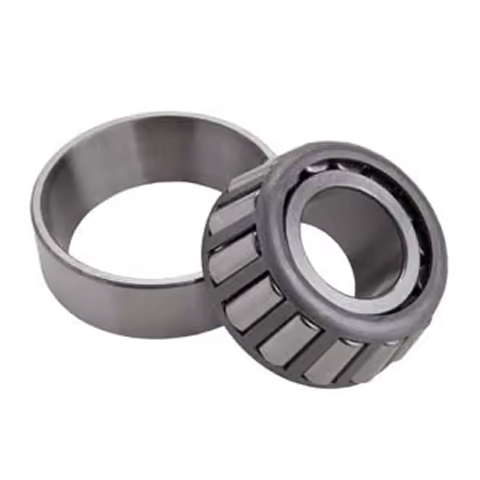
NTN NTN 32311U Single Row Tapered Roller Bearing, D=55mm
NTN 32311U Single Row Tapered Roller Bearing (Inside Dia - 55mm, Outside Dia - 120mm) SPECIFICATIONS Type of Product : Single Row Tapered Roller Bearing Inside Diameter (d) (mm) : 55 Outside Diameter D (mm) : 120 Width Dia mm : 43 Model No : 32311U 1. Types, design features, and characteristics Tapered roller bearings are designed so the tapered vertex of the raceway surfaces of the inner and outer rings and rollers converge at one point on the centerline of the bearing (see Fig. 1).The tapered rollers are guided by the compound force of the inner and outer raceway surfaces which keep the rollers pressed up against the large rib on the inner ring.A large variety of these bearings, including single, double, and four row arrangements, are available in both metric and inch series. Each type and associated characteristics are shown in Table 1. For four-row tapered roller bearings, see section “C. Special application bearings.” Table 1 Tapered roller bearing types and characteristics Type Characteristics Single row taperedroller bearings (1) There are both metric and inch series adhering to the standards shown in the following table. Dimension series *Dimension series previously not covered by 3XX are regulated under JIS B 1512; dimensions previously missing from 3XX will henceforth use the bearing number. (2) In addition to the standard design, there are also medium contact angle and large contact angle types, denoted by the contact angle codes at the end of the part numbers (C and D, respectively). (3) Subunits Tapered roller bearings can be disassembled into parts: the inner ring, rollers, and cage (collectively known as the “CONE”) and the outer ring (known as the “CUP”). These are the bearing’s “subunits”. Subunit dimensions are standardized under ISO or ABMA standards, and unified subunits are interchangeable within each dimensional standard. However, high precision grade bearings are generally not interchangeable, and these subunits must be used by assembling only subunits with identical manufacturing numbers.Aside from any cautionary notes that may appear, the single row tapered roller bearings listed in the dimension tables have subunits standardized for both metric and inch systems (including J series). (Refer to Fig. 2) Single row taperedroller bearings (4) These bearings are constructed to have a high capacity for radial loads, axial loads, and combined loads. The larger the contact angle, the greater the axial load capacity. When a pure radial load is applied to a tapered roller bearing, an induced load in the axial direction is also generated, so these bearings are generally used in pairs.(5) Single row tapered roller bearings are separable, so both the inner and outer rings can be used with tight fits. (6) Tapered roller bearings are also manufactured with flanges attached to the outer rings. For more details, contact NTN Engineering. (Refer to Fig. 3) Duplex tapered roller bearings (1) When two single-row tapered roller bearings are to be used in combination, the bearing clearance and preload are adjusted by the inner ring spacer or the outer ring spacer (see Fig. 4).(2) A product number and a combination code are indicated on inner rings, outer rings, and spacers. Parts displaying the same number and code must be used in combination.(3) See A-96 Table 8.14 for the axial internal clearance. Double row taperedroller bearings (1) Back-to-back arrangement (using double row outer rings) and face-to-face arrangement (using double row inner rings) are both available. The assemblies have been adjusted so that each type's internal clearance values are fixed. Only parts with identical manufacturing numbers can be used and they must be assembled according to their code numbers. (Refer to Fig. 5)(2) See A-96 Table 8.14 for the axial internal clearance of double-row and duplex bearings. 2. Standard cage type In general, pressed cages (see Fig. 6) are used in tapered roller bearings. For large sized bearings, machined or pin type cages may also be used, while resin cages may also be used for smaller sized bearings. 3. Allowable misalignment In order to avoid edge loading and potential for premature failure, the maximum allowable misalignment based on bearing series can be found below.The allowable misalignment of combined bearings is influenced by the load center position, so please consult NTN Engineering.• Single row (standard) …………… 1/ 2 000• Single row (ULTAGE) …………… 1/ 600 4. Precautions If bearing load is light during operation, or if the ratio of axial to radial load for duplex and double row bearings exceeds the value of e, slipping may develop between the rollers and raceway surface, sometimes resulting in smearing. The mass of rollers and cages particularly tends to be large for large tapered roller bearings. For additional details, please contact NTN Engineering.In tapered roller bearings, the cage may protrude beyond the inner and/or outer ring side faces. Care should be taken when designing the housing and shaft to ensure contact with the cage does not occur.
$63.59
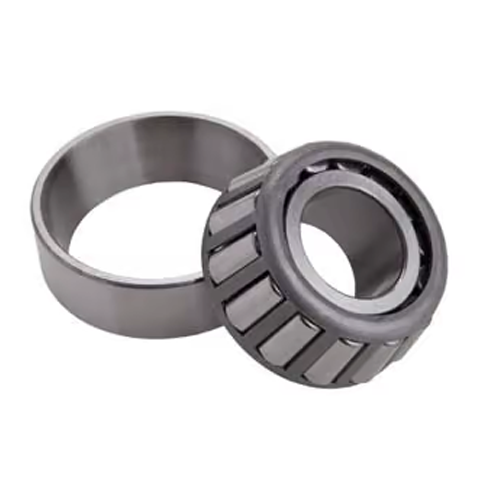
NTN NTN 32313U Single Row Tapered Roller Bearing, D=65mm
NTN 32313U Single Row Tapered Roller Bearing (Inside Dia - 65mm, Outside Dia - 140mm) SPECIFICATIONS Type of Product : Single Row Tapered Roller Bearing Inside Diameter (d) (mm) : 65 Outside Diameter D (mm) : 140 Width Dia mm : 48 Model No : 32313U 1. Types, design features, and characteristics Tapered roller bearings are designed so the tapered vertex of the raceway surfaces of the inner and outer rings and rollers converge at one point on the centerline of the bearing (see Fig. 1).The tapered rollers are guided by the compound force of the inner and outer raceway surfaces which keep the rollers pressed up against the large rib on the inner ring.A large variety of these bearings, including single, double, and four row arrangements, are available in both metric and inch series. Each type and associated characteristics are shown in Table 1. For four-row tapered roller bearings, see section “C. Special application bearings.” Table 1 Tapered roller bearing types and characteristics Type Characteristics Single row taperedroller bearings (1) There are both metric and inch series adhering to the standards shown in the following table. Dimension series *Dimension series previously not covered by 3XX are regulated under JIS B 1512; dimensions previously missing from 3XX will henceforth use the bearing number. (2) In addition to the standard design, there are also medium contact angle and large contact angle types, denoted by the contact angle codes at the end of the part numbers (C and D, respectively). (3) Subunits Tapered roller bearings can be disassembled into parts: the inner ring, rollers, and cage (collectively known as the “CONE”) and the outer ring (known as the “CUP”). These are the bearing’s “subunits”. Subunit dimensions are standardized under ISO or ABMA standards, and unified subunits are interchangeable within each dimensional standard. However, high precision grade bearings are generally not interchangeable, and these subunits must be used by assembling only subunits with identical manufacturing numbers.Aside from any cautionary notes that may appear, the single row tapered roller bearings listed in the dimension tables have subunits standardized for both metric and inch systems (including J series). (Refer to Fig. 2) Single row taperedroller bearings (4) These bearings are constructed to have a high capacity for radial loads, axial loads, and combined loads. The larger the contact angle, the greater the axial load capacity. When a pure radial load is applied to a tapered roller bearing, an induced load in the axial direction is also generated, so these bearings are generally used in pairs.(5) Single row tapered roller bearings are separable, so both the inner and outer rings can be used with tight fits. (6) Tapered roller bearings are also manufactured with flanges attached to the outer rings. For more details, contact NTN Engineering. (Refer to Fig. 3) Duplex tapered roller bearings (1) When two single-row tapered roller bearings are to be used in combination, the bearing clearance and preload are adjusted by the inner ring spacer or the outer ring spacer (see Fig. 4).(2) A product number and a combination code are indicated on inner rings, outer rings, and spacers. Parts displaying the same number and code must be used in combination.(3) See A-96 Table 8.14 for the axial internal clearance. Double row taperedroller bearings (1) Back-to-back arrangement (using double row outer rings) and face-to-face arrangement (using double row inner rings) are both available. The assemblies have been adjusted so that each type's internal clearance values are fixed. Only parts with identical manufacturing numbers can be used and they must be assembled according to their code numbers. (Refer to Fig. 5)(2) See A-96 Table 8.14 for the axial internal clearance of double-row and duplex bearings. 2. Standard cage type In general, pressed cages (see Fig. 6) are used in tapered roller bearings. For large sized bearings, machined or pin type cages may also be used, while resin cages may also be used for smaller sized bearings. 3. Allowable misalignment In order to avoid edge loading and potential for premature failure, the maximum allowable misalignment based on bearing series can be found below.The allowable misalignment of combined bearings is influenced by the load center position, so please consult NTN Engineering.• Single row (standard) …………… 1/ 2 000• Single row (ULTAGE) …………… 1/ 600 4. Precautions If bearing load is light during operation, or if the ratio of axial to radial load for duplex and double row bearings exceeds the value of e, slipping may develop between the rollers and raceway surface, sometimes resulting in smearing. The mass of rollers and cages particularly tends to be large for large tapered roller bearings. For additional details, please contact NTN Engineering.In tapered roller bearings, the cage may protrude beyond the inner and/or outer ring side faces. Care should be taken when designing the housing and shaft to ensure contact with the cage does not occur.
$101.77
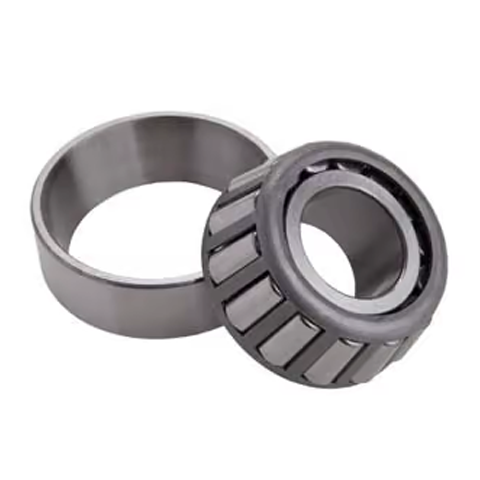
NTN NTN 32314U Single Row Tapered Roller Bearing, D=70mm
NTN 32314U Single Row Tapered Roller Bearing (Inside Dia - 70mm, Outside Dia - 150mm) SPECIFICATIONS Type of Product : Single Row Tapered Roller Bearing Inside Diameter (d) (mm) : 70 Outside Diameter D (mm) : 150 Width Dia mm : 51 Model No : 32314U 1. Types, design features, and characteristics Tapered roller bearings are designed so the tapered vertex of the raceway surfaces of the inner and outer rings and rollers converge at one point on the centerline of the bearing (see Fig. 1).The tapered rollers are guided by the compound force of the inner and outer raceway surfaces which keep the rollers pressed up against the large rib on the inner ring.A large variety of these bearings, including single, double, and four row arrangements, are available in both metric and inch series. Each type and associated characteristics are shown in Table 1. For four-row tapered roller bearings, see section “C. Special application bearings.” Table 1 Tapered roller bearing types and characteristics Type Characteristics Single row taperedroller bearings (1) There are both metric and inch series adhering to the standards shown in the following table. Dimension series *Dimension series previously not covered by 3XX are regulated under JIS B 1512; dimensions previously missing from 3XX will henceforth use the bearing number. (2) In addition to the standard design, there are also medium contact angle and large contact angle types, denoted by the contact angle codes at the end of the part numbers (C and D, respectively). (3) Subunits Tapered roller bearings can be disassembled into parts: the inner ring, rollers, and cage (collectively known as the “CONE”) and the outer ring (known as the “CUP”). These are the bearing’s “subunits”. Subunit dimensions are standardized under ISO or ABMA standards, and unified subunits are interchangeable within each dimensional standard. However, high precision grade bearings are generally not interchangeable, and these subunits must be used by assembling only subunits with identical manufacturing numbers.Aside from any cautionary notes that may appear, the single row tapered roller bearings listed in the dimension tables have subunits standardized for both metric and inch systems (including J series). (Refer to Fig. 2) Single row taperedroller bearings (4) These bearings are constructed to have a high capacity for radial loads, axial loads, and combined loads. The larger the contact angle, the greater the axial load capacity. When a pure radial load is applied to a tapered roller bearing, an induced load in the axial direction is also generated, so these bearings are generally used in pairs.(5) Single row tapered roller bearings are separable, so both the inner and outer rings can be used with tight fits. (6) Tapered roller bearings are also manufactured with flanges attached to the outer rings. For more details, contact NTN Engineering. (Refer to Fig. 3) Duplex tapered roller bearings (1) When two single-row tapered roller bearings are to be used in combination, the bearing clearance and preload are adjusted by the inner ring spacer or the outer ring spacer (see Fig. 4).(2) A product number and a combination code are indicated on inner rings, outer rings, and spacers. Parts displaying the same number and code must be used in combination.(3) See A-96 Table 8.14 for the axial internal clearance. Double row taperedroller bearings (1) Back-to-back arrangement (using double row outer rings) and face-to-face arrangement (using double row inner rings) are both available. The assemblies have been adjusted so that each type's internal clearance values are fixed. Only parts with identical manufacturing numbers can be used and they must be assembled according to their code numbers. (Refer to Fig. 5)(2) See A-96 Table 8.14 for the axial internal clearance of double-row and duplex bearings. 2. Standard cage type In general, pressed cages (see Fig. 6) are used in tapered roller bearings. For large sized bearings, machined or pin type cages may also be used, while resin cages may also be used for smaller sized bearings. 3. Allowable misalignment In order to avoid edge loading and potential for premature failure, the maximum allowable misalignment based on bearing series can be found below.The allowable misalignment of combined bearings is influenced by the load center position, so please consult NTN Engineering.• Single row (standard) …………… 1/ 2 000• Single row (ULTAGE) …………… 1/ 600 4. Precautions If bearing load is light during operation, or if the ratio of axial to radial load for duplex and double row bearings exceeds the value of e, slipping may develop between the rollers and raceway surface, sometimes resulting in smearing. The mass of rollers and cages particularly tends to be large for large tapered roller bearings. For additional details, please contact NTN Engineering.In tapered roller bearings, the cage may protrude beyond the inner and/or outer ring side faces. Care should be taken when designing the housing and shaft to ensure contact with the cage does not occur.
$131.40
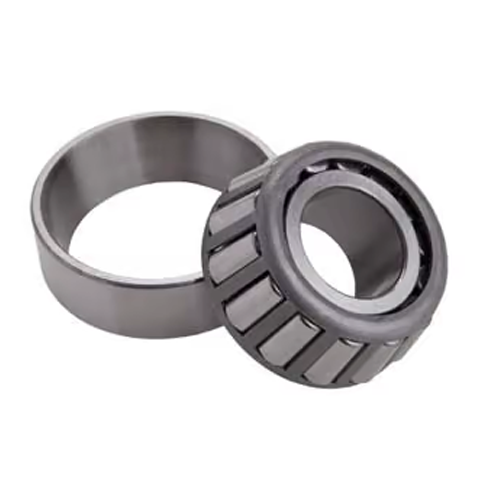
NTN NTN 32324U Single Row Tapered Roller Bearing, D=120mm
NTN 32324U Single Row Tapered Roller Bearing (Inside Dia - 120mm, Outside Dia - 260mm) SPECIFICATIONS Type of Product : Single Row Tapered Roller Bearing Inside Diameter (d) (mm) : 120 Outside Diameter D (mm) : 260 Width Dia mm : 86 Model No : 32324U 1. Types, design features, and characteristics Tapered roller bearings are designed so the tapered vertex of the raceway surfaces of the inner and outer rings and rollers converge at one point on the centerline of the bearing (see Fig. 1).The tapered rollers are guided by the compound force of the inner and outer raceway surfaces which keep the rollers pressed up against the large rib on the inner ring.A large variety of these bearings, including single, double, and four row arrangements, are available in both metric and inch series. Each type and associated characteristics are shown in Table 1. For four-row tapered roller bearings, see section “C. Special application bearings.” Table 1 Tapered roller bearing types and characteristics Type Characteristics Single row taperedroller bearings (1) There are both metric and inch series adhering to the standards shown in the following table. Dimension series *Dimension series previously not covered by 3XX are regulated under JIS B 1512; dimensions previously missing from 3XX will henceforth use the bearing number. (2) In addition to the standard design, there are also medium contact angle and large contact angle types, denoted by the contact angle codes at the end of the part numbers (C and D, respectively). (3) Subunits Tapered roller bearings can be disassembled into parts: the inner ring, rollers, and cage (collectively known as the “CONE”) and the outer ring (known as the “CUP”). These are the bearing’s “subunits”. Subunit dimensions are standardized under ISO or ABMA standards, and unified subunits are interchangeable within each dimensional standard. However, high precision grade bearings are generally not interchangeable, and these subunits must be used by assembling only subunits with identical manufacturing numbers.Aside from any cautionary notes that may appear, the single row tapered roller bearings listed in the dimension tables have subunits standardized for both metric and inch systems (including J series). (Refer to Fig. 2) Single row taperedroller bearings (4) These bearings are constructed to have a high capacity for radial loads, axial loads, and combined loads. The larger the contact angle, the greater the axial load capacity. When a pure radial load is applied to a tapered roller bearing, an induced load in the axial direction is also generated, so these bearings are generally used in pairs.(5) Single row tapered roller bearings are separable, so both the inner and outer rings can be used with tight fits. (6) Tapered roller bearings are also manufactured with flanges attached to the outer rings. For more details, contact NTN Engineering. (Refer to Fig. 3) Duplex tapered roller bearings (1) When two single-row tapered roller bearings are to be used in combination, the bearing clearance and preload are adjusted by the inner ring spacer or the outer ring spacer (see Fig. 4).(2) A product number and a combination code are indicated on inner rings, outer rings, and spacers. Parts displaying the same number and code must be used in combination.(3) See A-96 Table 8.14 for the axial internal clearance. Double row taperedroller bearings (1) Back-to-back arrangement (using double row outer rings) and face-to-face arrangement (using double row inner rings) are both available. The assemblies have been adjusted so that each type's internal clearance values are fixed. Only parts with identical manufacturing numbers can be used and they must be assembled according to their code numbers. (Refer to Fig. 5)(2) See A-96 Table 8.14 for the axial internal clearance of double-row and duplex bearings. 2. Standard cage type In general, pressed cages (see Fig. 6) are used in tapered roller bearings. For large sized bearings, machined or pin type cages may also be used, while resin cages may also be used for smaller sized bearings. 3. Allowable misalignment In order to avoid edge loading and potential for premature failure, the maximum allowable misalignment based on bearing series can be found below.The allowable misalignment of combined bearings is influenced by the load center position, so please consult NTN Engineering.• Single row (standard) …………… 1/ 2 000• Single row (ULTAGE) …………… 1/ 600 4. Precautions If bearing load is light during operation, or if the ratio of axial to radial load for duplex and double row bearings exceeds the value of e, slipping may develop between the rollers and raceway surface, sometimes resulting in smearing. The mass of rollers and cages particularly tends to be large for large tapered roller bearings. For additional details, please contact NTN Engineering.In tapered roller bearings, the cage may protrude beyond the inner and/or outer ring side faces. Care should be taken when designing the housing and shaft to ensure contact with the cage does not occur.
$835.68
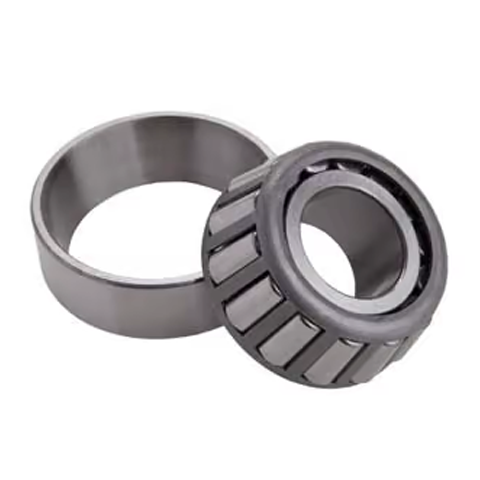
NTN NTN 4T-30203 Single Row Tapered Roller Bearing, D=17mm
NTN 4T-30203 Single Row Tapered Roller Bearing (Inside Dia - 17mm, Outside Dia - 40mm) SPECIFICATIONS Type of Product : Single Row Tapered Roller Bearing Inside Diameter (d) (mm) : 17 Outside Diameter D (mm) : 40 Width Dia mm : 12 Model No : 4T-30203 1. Types, design features, and characteristics Tapered roller bearings are designed so the tapered vertex of the raceway surfaces of the inner and outer rings and rollers converge at one point on the centerline of the bearing (see Fig. 1).The tapered rollers are guided by the compound force of the inner and outer raceway surfaces which keep the rollers pressed up against the large rib on the inner ring.A large variety of these bearings, including single, double, and four row arrangements, are available in both metric and inch series. Each type and associated characteristics are shown in Table 1. For four-row tapered roller bearings, see section “C. Special application bearings.” Table 1 Tapered roller bearing types and characteristics Type Characteristics Single row taperedroller bearings (1) There are both metric and inch series adhering to the standards shown in the following table. Dimension series *Dimension series previously not covered by 3XX are regulated under JIS B 1512; dimensions previously missing from 3XX will henceforth use the bearing number. (2) In addition to the standard design, there are also medium contact angle and large contact angle types, denoted by the contact angle codes at the end of the part numbers (C and D, respectively). (3) Subunits Tapered roller bearings can be disassembled into parts: the inner ring, rollers, and cage (collectively known as the “CONE”) and the outer ring (known as the “CUP”). These are the bearing’s “subunits”. Subunit dimensions are standardized under ISO or ABMA standards, and unified subunits are interchangeable within each dimensional standard. However, high precision grade bearings are generally not interchangeable, and these subunits must be used by assembling only subunits with identical manufacturing numbers.Aside from any cautionary notes that may appear, the single row tapered roller bearings listed in the dimension tables have subunits standardized for both metric and inch systems (including J series). (Refer to Fig. 2) Single row taperedroller bearings (4) These bearings are constructed to have a high capacity for radial loads, axial loads, and combined loads. The larger the contact angle, the greater the axial load capacity. When a pure radial load is applied to a tapered roller bearing, an induced load in the axial direction is also generated, so these bearings are generally used in pairs.(5) Single row tapered roller bearings are separable, so both the inner and outer rings can be used with tight fits. (6) Tapered roller bearings are also manufactured with flanges attached to the outer rings. For more details, contact NTN Engineering. (Refer to Fig. 3) Duplex tapered roller bearings (1) When two single-row tapered roller bearings are to be used in combination, the bearing clearance and preload are adjusted by the inner ring spacer or the outer ring spacer (see Fig. 4).(2) A product number and a combination code are indicated on inner rings, outer rings, and spacers. Parts displaying the same number and code must be used in combination.(3) See A-96 Table 8.14 for the axial internal clearance. Double row taperedroller bearings (1) Back-to-back arrangement (using double row outer rings) and face-to-face arrangement (using double row inner rings) are both available. The assemblies have been adjusted so that each type's internal clearance values are fixed. Only parts with identical manufacturing numbers can be used and they must be assembled according to their code numbers. (Refer to Fig. 5)(2) See A-96 Table 8.14 for the axial internal clearance of double-row and duplex bearings. 2. Standard cage type In general, pressed cages (see Fig. 6) are used in tapered roller bearings. For large sized bearings, machined or pin type cages may also be used, while resin cages may also be used for smaller sized bearings. 3. Allowable misalignment In order to avoid edge loading and potential for premature failure, the maximum allowable misalignment based on bearing series can be found below.The allowable misalignment of combined bearings is influenced by the load center position, so please consult NTN Engineering.• Single row (standard) …………… 1/ 2 000• Single row (ULTAGE) …………… 1/ 600 4. Precautions If bearing load is light during operation, or if the ratio of axial to radial load for duplex and double row bearings exceeds the value of e, slipping may develop between the rollers and raceway surface, sometimes resulting in smearing. The mass of rollers and cages particularly tends to be large for large tapered roller bearings. For additional details, please contact NTN Engineering.In tapered roller bearings, the cage may protrude beyond the inner and/or outer ring side faces. Care should be taken when designing the housing and shaft to ensure contact with the cage does not occur.
$7.95
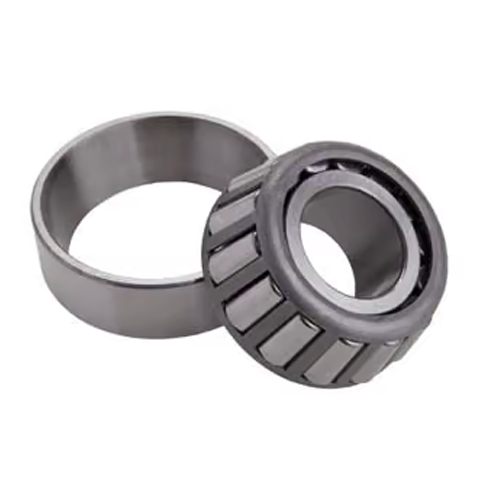
NTN NTN 4T-30204 Single Row Tapered Roller Bearing, D=20mm
NTN 4T-30204 Single Row Tapered Roller Bearing (Inside Dia - 20mm, Outside Dia - 47mm) SPECIFICATIONS Type of Product : Single Row Tapered Roller Bearing Inside Diameter (d) (mm) : 20 Outside Diameter D (mm) : 47 Width Dia mm : 14 Model No : 4T-30204 1. Types, design features, and characteristics Tapered roller bearings are designed so the tapered vertex of the raceway surfaces of the inner and outer rings and rollers converge at one point on the centerline of the bearing (see Fig. 1).The tapered rollers are guided by the compound force of the inner and outer raceway surfaces which keep the rollers pressed up against the large rib on the inner ring.A large variety of these bearings, including single, double, and four row arrangements, are available in both metric and inch series. Each type and associated characteristics are shown in Table 1. For four-row tapered roller bearings, see section “C. Special application bearings.” Table 1 Tapered roller bearing types and characteristics Type Characteristics Single row taperedroller bearings (1) There are both metric and inch series adhering to the standards shown in the following table. Dimension series *Dimension series previously not covered by 3XX are regulated under JIS B 1512; dimensions previously missing from 3XX will henceforth use the bearing number. (2) In addition to the standard design, there are also medium contact angle and large contact angle types, denoted by the contact angle codes at the end of the part numbers (C and D, respectively). (3) Subunits Tapered roller bearings can be disassembled into parts: the inner ring, rollers, and cage (collectively known as the “CONE”) and the outer ring (known as the “CUP”). These are the bearing’s “subunits”. Subunit dimensions are standardized under ISO or ABMA standards, and unified subunits are interchangeable within each dimensional standard. However, high precision grade bearings are generally not interchangeable, and these subunits must be used by assembling only subunits with identical manufacturing numbers.Aside from any cautionary notes that may appear, the single row tapered roller bearings listed in the dimension tables have subunits standardized for both metric and inch systems (including J series). (Refer to Fig. 2) Single row taperedroller bearings (4) These bearings are constructed to have a high capacity for radial loads, axial loads, and combined loads. The larger the contact angle, the greater the axial load capacity. When a pure radial load is applied to a tapered roller bearing, an induced load in the axial direction is also generated, so these bearings are generally used in pairs.(5) Single row tapered roller bearings are separable, so both the inner and outer rings can be used with tight fits. (6) Tapered roller bearings are also manufactured with flanges attached to the outer rings. For more details, contact NTN Engineering. (Refer to Fig. 3) Duplex tapered roller bearings (1) When two single-row tapered roller bearings are to be used in combination, the bearing clearance and preload are adjusted by the inner ring spacer or the outer ring spacer (see Fig. 4).(2) A product number and a combination code are indicated on inner rings, outer rings, and spacers. Parts displaying the same number and code must be used in combination.(3) See A-96 Table 8.14 for the axial internal clearance. Double row taperedroller bearings (1) Back-to-back arrangement (using double row outer rings) and face-to-face arrangement (using double row inner rings) are both available. The assemblies have been adjusted so that each type's internal clearance values are fixed. Only parts with identical manufacturing numbers can be used and they must be assembled according to their code numbers. (Refer to Fig. 5)(2) See A-96 Table 8.14 for the axial internal clearance of double-row and duplex bearings. 2. Standard cage type In general, pressed cages (see Fig. 6) are used in tapered roller bearings. For large sized bearings, machined or pin type cages may also be used, while resin cages may also be used for smaller sized bearings. 3. Allowable misalignment In order to avoid edge loading and potential for premature failure, the maximum allowable misalignment based on bearing series can be found below.The allowable misalignment of combined bearings is influenced by the load center position, so please consult NTN Engineering.• Single row (standard) …………… 1/ 2 000• Single row (ULTAGE) …………… 1/ 600 4. Precautions If bearing load is light during operation, or if the ratio of axial to radial load for duplex and double row bearings exceeds the value of e, slipping may develop between the rollers and raceway surface, sometimes resulting in smearing. The mass of rollers and cages particularly tends to be large for large tapered roller bearings. For additional details, please contact NTN Engineering.In tapered roller bearings, the cage may protrude beyond the inner and/or outer ring side faces. Care should be taken when designing the housing and shaft to ensure contact with the cage does not occur.
$10.51
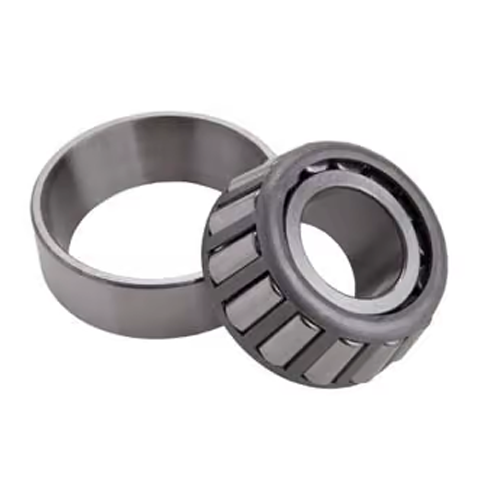
NTN NTN 4T-30207 Single Row Tapered Roller Bearing, D=35mm
NTN 4T-30207 Single Row Tapered Roller Bearing (Inside Dia - 35mm, Outside Dia - 72mm) SPECIFICATIONS Type of Product : Single Row Tapered Roller Bearing Inside Diameter (d) (mm) : 35 Outside Diameter D (mm) : 72 Width Dia mm : 17 Model No : 4T-30207 1. Types, design features, and characteristics Tapered roller bearings are designed so the tapered vertex of the raceway surfaces of the inner and outer rings and rollers converge at one point on the centerline of the bearing (see Fig. 1).The tapered rollers are guided by the compound force of the inner and outer raceway surfaces which keep the rollers pressed up against the large rib on the inner ring.A large variety of these bearings, including single, double, and four row arrangements, are available in both metric and inch series. Each type and associated characteristics are shown in Table 1. For four-row tapered roller bearings, see section “C. Special application bearings.” Table 1 Tapered roller bearing types and characteristics Type Characteristics Single row taperedroller bearings (1) There are both metric and inch series adhering to the standards shown in the following table. Dimension series *Dimension series previously not covered by 3XX are regulated under JIS B 1512; dimensions previously missing from 3XX will henceforth use the bearing number. (2) In addition to the standard design, there are also medium contact angle and large contact angle types, denoted by the contact angle codes at the end of the part numbers (C and D, respectively). (3) Subunits Tapered roller bearings can be disassembled into parts: the inner ring, rollers, and cage (collectively known as the “CONE”) and the outer ring (known as the “CUP”). These are the bearing’s “subunits”. Subunit dimensions are standardized under ISO or ABMA standards, and unified subunits are interchangeable within each dimensional standard. However, high precision grade bearings are generally not interchangeable, and these subunits must be used by assembling only subunits with identical manufacturing numbers.Aside from any cautionary notes that may appear, the single row tapered roller bearings listed in the dimension tables have subunits standardized for both metric and inch systems (including J series). (Refer to Fig. 2) Single row taperedroller bearings (4) These bearings are constructed to have a high capacity for radial loads, axial loads, and combined loads. The larger the contact angle, the greater the axial load capacity. When a pure radial load is applied to a tapered roller bearing, an induced load in the axial direction is also generated, so these bearings are generally used in pairs.(5) Single row tapered roller bearings are separable, so both the inner and outer rings can be used with tight fits. (6) Tapered roller bearings are also manufactured with flanges attached to the outer rings. For more details, contact NTN Engineering. (Refer to Fig. 3) Duplex tapered roller bearings (1) When two single-row tapered roller bearings are to be used in combination, the bearing clearance and preload are adjusted by the inner ring spacer or the outer ring spacer (see Fig. 4).(2) A product number and a combination code are indicated on inner rings, outer rings, and spacers. Parts displaying the same number and code must be used in combination.(3) See A-96 Table 8.14 for the axial internal clearance. Double row taperedroller bearings (1) Back-to-back arrangement (using double row outer rings) and face-to-face arrangement (using double row inner rings) are both available. The assemblies have been adjusted so that each type's internal clearance values are fixed. Only parts with identical manufacturing numbers can be used and they must be assembled according to their code numbers. (Refer to Fig. 5)(2) See A-96 Table 8.14 for the axial internal clearance of double-row and duplex bearings. 2. Standard cage type In general, pressed cages (see Fig. 6) are used in tapered roller bearings. For large sized bearings, machined or pin type cages may also be used, while resin cages may also be used for smaller sized bearings. 3. Allowable misalignment In order to avoid edge loading and potential for premature failure, the maximum allowable misalignment based on bearing series can be found below.The allowable misalignment of combined bearings is influenced by the load center position, so please consult NTN Engineering.• Single row (standard) …………… 1/ 2 000• Single row (ULTAGE) …………… 1/ 600 4. Precautions If bearing load is light during operation, or if the ratio of axial to radial load for duplex and double row bearings exceeds the value of e, slipping may develop between the rollers and raceway surface, sometimes resulting in smearing. The mass of rollers and cages particularly tends to be large for large tapered roller bearings. For additional details, please contact NTN Engineering.In tapered roller bearings, the cage may protrude beyond the inner and/or outer ring side faces. Care should be taken when designing the housing and shaft to ensure contact with the cage does not occur.
$15.71
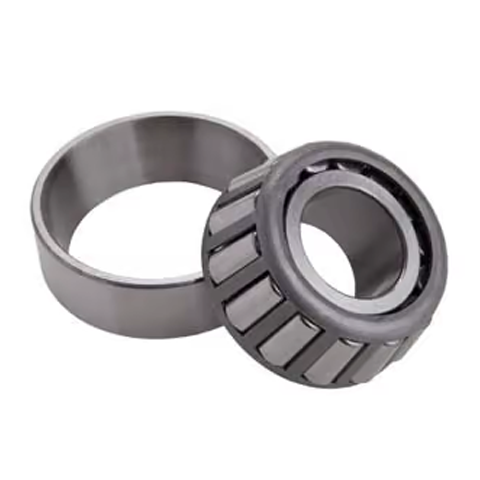
NTN NTN 4T-30209 Single Row Tapered Roller Bearing, D=45mm
NTN 4T-30209 Single Row Tapered Roller Bearing (Inside Dia - 45mm, Outside Dia - 85mm) SPECIFICATIONS Type of Product : Single Row Tapered Roller Bearing Inside Diameter (d) (mm) : 45 Outside Diameter D (mm) : 85 Width Dia mm : 19 Model No : 4T-30209 1. Types, design features, and characteristics Tapered roller bearings are designed so the tapered vertex of the raceway surfaces of the inner and outer rings and rollers converge at one point on the centerline of the bearing (see Fig. 1).The tapered rollers are guided by the compound force of the inner and outer raceway surfaces which keep the rollers pressed up against the large rib on the inner ring.A large variety of these bearings, including single, double, and four row arrangements, are available in both metric and inch series. Each type and associated characteristics are shown in Table 1. For four-row tapered roller bearings, see section “C. Special application bearings.” Table 1 Tapered roller bearing types and characteristics Type Characteristics Single row taperedroller bearings (1) There are both metric and inch series adhering to the standards shown in the following table. Dimension series *Dimension series previously not covered by 3XX are regulated under JIS B 1512; dimensions previously missing from 3XX will henceforth use the bearing number. (2) In addition to the standard design, there are also medium contact angle and large contact angle types, denoted by the contact angle codes at the end of the part numbers (C and D, respectively). (3) Subunits Tapered roller bearings can be disassembled into parts: the inner ring, rollers, and cage (collectively known as the “CONE”) and the outer ring (known as the “CUP”). These are the bearing’s “subunits”. Subunit dimensions are standardized under ISO or ABMA standards, and unified subunits are interchangeable within each dimensional standard. However, high precision grade bearings are generally not interchangeable, and these subunits must be used by assembling only subunits with identical manufacturing numbers.Aside from any cautionary notes that may appear, the single row tapered roller bearings listed in the dimension tables have subunits standardized for both metric and inch systems (including J series). (Refer to Fig. 2) Single row taperedroller bearings (4) These bearings are constructed to have a high capacity for radial loads, axial loads, and combined loads. The larger the contact angle, the greater the axial load capacity. When a pure radial load is applied to a tapered roller bearing, an induced load in the axial direction is also generated, so these bearings are generally used in pairs.(5) Single row tapered roller bearings are separable, so both the inner and outer rings can be used with tight fits. (6) Tapered roller bearings are also manufactured with flanges attached to the outer rings. For more details, contact NTN Engineering. (Refer to Fig. 3) Duplex tapered roller bearings (1) When two single-row tapered roller bearings are to be used in combination, the bearing clearance and preload are adjusted by the inner ring spacer or the outer ring spacer (see Fig. 4).(2) A product number and a combination code are indicated on inner rings, outer rings, and spacers. Parts displaying the same number and code must be used in combination.(3) See A-96 Table 8.14 for the axial internal clearance. Double row taperedroller bearings (1) Back-to-back arrangement (using double row outer rings) and face-to-face arrangement (using double row inner rings) are both available. The assemblies have been adjusted so that each type's internal clearance values are fixed. Only parts with identical manufacturing numbers can be used and they must be assembled according to their code numbers. (Refer to Fig. 5)(2) See A-96 Table 8.14 for the axial internal clearance of double-row and duplex bearings. 2. Standard cage type In general, pressed cages (see Fig. 6) are used in tapered roller bearings. For large sized bearings, machined or pin type cages may also be used, while resin cages may also be used for smaller sized bearings. 3. Allowable misalignment In order to avoid edge loading and potential for premature failure, the maximum allowable misalignment based on bearing series can be found below.The allowable misalignment of combined bearings is influenced by the load center position, so please consult NTN Engineering.• Single row (standard) …………… 1/ 2 000• Single row (ULTAGE) …………… 1/ 600 4. Precautions If bearing load is light during operation, or if the ratio of axial to radial load for duplex and double row bearings exceeds the value of e, slipping may develop between the rollers and raceway surface, sometimes resulting in smearing. The mass of rollers and cages particularly tends to be large for large tapered roller bearings. For additional details, please contact NTN Engineering.In tapered roller bearings, the cage may protrude beyond the inner and/or outer ring side faces. Care should be taken when designing the housing and shaft to ensure contact with the cage does not occur.
$20.77
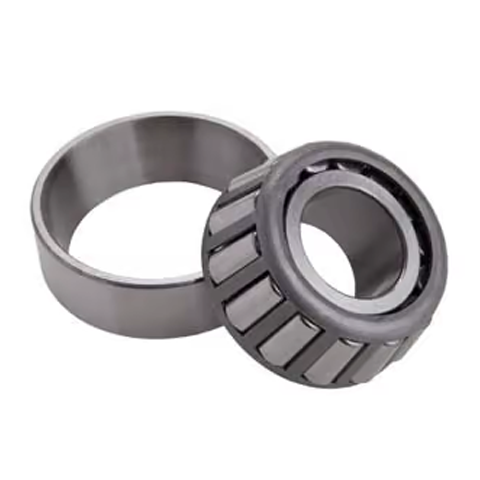
NTN NTN 4T-30210 Single Row Tapered Roller Bearing, D=50mm
NTN 4T-30210 Single Row Tapered Roller Bearing (Inside Dia - 50mm, Outside Dia - 90mm) SPECIFICATIONS Type of Product : Single Row Tapered Roller Bearing Inside Diameter (d) (mm) : 50 Outside Diameter D (mm) : 90 Width Dia mm : 20 Model No : 4T-30210 1. Types, design features, and characteristics Tapered roller bearings are designed so the tapered vertex of the raceway surfaces of the inner and outer rings and rollers converge at one point on the centerline of the bearing (see Fig. 1).The tapered rollers are guided by the compound force of the inner and outer raceway surfaces which keep the rollers pressed up against the large rib on the inner ring.A large variety of these bearings, including single, double, and four row arrangements, are available in both metric and inch series. Each type and associated characteristics are shown in Table 1. For four-row tapered roller bearings, see section “C. Special application bearings.” Table 1 Tapered roller bearing types and characteristics Type Characteristics Single row taperedroller bearings (1) There are both metric and inch series adhering to the standards shown in the following table. Dimension series *Dimension series previously not covered by 3XX are regulated under JIS B 1512; dimensions previously missing from 3XX will henceforth use the bearing number. (2) In addition to the standard design, there are also medium contact angle and large contact angle types, denoted by the contact angle codes at the end of the part numbers (C and D, respectively). (3) Subunits Tapered roller bearings can be disassembled into parts: the inner ring, rollers, and cage (collectively known as the “CONE”) and the outer ring (known as the “CUP”). These are the bearing’s “subunits”. Subunit dimensions are standardized under ISO or ABMA standards, and unified subunits are interchangeable within each dimensional standard. However, high precision grade bearings are generally not interchangeable, and these subunits must be used by assembling only subunits with identical manufacturing numbers.Aside from any cautionary notes that may appear, the single row tapered roller bearings listed in the dimension tables have subunits standardized for both metric and inch systems (including J series). (Refer to Fig. 2) Single row taperedroller bearings (4) These bearings are constructed to have a high capacity for radial loads, axial loads, and combined loads. The larger the contact angle, the greater the axial load capacity. When a pure radial load is applied to a tapered roller bearing, an induced load in the axial direction is also generated, so these bearings are generally used in pairs.(5) Single row tapered roller bearings are separable, so both the inner and outer rings can be used with tight fits. (6) Tapered roller bearings are also manufactured with flanges attached to the outer rings. For more details, contact NTN Engineering. (Refer to Fig. 3) Duplex tapered roller bearings (1) When two single-row tapered roller bearings are to be used in combination, the bearing clearance and preload are adjusted by the inner ring spacer or the outer ring spacer (see Fig. 4).(2) A product number and a combination code are indicated on inner rings, outer rings, and spacers. Parts displaying the same number and code must be used in combination.(3) See A-96 Table 8.14 for the axial internal clearance. Double row taperedroller bearings (1) Back-to-back arrangement (using double row outer rings) and face-to-face arrangement (using double row inner rings) are both available. The assemblies have been adjusted so that each type's internal clearance values are fixed. Only parts with identical manufacturing numbers can be used and they must be assembled according to their code numbers. (Refer to Fig. 5)(2) See A-96 Table 8.14 for the axial internal clearance of double-row and duplex bearings. 2. Standard cage type In general, pressed cages (see Fig. 6) are used in tapered roller bearings. For large sized bearings, machined or pin type cages may also be used, while resin cages may also be used for smaller sized bearings. 3. Allowable misalignment In order to avoid edge loading and potential for premature failure, the maximum allowable misalignment based on bearing series can be found below.The allowable misalignment of combined bearings is influenced by the load center position, so please consult NTN Engineering.• Single row (standard) …………… 1/ 2 000• Single row (ULTAGE) …………… 1/ 600 4. Precautions If bearing load is light during operation, or if the ratio of axial to radial load for duplex and double row bearings exceeds the value of e, slipping may develop between the rollers and raceway surface, sometimes resulting in smearing. The mass of rollers and cages particularly tends to be large for large tapered roller bearings. For additional details, please contact NTN Engineering.In tapered roller bearings, the cage may protrude beyond the inner and/or outer ring side faces. Care should be taken when designing the housing and shaft to ensure contact with the cage does not occur.
$21.94
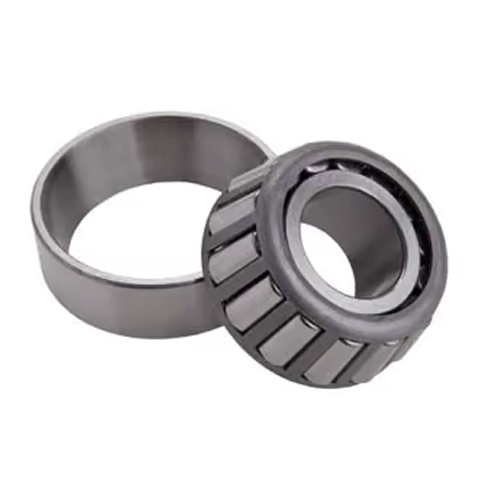
NTN NTN 4T-30211 Single Row Tapered Roller Bearing, D=55mm
NTN 4T-30211 Single Row Tapered Roller Bearing (Inside Dia - 55mm, Outside Dia - 100mm) SPECIFICATIONS Type of Product : Single Row Tapered Roller Bearing Inside Diameter (d) (mm) : 55 Outside Diameter D (mm) : 100 Width Dia mm : 21 Model No : 4T-30211 1. Types, design features, and characteristics Tapered roller bearings are designed so the tapered vertex of the raceway surfaces of the inner and outer rings and rollers converge at one point on the centerline of the bearing (see Fig. 1).The tapered rollers are guided by the compound force of the inner and outer raceway surfaces which keep the rollers pressed up against the large rib on the inner ring.A large variety of these bearings, including single, double, and four row arrangements, are available in both metric and inch series. Each type and associated characteristics are shown in Table 1. For four-row tapered roller bearings, see section “C. Special application bearings.” Table 1 Tapered roller bearing types and characteristics Type Characteristics Single row taperedroller bearings (1) There are both metric and inch series adhering to the standards shown in the following table. Dimension series *Dimension series previously not covered by 3XX are regulated under JIS B 1512; dimensions previously missing from 3XX will henceforth use the bearing number. (2) In addition to the standard design, there are also medium contact angle and large contact angle types, denoted by the contact angle codes at the end of the part numbers (C and D, respectively). (3) Subunits Tapered roller bearings can be disassembled into parts: the inner ring, rollers, and cage (collectively known as the “CONE”) and the outer ring (known as the “CUP”). These are the bearing’s “subunits”. Subunit dimensions are standardized under ISO or ABMA standards, and unified subunits are interchangeable within each dimensional standard. However, high precision grade bearings are generally not interchangeable, and these subunits must be used by assembling only subunits with identical manufacturing numbers.Aside from any cautionary notes that may appear, the single row tapered roller bearings listed in the dimension tables have subunits standardized for both metric and inch systems (including J series). (Refer to Fig. 2) Single row taperedroller bearings (4) These bearings are constructed to have a high capacity for radial loads, axial loads, and combined loads. The larger the contact angle, the greater the axial load capacity. When a pure radial load is applied to a tapered roller bearing, an induced load in the axial direction is also generated, so these bearings are generally used in pairs.(5) Single row tapered roller bearings are separable, so both the inner and outer rings can be used with tight fits. (6) Tapered roller bearings are also manufactured with flanges attached to the outer rings. For more details, contact NTN Engineering. (Refer to Fig. 3) Duplex tapered roller bearings (1) When two single-row tapered roller bearings are to be used in combination, the bearing clearance and preload are adjusted by the inner ring spacer or the outer ring spacer (see Fig. 4).(2) A product number and a combination code are indicated on inner rings, outer rings, and spacers. Parts displaying the same number and code must be used in combination.(3) See A-96 Table 8.14 for the axial internal clearance. Double row taperedroller bearings (1) Back-to-back arrangement (using double row outer rings) and face-to-face arrangement (using double row inner rings) are both available. The assemblies have been adjusted so that each type's internal clearance values are fixed. Only parts with identical manufacturing numbers can be used and they must be assembled according to their code numbers. (Refer to Fig. 5)(2) See A-96 Table 8.14 for the axial internal clearance of double-row and duplex bearings. 2. Standard cage type In general, pressed cages (see Fig. 6) are used in tapered roller bearings. For large sized bearings, machined or pin type cages may also be used, while resin cages may also be used for smaller sized bearings. 3. Allowable misalignment In order to avoid edge loading and potential for premature failure, the maximum allowable misalignment based on bearing series can be found below.The allowable misalignment of combined bearings is influenced by the load center position, so please consult NTN Engineering.• Single row (standard) …………… 1/ 2 000• Single row (ULTAGE) …………… 1/ 600 4. Precautions If bearing load is light during operation, or if the ratio of axial to radial load for duplex and double row bearings exceeds the value of e, slipping may develop between the rollers and raceway surface, sometimes resulting in smearing. The mass of rollers and cages particularly tends to be large for large tapered roller bearings. For additional details, please contact NTN Engineering.In tapered roller bearings, the cage may protrude beyond the inner and/or outer ring side faces. Care should be taken when designing the housing and shaft to ensure contact with the cage does not occur.
$26.93
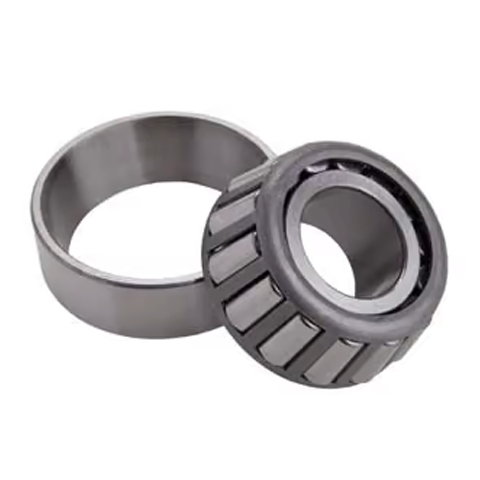
NTN NTN 4T-30214 Single Row Tapered Roller Bearing, D=70mm
NTN 4T-30214 Single Row Tapered Roller Bearing (Inside Dia - 70mm, Outside Dia - 125mm) SPECIFICATIONS Type of Product : Single Row Tapered Roller Bearing Inside Diameter (d) (mm) : 70 Outside Diameter D (mm) : 125 Width Dia mm : 28.1 Model No : 4T-30214 1. Types, design features, and characteristics Tapered roller bearings are designed so the tapered vertex of the raceway surfaces of the inner and outer rings and rollers converge at one point on the centerline of the bearing (see Fig. 1).The tapered rollers are guided by the compound force of the inner and outer raceway surfaces which keep the rollers pressed up against the large rib on the inner ring.A large variety of these bearings, including single, double, and four row arrangements, are available in both metric and inch series. Each type and associated characteristics are shown in Table 1. For four-row tapered roller bearings, see section “C. Special application bearings.” Table 1 Tapered roller bearing types and characteristics Type Characteristics Single row taperedroller bearings (1) There are both metric and inch series adhering to the standards shown in the following table. Dimension series *Dimension series previously not covered by 3XX are regulated under JIS B 1512; dimensions previously missing from 3XX will henceforth use the bearing number. (2) In addition to the standard design, there are also medium contact angle and large contact angle types, denoted by the contact angle codes at the end of the part numbers (C and D, respectively). (3) Subunits Tapered roller bearings can be disassembled into parts: the inner ring, rollers, and cage (collectively known as the “CONE”) and the outer ring (known as the “CUP”). These are the bearing’s “subunits”. Subunit dimensions are standardized under ISO or ABMA standards, and unified subunits are interchangeable within each dimensional standard. However, high precision grade bearings are generally not interchangeable, and these subunits must be used by assembling only subunits with identical manufacturing numbers.Aside from any cautionary notes that may appear, the single row tapered roller bearings listed in the dimension tables have subunits standardized for both metric and inch systems (including J series). (Refer to Fig. 2) Single row taperedroller bearings (4) These bearings are constructed to have a high capacity for radial loads, axial loads, and combined loads. The larger the contact angle, the greater the axial load capacity. When a pure radial load is applied to a tapered roller bearing, an induced load in the axial direction is also generated, so these bearings are generally used in pairs.(5) Single row tapered roller bearings are separable, so both the inner and outer rings can be used with tight fits. (6) Tapered roller bearings are also manufactured with flanges attached to the outer rings. For more details, contact NTN Engineering. (Refer to Fig. 3) Duplex tapered roller bearings (1) When two single-row tapered roller bearings are to be used in combination, the bearing clearance and preload are adjusted by the inner ring spacer or the outer ring spacer (see Fig. 4).(2) A product number and a combination code are indicated on inner rings, outer rings, and spacers. Parts displaying the same number and code must be used in combination.(3) See A-96 Table 8.14 for the axial internal clearance. Double row taperedroller bearings (1) Back-to-back arrangement (using double row outer rings) and face-to-face arrangement (using double row inner rings) are both available. The assemblies have been adjusted so that each type's internal clearance values are fixed. Only parts with identical manufacturing numbers can be used and they must be assembled according to their code numbers. (Refer to Fig. 5)(2) See A-96 Table 8.14 for the axial internal clearance of double-row and duplex bearings. 2. Standard cage type In general, pressed cages (see Fig. 6) are used in tapered roller bearings. For large sized bearings, machined or pin type cages may also be used, while resin cages may also be used for smaller sized bearings. 3. Allowable misalignment In order to avoid edge loading and potential for premature failure, the maximum allowable misalignment based on bearing series can be found below.The allowable misalignment of combined bearings is influenced by the load center position, so please consult NTN Engineering.• Single row (standard) …………… 1/ 2 000• Single row (ULTAGE) …………… 1/ 600 4. Precautions If bearing load is light during operation, or if the ratio of axial to radial load for duplex and double row bearings exceeds the value of e, slipping may develop between the rollers and raceway surface, sometimes resulting in smearing. The mass of rollers and cages particularly tends to be large for large tapered roller bearings. For additional details, please contact NTN Engineering.In tapered roller bearings, the cage may protrude beyond the inner and/or outer ring side faces. Care should be taken when designing the housing and shaft to ensure contact with the cage does not occur.
$44.78
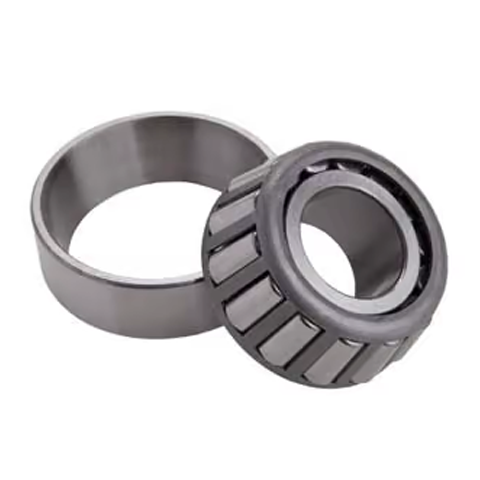
NTN NTN 4T-30215 Single Row Tapered Roller Bearing, D=75mm
NTN 4T-30215 Single Row Tapered Roller Bearing (Inside Dia - 75mm, Outside Dia - 130mm) SPECIFICATIONS Type of Product : Single Row Tapered Roller Bearing Inside Diameter (d) (mm) : 75 Outside Diameter D (mm) : 130 Width Dia mm : 25 Model No : 4T-30215 1. Types, design features, and characteristics Tapered roller bearings are designed so the tapered vertex of the raceway surfaces of the inner and outer rings and rollers converge at one point on the centerline of the bearing (see Fig. 1).The tapered rollers are guided by the compound force of the inner and outer raceway surfaces which keep the rollers pressed up against the large rib on the inner ring.A large variety of these bearings, including single, double, and four row arrangements, are available in both metric and inch series. Each type and associated characteristics are shown in Table 1. For four-row tapered roller bearings, see section “C. Special application bearings.” Table 1 Tapered roller bearing types and characteristics Type Characteristics Single row taperedroller bearings (1) There are both metric and inch series adhering to the standards shown in the following table. Dimension series *Dimension series previously not covered by 3XX are regulated under JIS B 1512; dimensions previously missing from 3XX will henceforth use the bearing number. (2) In addition to the standard design, there are also medium contact angle and large contact angle types, denoted by the contact angle codes at the end of the part numbers (C and D, respectively). (3) Subunits Tapered roller bearings can be disassembled into parts: the inner ring, rollers, and cage (collectively known as the “CONE”) and the outer ring (known as the “CUP”). These are the bearing’s “subunits”. Subunit dimensions are standardized under ISO or ABMA standards, and unified subunits are interchangeable within each dimensional standard. However, high precision grade bearings are generally not interchangeable, and these subunits must be used by assembling only subunits with identical manufacturing numbers.Aside from any cautionary notes that may appear, the single row tapered roller bearings listed in the dimension tables have subunits standardized for both metric and inch systems (including J series). (Refer to Fig. 2) Single row taperedroller bearings (4) These bearings are constructed to have a high capacity for radial loads, axial loads, and combined loads. The larger the contact angle, the greater the axial load capacity. When a pure radial load is applied to a tapered roller bearing, an induced load in the axial direction is also generated, so these bearings are generally used in pairs.(5) Single row tapered roller bearings are separable, so both the inner and outer rings can be used with tight fits. (6) Tapered roller bearings are also manufactured with flanges attached to the outer rings. For more details, contact NTN Engineering. (Refer to Fig. 3) Duplex tapered roller bearings (1) When two single-row tapered roller bearings are to be used in combination, the bearing clearance and preload are adjusted by the inner ring spacer or the outer ring spacer (see Fig. 4).(2) A product number and a combination code are indicated on inner rings, outer rings, and spacers. Parts displaying the same number and code must be used in combination.(3) See A-96 Table 8.14 for the axial internal clearance. Double row taperedroller bearings (1) Back-to-back arrangement (using double row outer rings) and face-to-face arrangement (using double row inner rings) are both available. The assemblies have been adjusted so that each type's internal clearance values are fixed. Only parts with identical manufacturing numbers can be used and they must be assembled according to their code numbers. (Refer to Fig. 5)(2) See A-96 Table 8.14 for the axial internal clearance of double-row and duplex bearings. 2. Standard cage type In general, pressed cages (see Fig. 6) are used in tapered roller bearings. For large sized bearings, machined or pin type cages may also be used, while resin cages may also be used for smaller sized bearings. 3. Allowable misalignment In order to avoid edge loading and potential for premature failure, the maximum allowable misalignment based on bearing series can be found below.The allowable misalignment of combined bearings is influenced by the load center position, so please consult NTN Engineering.• Single row (standard) …………… 1/ 2 000• Single row (ULTAGE) …………… 1/ 600 4. Precautions If bearing load is light during operation, or if the ratio of axial to radial load for duplex and double row bearings exceeds the value of e, slipping may develop between the rollers and raceway surface, sometimes resulting in smearing. The mass of rollers and cages particularly tends to be large for large tapered roller bearings. For additional details, please contact NTN Engineering.In tapered roller bearings, the cage may protrude beyond the inner and/or outer ring side faces. Care should be taken when designing the housing and shaft to ensure contact with the cage does not occur.
$42.71
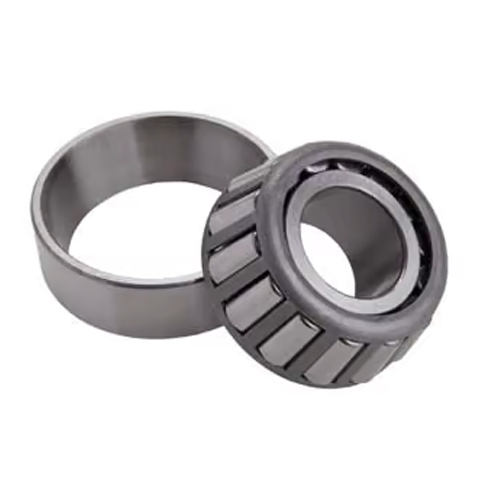
NTN NTN 4T-30302 Single Row Tapered Roller Bearing, D=15mm
NTN 4T-30302 Single Row Tapered Roller Bearing (Inside Dia - 15mm, Outside Dia - 42mm) SPECIFICATIONS Type of Product : Single Row Tapered Roller Bearing Inside Diameter (d) (mm) : 15 Outside Diameter D (mm) : 42 Width Dia mm : 13 Model No : 4T-30302 1. Types, design features, and characteristics Tapered roller bearings are designed so the tapered vertex of the raceway surfaces of the inner and outer rings and rollers converge at one point on the centerline of the bearing (see Fig. 1).The tapered rollers are guided by the compound force of the inner and outer raceway surfaces which keep the rollers pressed up against the large rib on the inner ring.A large variety of these bearings, including single, double, and four row arrangements, are available in both metric and inch series. Each type and associated characteristics are shown in Table 1. For four-row tapered roller bearings, see section “C. Special application bearings.” Table 1 Tapered roller bearing types and characteristics Type Characteristics Single row taperedroller bearings (1) There are both metric and inch series adhering to the standards shown in the following table. Dimension series *Dimension series previously not covered by 3XX are regulated under JIS B 1512; dimensions previously missing from 3XX will henceforth use the bearing number. (2) In addition to the standard design, there are also medium contact angle and large contact angle types, denoted by the contact angle codes at the end of the part numbers (C and D, respectively). (3) Subunits Tapered roller bearings can be disassembled into parts: the inner ring, rollers, and cage (collectively known as the “CONE”) and the outer ring (known as the “CUP”). These are the bearing’s “subunits”. Subunit dimensions are standardized under ISO or ABMA standards, and unified subunits are interchangeable within each dimensional standard. However, high precision grade bearings are generally not interchangeable, and these subunits must be used by assembling only subunits with identical manufacturing numbers.Aside from any cautionary notes that may appear, the single row tapered roller bearings listed in the dimension tables have subunits standardized for both metric and inch systems (including J series). (Refer to Fig. 2) Single row taperedroller bearings (4) These bearings are constructed to have a high capacity for radial loads, axial loads, and combined loads. The larger the contact angle, the greater the axial load capacity. When a pure radial load is applied to a tapered roller bearing, an induced load in the axial direction is also generated, so these bearings are generally used in pairs.(5) Single row tapered roller bearings are separable, so both the inner and outer rings can be used with tight fits. (6) Tapered roller bearings are also manufactured with flanges attached to the outer rings. For more details, contact NTN Engineering. (Refer to Fig. 3) Duplex tapered roller bearings (1) When two single-row tapered roller bearings are to be used in combination, the bearing clearance and preload are adjusted by the inner ring spacer or the outer ring spacer (see Fig. 4).(2) A product number and a combination code are indicated on inner rings, outer rings, and spacers. Parts displaying the same number and code must be used in combination.(3) See A-96 Table 8.14 for the axial internal clearance. Double row taperedroller bearings (1) Back-to-back arrangement (using double row outer rings) and face-to-face arrangement (using double row inner rings) are both available. The assemblies have been adjusted so that each type's internal clearance values are fixed. Only parts with identical manufacturing numbers can be used and they must be assembled according to their code numbers. (Refer to Fig. 5)(2) See A-96 Table 8.14 for the axial internal clearance of double-row and duplex bearings. 2. Standard cage type In general, pressed cages (see Fig. 6) are used in tapered roller bearings. For large sized bearings, machined or pin type cages may also be used, while resin cages may also be used for smaller sized bearings. 3. Allowable misalignment In order to avoid edge loading and potential for premature failure, the maximum allowable misalignment based on bearing series can be found below.The allowable misalignment of combined bearings is influenced by the load center position, so please consult NTN Engineering.• Single row (standard) …………… 1/ 2 000• Single row (ULTAGE) …………… 1/ 600 4. Precautions If bearing load is light during operation, or if the ratio of axial to radial load for duplex and double row bearings exceeds the value of e, slipping may develop between the rollers and raceway surface, sometimes resulting in smearing. The mass of rollers and cages particularly tends to be large for large tapered roller bearings. For additional details, please contact NTN Engineering.In tapered roller bearings, the cage may protrude beyond the inner and/or outer ring side faces. Care should be taken when designing the housing and shaft to ensure contact with the cage does not occur.
$7.74
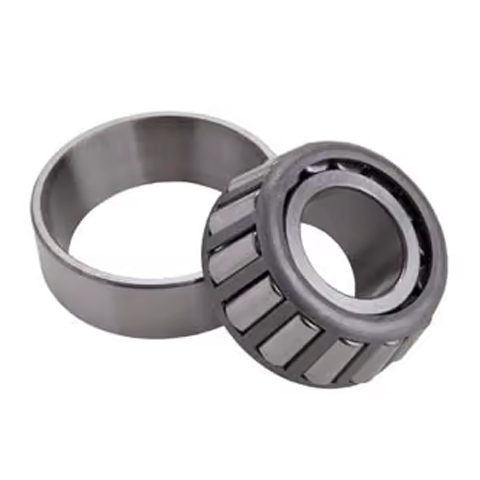
NTN NTN 4T-30303 Single Row Tapered Roller Bearing, D=17mm
NTN 4T-30303 Single Row Tapered Roller Bearing (Inside Dia - 17mm, Outside Dia - 47mm) SPECIFICATIONS Type of Product : Single Row Tapered Roller Bearing Inside Diameter (d) (mm) : 17 Outside Diameter D (mm) : 47 Width Dia mm : 14 Model No : 4T-30303 1. Types, design features, and characteristics Tapered roller bearings are designed so the tapered vertex of the raceway surfaces of the inner and outer rings and rollers converge at one point on the centerline of the bearing (see Fig. 1).The tapered rollers are guided by the compound force of the inner and outer raceway surfaces which keep the rollers pressed up against the large rib on the inner ring.A large variety of these bearings, including single, double, and four row arrangements, are available in both metric and inch series. Each type and associated characteristics are shown in Table 1. For four-row tapered roller bearings, see section “C. Special application bearings.” Table 1 Tapered roller bearing types and characteristics Type Characteristics Single row taperedroller bearings (1) There are both metric and inch series adhering to the standards shown in the following table. Dimension series *Dimension series previously not covered by 3XX are regulated under JIS B 1512; dimensions previously missing from 3XX will henceforth use the bearing number. (2) In addition to the standard design, there are also medium contact angle and large contact angle types, denoted by the contact angle codes at the end of the part numbers (C and D, respectively). (3) Subunits Tapered roller bearings can be disassembled into parts: the inner ring, rollers, and cage (collectively known as the “CONE”) and the outer ring (known as the “CUP”). These are the bearing’s “subunits”. Subunit dimensions are standardized under ISO or ABMA standards, and unified subunits are interchangeable within each dimensional standard. However, high precision grade bearings are generally not interchangeable, and these subunits must be used by assembling only subunits with identical manufacturing numbers.Aside from any cautionary notes that may appear, the single row tapered roller bearings listed in the dimension tables have subunits standardized for both metric and inch systems (including J series). (Refer to Fig. 2) Single row taperedroller bearings (4) These bearings are constructed to have a high capacity for radial loads, axial loads, and combined loads. The larger the contact angle, the greater the axial load capacity. When a pure radial load is applied to a tapered roller bearing, an induced load in the axial direction is also generated, so these bearings are generally used in pairs.(5) Single row tapered roller bearings are separable, so both the inner and outer rings can be used with tight fits. (6) Tapered roller bearings are also manufactured with flanges attached to the outer rings. For more details, contact NTN Engineering. (Refer to Fig. 3) Duplex tapered roller bearings (1) When two single-row tapered roller bearings are to be used in combination, the bearing clearance and preload are adjusted by the inner ring spacer or the outer ring spacer (see Fig. 4).(2) A product number and a combination code are indicated on inner rings, outer rings, and spacers. Parts displaying the same number and code must be used in combination.(3) See A-96 Table 8.14 for the axial internal clearance. Double row taperedroller bearings (1) Back-to-back arrangement (using double row outer rings) and face-to-face arrangement (using double row inner rings) are both available. The assemblies have been adjusted so that each type's internal clearance values are fixed. Only parts with identical manufacturing numbers can be used and they must be assembled according to their code numbers. (Refer to Fig. 5)(2) See A-96 Table 8.14 for the axial internal clearance of double-row and duplex bearings. 2. Standard cage type In general, pressed cages (see Fig. 6) are used in tapered roller bearings. For large sized bearings, machined or pin type cages may also be used, while resin cages may also be used for smaller sized bearings. 3. Allowable misalignment In order to avoid edge loading and potential for premature failure, the maximum allowable misalignment based on bearing series can be found below.The allowable misalignment of combined bearings is influenced by the load center position, so please consult NTN Engineering.• Single row (standard) …………… 1/ 2 000• Single row (ULTAGE) …………… 1/ 600 4. Precautions If bearing load is light during operation, or if the ratio of axial to radial load for duplex and double row bearings exceeds the value of e, slipping may develop between the rollers and raceway surface, sometimes resulting in smearing. The mass of rollers and cages particularly tends to be large for large tapered roller bearings. For additional details, please contact NTN Engineering.In tapered roller bearings, the cage may protrude beyond the inner and/or outer ring side faces. Care should be taken when designing the housing and shaft to ensure contact with the cage does not occur.
$7.98
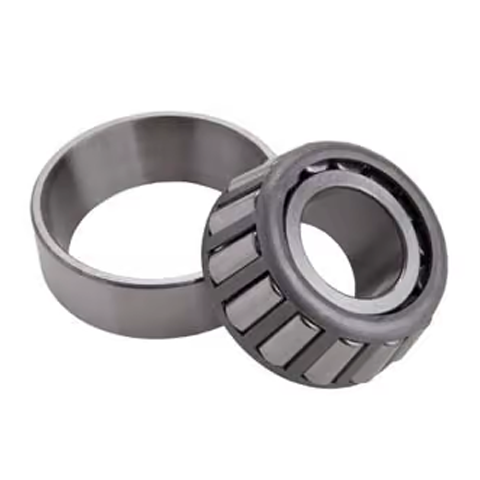
NTN NTN 4T-30304 Single Row Tapered Roller Bearing, D=20mm
NTN 4T-30304 Single Row Tapered Roller Bearing (Inside Dia - 20mm, Outside Dia - 52mm) SPECIFICATIONS Type of Product : Single Row Tapered Roller Bearing Inside Diameter (d) (mm) : 20 Outside Diameter D (mm) : 52 Width Dia mm : 16 Model No : 4T-30304 1. Types, design features, and characteristics Tapered roller bearings are designed so the tapered vertex of the raceway surfaces of the inner and outer rings and rollers converge at one point on the centerline of the bearing (see Fig. 1).The tapered rollers are guided by the compound force of the inner and outer raceway surfaces which keep the rollers pressed up against the large rib on the inner ring.A large variety of these bearings, including single, double, and four row arrangements, are available in both metric and inch series. Each type and associated characteristics are shown in Table 1. For four-row tapered roller bearings, see section “C. Special application bearings.” Table 1 Tapered roller bearing types and characteristics Type Characteristics Single row taperedroller bearings (1) There are both metric and inch series adhering to the standards shown in the following table. Dimension series *Dimension series previously not covered by 3XX are regulated under JIS B 1512; dimensions previously missing from 3XX will henceforth use the bearing number. (2) In addition to the standard design, there are also medium contact angle and large contact angle types, denoted by the contact angle codes at the end of the part numbers (C and D, respectively). (3) Subunits Tapered roller bearings can be disassembled into parts: the inner ring, rollers, and cage (collectively known as the “CONE”) and the outer ring (known as the “CUP”). These are the bearing’s “subunits”. Subunit dimensions are standardized under ISO or ABMA standards, and unified subunits are interchangeable within each dimensional standard. However, high precision grade bearings are generally not interchangeable, and these subunits must be used by assembling only subunits with identical manufacturing numbers.Aside from any cautionary notes that may appear, the single row tapered roller bearings listed in the dimension tables have subunits standardized for both metric and inch systems (including J series). (Refer to Fig. 2) Single row taperedroller bearings (4) These bearings are constructed to have a high capacity for radial loads, axial loads, and combined loads. The larger the contact angle, the greater the axial load capacity. When a pure radial load is applied to a tapered roller bearing, an induced load in the axial direction is also generated, so these bearings are generally used in pairs.(5) Single row tapered roller bearings are separable, so both the inner and outer rings can be used with tight fits. (6) Tapered roller bearings are also manufactured with flanges attached to the outer rings. For more details, contact NTN Engineering. (Refer to Fig. 3) Duplex tapered roller bearings (1) When two single-row tapered roller bearings are to be used in combination, the bearing clearance and preload are adjusted by the inner ring spacer or the outer ring spacer (see Fig. 4).(2) A product number and a combination code are indicated on inner rings, outer rings, and spacers. Parts displaying the same number and code must be used in combination.(3) See A-96 Table 8.14 for the axial internal clearance. Double row taperedroller bearings (1) Back-to-back arrangement (using double row outer rings) and face-to-face arrangement (using double row inner rings) are both available. The assemblies have been adjusted so that each type's internal clearance values are fixed. Only parts with identical manufacturing numbers can be used and they must be assembled according to their code numbers. (Refer to Fig. 5)(2) See A-96 Table 8.14 for the axial internal clearance of double-row and duplex bearings. 2. Standard cage type In general, pressed cages (see Fig. 6) are used in tapered roller bearings. For large sized bearings, machined or pin type cages may also be used, while resin cages may also be used for smaller sized bearings. 3. Allowable misalignment In order to avoid edge loading and potential for premature failure, the maximum allowable misalignment based on bearing series can be found below.The allowable misalignment of combined bearings is influenced by the load center position, so please consult NTN Engineering.• Single row (standard) …………… 1/ 2 000• Single row (ULTAGE) …………… 1/ 600 4. Precautions If bearing load is light during operation, or if the ratio of axial to radial load for duplex and double row bearings exceeds the value of e, slipping may develop between the rollers and raceway surface, sometimes resulting in smearing. The mass of rollers and cages particularly tends to be large for large tapered roller bearings. For additional details, please contact NTN Engineering.In tapered roller bearings, the cage may protrude beyond the inner and/or outer ring side faces. Care should be taken when designing the housing and shaft to ensure contact with the cage does not occur.
$9.22
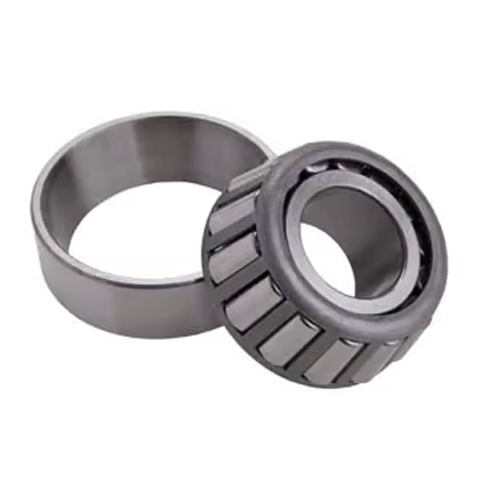
NTN NTN 4T-30305 Single Row Tapered Roller Bearing, D=25mm
NTN 4T-30305 Single Row Tapered Roller Bearing (Inside Dia - 25mm, Outside Dia - 62mm) SPECIFICATIONS Type of Product : Single Row Tapered Roller Bearing Inside Diameter (d) (mm) : 25 Outside Diameter D (mm) : 62 Width Dia mm : 17 Model No : 4T-30305 1. Types, design features, and characteristics Tapered roller bearings are designed so the tapered vertex of the raceway surfaces of the inner and outer rings and rollers converge at one point on the centerline of the bearing (see Fig. 1).The tapered rollers are guided by the compound force of the inner and outer raceway surfaces which keep the rollers pressed up against the large rib on the inner ring.A large variety of these bearings, including single, double, and four row arrangements, are available in both metric and inch series. Each type and associated characteristics are shown in Table 1. For four-row tapered roller bearings, see section “C. Special application bearings.” Table 1 Tapered roller bearing types and characteristics Type Characteristics Single row taperedroller bearings (1) There are both metric and inch series adhering to the standards shown in the following table. Dimension series *Dimension series previously not covered by 3XX are regulated under JIS B 1512; dimensions previously missing from 3XX will henceforth use the bearing number. (2) In addition to the standard design, there are also medium contact angle and large contact angle types, denoted by the contact angle codes at the end of the part numbers (C and D, respectively). (3) Subunits Tapered roller bearings can be disassembled into parts: the inner ring, rollers, and cage (collectively known as the “CONE”) and the outer ring (known as the “CUP”). These are the bearing’s “subunits”. Subunit dimensions are standardized under ISO or ABMA standards, and unified subunits are interchangeable within each dimensional standard. However, high precision grade bearings are generally not interchangeable, and these subunits must be used by assembling only subunits with identical manufacturing numbers.Aside from any cautionary notes that may appear, the single row tapered roller bearings listed in the dimension tables have subunits standardized for both metric and inch systems (including J series). (Refer to Fig. 2) Single row taperedroller bearings (4) These bearings are constructed to have a high capacity for radial loads, axial loads, and combined loads. The larger the contact angle, the greater the axial load capacity. When a pure radial load is applied to a tapered roller bearing, an induced load in the axial direction is also generated, so these bearings are generally used in pairs.(5) Single row tapered roller bearings are separable, so both the inner and outer rings can be used with tight fits. (6) Tapered roller bearings are also manufactured with flanges attached to the outer rings. For more details, contact NTN Engineering. (Refer to Fig. 3) Duplex tapered roller bearings (1) When two single-row tapered roller bearings are to be used in combination, the bearing clearance and preload are adjusted by the inner ring spacer or the outer ring spacer (see Fig. 4).(2) A product number and a combination code are indicated on inner rings, outer rings, and spacers. Parts displaying the same number and code must be used in combination.(3) See A-96 Table 8.14 for the axial internal clearance. Double row taperedroller bearings (1) Back-to-back arrangement (using double row outer rings) and face-to-face arrangement (using double row inner rings) are both available. The assemblies have been adjusted so that each type's internal clearance values are fixed. Only parts with identical manufacturing numbers can be used and they must be assembled according to their code numbers. (Refer to Fig. 5)(2) See A-96 Table 8.14 for the axial internal clearance of double-row and duplex bearings. 2. Standard cage type In general, pressed cages (see Fig. 6) are used in tapered roller bearings. For large sized bearings, machined or pin type cages may also be used, while resin cages may also be used for smaller sized bearings. 3. Allowable misalignment In order to avoid edge loading and potential for premature failure, the maximum allowable misalignment based on bearing series can be found below.The allowable misalignment of combined bearings is influenced by the load center position, so please consult NTN Engineering.• Single row (standard) …………… 1/ 2 000• Single row (ULTAGE) …………… 1/ 600 4. Precautions If bearing load is light during operation, or if the ratio of axial to radial load for duplex and double row bearings exceeds the value of e, slipping may develop between the rollers and raceway surface, sometimes resulting in smearing. The mass of rollers and cages particularly tends to be large for large tapered roller bearings. For additional details, please contact NTN Engineering.In tapered roller bearings, the cage may protrude beyond the inner and/or outer ring side faces. Care should be taken when designing the housing and shaft to ensure contact with the cage does not occur.
$14.42
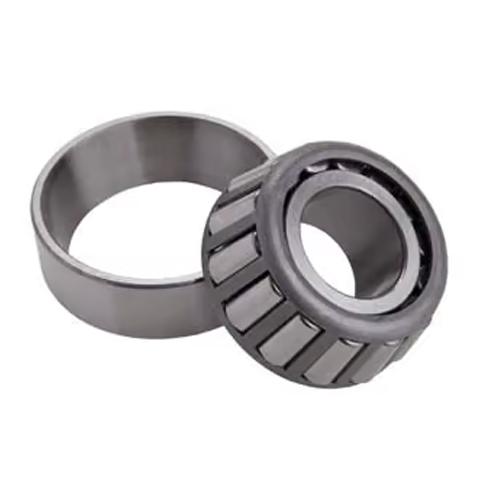
NTN NTN 4T-30306 Single Row Tapered Roller Bearing, D=30mm
NTN 4T-30306 Single Row Tapered Roller Bearing (Inside Dia - 30mm, Outside Dia - 72mm) SPECIFICATIONS Type of Product : Single Row Tapered Roller Bearing Inside Diameter (d) (mm) : 30 Outside Diameter D (mm) : 72 Width Dia mm : 19 Model No : 4T-30306 1. Types, design features, and characteristics Tapered roller bearings are designed so the tapered vertex of the raceway surfaces of the inner and outer rings and rollers converge at one point on the centerline of the bearing (see Fig. 1).The tapered rollers are guided by the compound force of the inner and outer raceway surfaces which keep the rollers pressed up against the large rib on the inner ring.A large variety of these bearings, including single, double, and four row arrangements, are available in both metric and inch series. Each type and associated characteristics are shown in Table 1. For four-row tapered roller bearings, see section “C. Special application bearings.” Table 1 Tapered roller bearing types and characteristics Type Characteristics Single row taperedroller bearings (1) There are both metric and inch series adhering to the standards shown in the following table. Dimension series *Dimension series previously not covered by 3XX are regulated under JIS B 1512; dimensions previously missing from 3XX will henceforth use the bearing number. (2) In addition to the standard design, there are also medium contact angle and large contact angle types, denoted by the contact angle codes at the end of the part numbers (C and D, respectively). (3) Subunits Tapered roller bearings can be disassembled into parts: the inner ring, rollers, and cage (collectively known as the “CONE”) and the outer ring (known as the “CUP”). These are the bearing’s “subunits”. Subunit dimensions are standardized under ISO or ABMA standards, and unified subunits are interchangeable within each dimensional standard. However, high precision grade bearings are generally not interchangeable, and these subunits must be used by assembling only subunits with identical manufacturing numbers.Aside from any cautionary notes that may appear, the single row tapered roller bearings listed in the dimension tables have subunits standardized for both metric and inch systems (including J series). (Refer to Fig. 2) Single row taperedroller bearings (4) These bearings are constructed to have a high capacity for radial loads, axial loads, and combined loads. The larger the contact angle, the greater the axial load capacity. When a pure radial load is applied to a tapered roller bearing, an induced load in the axial direction is also generated, so these bearings are generally used in pairs.(5) Single row tapered roller bearings are separable, so both the inner and outer rings can be used with tight fits. (6) Tapered roller bearings are also manufactured with flanges attached to the outer rings. For more details, contact NTN Engineering. (Refer to Fig. 3) Duplex tapered roller bearings (1) When two single-row tapered roller bearings are to be used in combination, the bearing clearance and preload are adjusted by the inner ring spacer or the outer ring spacer (see Fig. 4).(2) A product number and a combination code are indicated on inner rings, outer rings, and spacers. Parts displaying the same number and code must be used in combination.(3) See A-96 Table 8.14 for the axial internal clearance. Double row taperedroller bearings (1) Back-to-back arrangement (using double row outer rings) and face-to-face arrangement (using double row inner rings) are both available. The assemblies have been adjusted so that each type's internal clearance values are fixed. Only parts with identical manufacturing numbers can be used and they must be assembled according to their code numbers. (Refer to Fig. 5)(2) See A-96 Table 8.14 for the axial internal clearance of double-row and duplex bearings. 2. Standard cage type In general, pressed cages (see Fig. 6) are used in tapered roller bearings. For large sized bearings, machined or pin type cages may also be used, while resin cages may also be used for smaller sized bearings. 3. Allowable misalignment In order to avoid edge loading and potential for premature failure, the maximum allowable misalignment based on bearing series can be found below.The allowable misalignment of combined bearings is influenced by the load center position, so please consult NTN Engineering.• Single row (standard) …………… 1/ 2 000• Single row (ULTAGE) …………… 1/ 600 4. Precautions If bearing load is light during operation, or if the ratio of axial to radial load for duplex and double row bearings exceeds the value of e, slipping may develop between the rollers and raceway surface, sometimes resulting in smearing. The mass of rollers and cages particularly tends to be large for large tapered roller bearings. For additional details, please contact NTN Engineering.In tapered roller bearings, the cage may protrude beyond the inner and/or outer ring side faces. Care should be taken when designing the housing and shaft to ensure contact with the cage does not occur.
$16.81
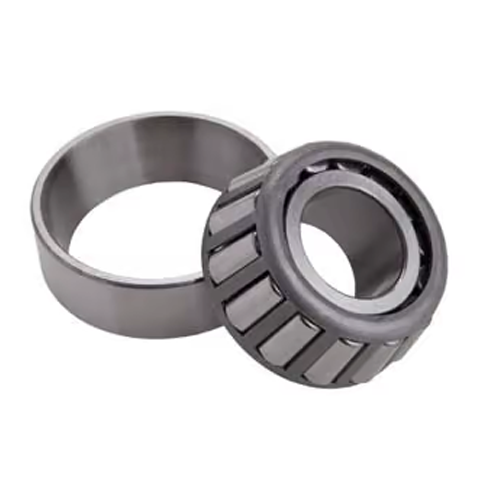
NTN NTN 4T-30307 Single Row Tapered Roller Bearing, D=35mm
NTN 4T-30307 Single Row Tapered Roller Bearing (Inside Dia - 35mm, Outside Dia - 80mm) SPECIFICATIONS Type of Product : Single Row Tapered Roller Bearing Inside Diameter (d) (mm) : 35 Outside Diameter D (mm) : 80 Width Dia mm : 21 Model No : 4T-30307 1. Types, design features, and characteristics Tapered roller bearings are designed so the tapered vertex of the raceway surfaces of the inner and outer rings and rollers converge at one point on the centerline of the bearing (see Fig. 1).The tapered rollers are guided by the compound force of the inner and outer raceway surfaces which keep the rollers pressed up against the large rib on the inner ring.A large variety of these bearings, including single, double, and four row arrangements, are available in both metric and inch series. Each type and associated characteristics are shown in Table 1. For four-row tapered roller bearings, see section “C. Special application bearings.” Table 1 Tapered roller bearing types and characteristics Type Characteristics Single row taperedroller bearings (1) There are both metric and inch series adhering to the standards shown in the following table. Dimension series *Dimension series previously not covered by 3XX are regulated under JIS B 1512; dimensions previously missing from 3XX will henceforth use the bearing number. (2) In addition to the standard design, there are also medium contact angle and large contact angle types, denoted by the contact angle codes at the end of the part numbers (C and D, respectively). (3) Subunits Tapered roller bearings can be disassembled into parts: the inner ring, rollers, and cage (collectively known as the “CONE”) and the outer ring (known as the “CUP”). These are the bearing’s “subunits”. Subunit dimensions are standardized under ISO or ABMA standards, and unified subunits are interchangeable within each dimensional standard. However, high precision grade bearings are generally not interchangeable, and these subunits must be used by assembling only subunits with identical manufacturing numbers.Aside from any cautionary notes that may appear, the single row tapered roller bearings listed in the dimension tables have subunits standardized for both metric and inch systems (including J series). (Refer to Fig. 2) Single row taperedroller bearings (4) These bearings are constructed to have a high capacity for radial loads, axial loads, and combined loads. The larger the contact angle, the greater the axial load capacity. When a pure radial load is applied to a tapered roller bearing, an induced load in the axial direction is also generated, so these bearings are generally used in pairs.(5) Single row tapered roller bearings are separable, so both the inner and outer rings can be used with tight fits. (6) Tapered roller bearings are also manufactured with flanges attached to the outer rings. For more details, contact NTN Engineering. (Refer to Fig. 3) Duplex tapered roller bearings (1) When two single-row tapered roller bearings are to be used in combination, the bearing clearance and preload are adjusted by the inner ring spacer or the outer ring spacer (see Fig. 4).(2) A product number and a combination code are indicated on inner rings, outer rings, and spacers. Parts displaying the same number and code must be used in combination.(3) See A-96 Table 8.14 for the axial internal clearance. Double row taperedroller bearings (1) Back-to-back arrangement (using double row outer rings) and face-to-face arrangement (using double row inner rings) are both available. The assemblies have been adjusted so that each type's internal clearance values are fixed. Only parts with identical manufacturing numbers can be used and they must be assembled according to their code numbers. (Refer to Fig. 5)(2) See A-96 Table 8.14 for the axial internal clearance of double-row and duplex bearings. 2. Standard cage type In general, pressed cages (see Fig. 6) are used in tapered roller bearings. For large sized bearings, machined or pin type cages may also be used, while resin cages may also be used for smaller sized bearings. 3. Allowable misalignment In order to avoid edge loading and potential for premature failure, the maximum allowable misalignment based on bearing series can be found below.The allowable misalignment of combined bearings is influenced by the load center position, so please consult NTN Engineering.• Single row (standard) …………… 1/ 2 000• Single row (ULTAGE) …………… 1/ 600 4. Precautions If bearing load is light during operation, or if the ratio of axial to radial load for duplex and double row bearings exceeds the value of e, slipping may develop between the rollers and raceway surface, sometimes resulting in smearing. The mass of rollers and cages particularly tends to be large for large tapered roller bearings. For additional details, please contact NTN Engineering.In tapered roller bearings, the cage may protrude beyond the inner and/or outer ring side faces. Care should be taken when designing the housing and shaft to ensure contact with the cage does not occur.
$20.45
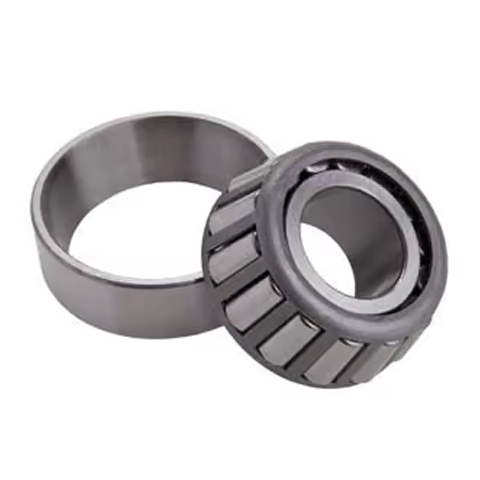
NTN NTN 4T-30310 Single Row Tapered Roller Bearing, D=50mm
NTN 4T-30310 Single Row Tapered Roller Bearing (Inside Dia - 50mm, Outside Dia - 110mm) SPECIFICATIONS Type of Product : Single Row Tapered Roller Bearing Inside Diameter (d) (mm) : 50 Outside Diameter D (mm) : 110 Width Dia mm : 27 Model No : 4T-30310 1. Types, design features, and characteristics Tapered roller bearings are designed so the tapered vertex of the raceway surfaces of the inner and outer rings and rollers converge at one point on the centerline of the bearing (see Fig. 1).The tapered rollers are guided by the compound force of the inner and outer raceway surfaces which keep the rollers pressed up against the large rib on the inner ring.A large variety of these bearings, including single, double, and four row arrangements, are available in both metric and inch series. Each type and associated characteristics are shown in Table 1. For four-row tapered roller bearings, see section “C. Special application bearings.” Table 1 Tapered roller bearing types and characteristics Type Characteristics Single row taperedroller bearings (1) There are both metric and inch series adhering to the standards shown in the following table. Dimension series *Dimension series previously not covered by 3XX are regulated under JIS B 1512; dimensions previously missing from 3XX will henceforth use the bearing number. (2) In addition to the standard design, there are also medium contact angle and large contact angle types, denoted by the contact angle codes at the end of the part numbers (C and D, respectively). (3) Subunits Tapered roller bearings can be disassembled into parts: the inner ring, rollers, and cage (collectively known as the “CONE”) and the outer ring (known as the “CUP”). These are the bearing’s “subunits”. Subunit dimensions are standardized under ISO or ABMA standards, and unified subunits are interchangeable within each dimensional standard. However, high precision grade bearings are generally not interchangeable, and these subunits must be used by assembling only subunits with identical manufacturing numbers.Aside from any cautionary notes that may appear, the single row tapered roller bearings listed in the dimension tables have subunits standardized for both metric and inch systems (including J series). (Refer to Fig. 2) Single row taperedroller bearings (4) These bearings are constructed to have a high capacity for radial loads, axial loads, and combined loads. The larger the contact angle, the greater the axial load capacity. When a pure radial load is applied to a tapered roller bearing, an induced load in the axial direction is also generated, so these bearings are generally used in pairs.(5) Single row tapered roller bearings are separable, so both the inner and outer rings can be used with tight fits. (6) Tapered roller bearings are also manufactured with flanges attached to the outer rings. For more details, contact NTN Engineering. (Refer to Fig. 3) Duplex tapered roller bearings (1) When two single-row tapered roller bearings are to be used in combination, the bearing clearance and preload are adjusted by the inner ring spacer or the outer ring spacer (see Fig. 4).(2) A product number and a combination code are indicated on inner rings, outer rings, and spacers. Parts displaying the same number and code must be used in combination.(3) See A-96 Table 8.14 for the axial internal clearance. Double row taperedroller bearings (1) Back-to-back arrangement (using double row outer rings) and face-to-face arrangement (using double row inner rings) are both available. The assemblies have been adjusted so that each type's internal clearance values are fixed. Only parts with identical manufacturing numbers can be used and they must be assembled according to their code numbers. (Refer to Fig. 5)(2) See A-96 Table 8.14 for the axial internal clearance of double-row and duplex bearings. 2. Standard cage type In general, pressed cages (see Fig. 6) are used in tapered roller bearings. For large sized bearings, machined or pin type cages may also be used, while resin cages may also be used for smaller sized bearings. 3. Allowable misalignment In order to avoid edge loading and potential for premature failure, the maximum allowable misalignment based on bearing series can be found below.The allowable misalignment of combined bearings is influenced by the load center position, so please consult NTN Engineering.• Single row (standard) …………… 1/ 2 000• Single row (ULTAGE) …………… 1/ 600 4. Precautions If bearing load is light during operation, or if the ratio of axial to radial load for duplex and double row bearings exceeds the value of e, slipping may develop between the rollers and raceway surface, sometimes resulting in smearing. The mass of rollers and cages particularly tends to be large for large tapered roller bearings. For additional details, please contact NTN Engineering.In tapered roller bearings, the cage may protrude beyond the inner and/or outer ring side faces. Care should be taken when designing the housing and shaft to ensure contact with the cage does not occur.
$35.40
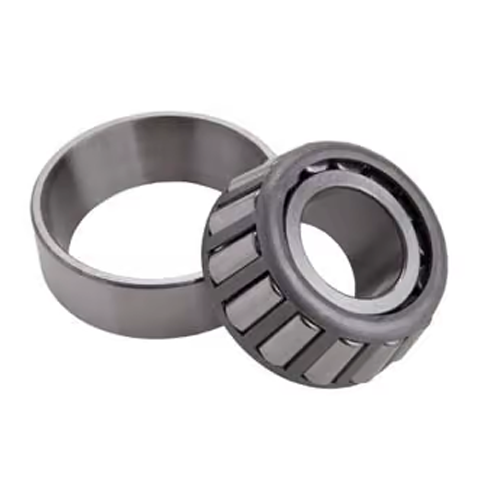
NTN NTN 4T-30311 Single Row Tapered Roller Bearing, D=55mm
NTN 4T-30311 Single Row Tapered Roller Bearing (Inside Dia - 55mm, Outside Dia - 120mm) SPECIFICATIONS Type of Product : Single Row Tapered Roller Bearing Inside Diameter (d) (mm) : 55 Outside Diameter D (mm) : 120 Width Dia mm : 29 Model No : 4T-30311 1. Types, design features, and characteristics Tapered roller bearings are designed so the tapered vertex of the raceway surfaces of the inner and outer rings and rollers converge at one point on the centerline of the bearing (see Fig. 1).The tapered rollers are guided by the compound force of the inner and outer raceway surfaces which keep the rollers pressed up against the large rib on the inner ring.A large variety of these bearings, including single, double, and four row arrangements, are available in both metric and inch series. Each type and associated characteristics are shown in Table 1. For four-row tapered roller bearings, see section “C. Special application bearings.” Table 1 Tapered roller bearing types and characteristics Type Characteristics Single row taperedroller bearings (1) There are both metric and inch series adhering to the standards shown in the following table. Dimension series *Dimension series previously not covered by 3XX are regulated under JIS B 1512; dimensions previously missing from 3XX will henceforth use the bearing number. (2) In addition to the standard design, there are also medium contact angle and large contact angle types, denoted by the contact angle codes at the end of the part numbers (C and D, respectively). (3) Subunits Tapered roller bearings can be disassembled into parts: the inner ring, rollers, and cage (collectively known as the “CONE”) and the outer ring (known as the “CUP”). These are the bearing’s “subunits”. Subunit dimensions are standardized under ISO or ABMA standards, and unified subunits are interchangeable within each dimensional standard. However, high precision grade bearings are generally not interchangeable, and these subunits must be used by assembling only subunits with identical manufacturing numbers.Aside from any cautionary notes that may appear, the single row tapered roller bearings listed in the dimension tables have subunits standardized for both metric and inch systems (including J series). (Refer to Fig. 2) Single row taperedroller bearings (4) These bearings are constructed to have a high capacity for radial loads, axial loads, and combined loads. The larger the contact angle, the greater the axial load capacity. When a pure radial load is applied to a tapered roller bearing, an induced load in the axial direction is also generated, so these bearings are generally used in pairs.(5) Single row tapered roller bearings are separable, so both the inner and outer rings can be used with tight fits. (6) Tapered roller bearings are also manufactured with flanges attached to the outer rings. For more details, contact NTN Engineering. (Refer to Fig. 3) Duplex tapered roller bearings (1) When two single-row tapered roller bearings are to be used in combination, the bearing clearance and preload are adjusted by the inner ring spacer or the outer ring spacer (see Fig. 4).(2) A product number and a combination code are indicated on inner rings, outer rings, and spacers. Parts displaying the same number and code must be used in combination.(3) See A-96 Table 8.14 for the axial internal clearance. Double row taperedroller bearings (1) Back-to-back arrangement (using double row outer rings) and face-to-face arrangement (using double row inner rings) are both available. The assemblies have been adjusted so that each type's internal clearance values are fixed. Only parts with identical manufacturing numbers can be used and they must be assembled according to their code numbers. (Refer to Fig. 5)(2) See A-96 Table 8.14 for the axial internal clearance of double-row and duplex bearings. 2. Standard cage type In general, pressed cages (see Fig. 6) are used in tapered roller bearings. For large sized bearings, machined or pin type cages may also be used, while resin cages may also be used for smaller sized bearings. 3. Allowable misalignment In order to avoid edge loading and potential for premature failure, the maximum allowable misalignment based on bearing series can be found below.The allowable misalignment of combined bearings is influenced by the load center position, so please consult NTN Engineering.• Single row (standard) …………… 1/ 2 000• Single row (ULTAGE) …………… 1/ 600 4. Precautions If bearing load is light during operation, or if the ratio of axial to radial load for duplex and double row bearings exceeds the value of e, slipping may develop between the rollers and raceway surface, sometimes resulting in smearing. The mass of rollers and cages particularly tends to be large for large tapered roller bearings. For additional details, please contact NTN Engineering.In tapered roller bearings, the cage may protrude beyond the inner and/or outer ring side faces. Care should be taken when designing the housing and shaft to ensure contact with the cage does not occur.
$45.77
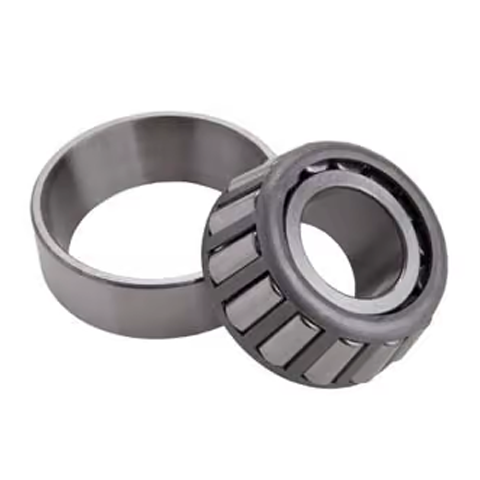
NTN NTN 4T-30312 Single Row Tapered Roller Bearing, D=60mm
NTN 4T-30312 Single Row Tapered Roller Bearing (Inside Dia - 60mm, Outside Dia - 130mm) SPECIFICATIONS Type of Product : Single Row Tapered Roller Bearing Inside Diameter (d) (mm) : 60 Outside Diameter D (mm) : 130 Width Dia mm : 31 Model No : 4T-30312 1. Types, design features, and characteristics Tapered roller bearings are designed so the tapered vertex of the raceway surfaces of the inner and outer rings and rollers converge at one point on the centerline of the bearing (see Fig. 1).The tapered rollers are guided by the compound force of the inner and outer raceway surfaces which keep the rollers pressed up against the large rib on the inner ring.A large variety of these bearings, including single, double, and four row arrangements, are available in both metric and inch series. Each type and associated characteristics are shown in Table 1. For four-row tapered roller bearings, see section “C. Special application bearings.” Table 1 Tapered roller bearing types and characteristics Type Characteristics Single row taperedroller bearings (1) There are both metric and inch series adhering to the standards shown in the following table. Dimension series *Dimension series previously not covered by 3XX are regulated under JIS B 1512; dimensions previously missing from 3XX will henceforth use the bearing number. (2) In addition to the standard design, there are also medium contact angle and large contact angle types, denoted by the contact angle codes at the end of the part numbers (C and D, respectively). (3) Subunits Tapered roller bearings can be disassembled into parts: the inner ring, rollers, and cage (collectively known as the “CONE”) and the outer ring (known as the “CUP”). These are the bearing’s “subunits”. Subunit dimensions are standardized under ISO or ABMA standards, and unified subunits are interchangeable within each dimensional standard. However, high precision grade bearings are generally not interchangeable, and these subunits must be used by assembling only subunits with identical manufacturing numbers.Aside from any cautionary notes that may appear, the single row tapered roller bearings listed in the dimension tables have subunits standardized for both metric and inch systems (including J series). (Refer to Fig. 2) Single row taperedroller bearings (4) These bearings are constructed to have a high capacity for radial loads, axial loads, and combined loads. The larger the contact angle, the greater the axial load capacity. When a pure radial load is applied to a tapered roller bearing, an induced load in the axial direction is also generated, so these bearings are generally used in pairs.(5) Single row tapered roller bearings are separable, so both the inner and outer rings can be used with tight fits. (6) Tapered roller bearings are also manufactured with flanges attached to the outer rings. For more details, contact NTN Engineering. (Refer to Fig. 3) Duplex tapered roller bearings (1) When two single-row tapered roller bearings are to be used in combination, the bearing clearance and preload are adjusted by the inner ring spacer or the outer ring spacer (see Fig. 4).(2) A product number and a combination code are indicated on inner rings, outer rings, and spacers. Parts displaying the same number and code must be used in combination.(3) See A-96 Table 8.14 for the axial internal clearance. Double row taperedroller bearings (1) Back-to-back arrangement (using double row outer rings) and face-to-face arrangement (using double row inner rings) are both available. The assemblies have been adjusted so that each type's internal clearance values are fixed. Only parts with identical manufacturing numbers can be used and they must be assembled according to their code numbers. (Refer to Fig. 5)(2) See A-96 Table 8.14 for the axial internal clearance of double-row and duplex bearings. 2. Standard cage type In general, pressed cages (see Fig. 6) are used in tapered roller bearings. For large sized bearings, machined or pin type cages may also be used, while resin cages may also be used for smaller sized bearings. 3. Allowable misalignment In order to avoid edge loading and potential for premature failure, the maximum allowable misalignment based on bearing series can be found below.The allowable misalignment of combined bearings is influenced by the load center position, so please consult NTN Engineering.• Single row (standard) …………… 1/ 2 000• Single row (ULTAGE) …………… 1/ 600 4. Precautions If bearing load is light during operation, or if the ratio of axial to radial load for duplex and double row bearings exceeds the value of e, slipping may develop between the rollers and raceway surface, sometimes resulting in smearing. The mass of rollers and cages particularly tends to be large for large tapered roller bearings. For additional details, please contact NTN Engineering.In tapered roller bearings, the cage may protrude beyond the inner and/or outer ring side faces. Care should be taken when designing the housing and shaft to ensure contact with the cage does not occur.
$62.72
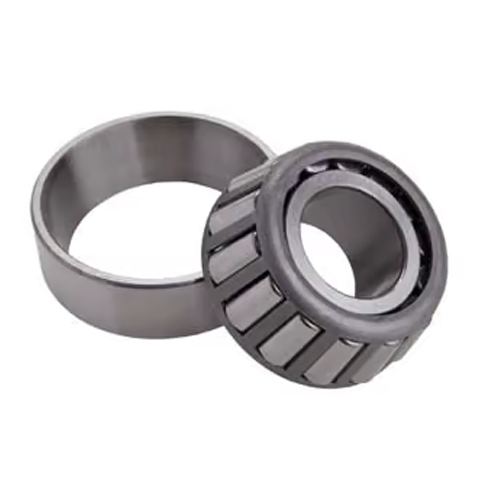
NTN NTN 4T-30314 Single Row Tapered Roller Bearing, D=70mm
NTN 4T-30314 Single Row Tapered Roller Bearing (Inside Dia - 70mm, Outside Dia - 150mm) SPECIFICATIONS Type of Product : Single Row Tapered Roller Bearing Inside Diameter (d) (mm) : 70 Outside Diameter D (mm) : 150 Width Dia mm : 35 Model No : 4T-30314 1. Types, design features, and characteristics Tapered roller bearings are designed so the tapered vertex of the raceway surfaces of the inner and outer rings and rollers converge at one point on the centerline of the bearing (see Fig. 1).The tapered rollers are guided by the compound force of the inner and outer raceway surfaces which keep the rollers pressed up against the large rib on the inner ring.A large variety of these bearings, including single, double, and four row arrangements, are available in both metric and inch series. Each type and associated characteristics are shown in Table 1. For four-row tapered roller bearings, see section “C. Special application bearings.” Table 1 Tapered roller bearing types and characteristics Type Characteristics Single row taperedroller bearings (1) There are both metric and inch series adhering to the standards shown in the following table. Dimension series *Dimension series previously not covered by 3XX are regulated under JIS B 1512; dimensions previously missing from 3XX will henceforth use the bearing number. (2) In addition to the standard design, there are also medium contact angle and large contact angle types, denoted by the contact angle codes at the end of the part numbers (C and D, respectively). (3) Subunits Tapered roller bearings can be disassembled into parts: the inner ring, rollers, and cage (collectively known as the “CONE”) and the outer ring (known as the “CUP”). These are the bearing’s “subunits”. Subunit dimensions are standardized under ISO or ABMA standards, and unified subunits are interchangeable within each dimensional standard. However, high precision grade bearings are generally not interchangeable, and these subunits must be used by assembling only subunits with identical manufacturing numbers.Aside from any cautionary notes that may appear, the single row tapered roller bearings listed in the dimension tables have subunits standardized for both metric and inch systems (including J series). (Refer to Fig. 2) Single row taperedroller bearings (4) These bearings are constructed to have a high capacity for radial loads, axial loads, and combined loads. The larger the contact angle, the greater the axial load capacity. When a pure radial load is applied to a tapered roller bearing, an induced load in the axial direction is also generated, so these bearings are generally used in pairs.(5) Single row tapered roller bearings are separable, so both the inner and outer rings can be used with tight fits. (6) Tapered roller bearings are also manufactured with flanges attached to the outer rings. For more details, contact NTN Engineering. (Refer to Fig. 3) Duplex tapered roller bearings (1) When two single-row tapered roller bearings are to be used in combination, the bearing clearance and preload are adjusted by the inner ring spacer or the outer ring spacer (see Fig. 4).(2) A product number and a combination code are indicated on inner rings, outer rings, and spacers. Parts displaying the same number and code must be used in combination.(3) See A-96 Table 8.14 for the axial internal clearance. Double row taperedroller bearings (1) Back-to-back arrangement (using double row outer rings) and face-to-face arrangement (using double row inner rings) are both available. The assemblies have been adjusted so that each type's internal clearance values are fixed. Only parts with identical manufacturing numbers can be used and they must be assembled according to their code numbers. (Refer to Fig. 5)(2) See A-96 Table 8.14 for the axial internal clearance of double-row and duplex bearings. 2. Standard cage type In general, pressed cages (see Fig. 6) are used in tapered roller bearings. For large sized bearings, machined or pin type cages may also be used, while resin cages may also be used for smaller sized bearings. 3. Allowable misalignment In order to avoid edge loading and potential for premature failure, the maximum allowable misalignment based on bearing series can be found below.The allowable misalignment of combined bearings is influenced by the load center position, so please consult NTN Engineering.• Single row (standard) …………… 1/ 2 000• Single row (ULTAGE) …………… 1/ 600 4. Precautions If bearing load is light during operation, or if the ratio of axial to radial load for duplex and double row bearings exceeds the value of e, slipping may develop between the rollers and raceway surface, sometimes resulting in smearing. The mass of rollers and cages particularly tends to be large for large tapered roller bearings. For additional details, please contact NTN Engineering.In tapered roller bearings, the cage may protrude beyond the inner and/or outer ring side faces. Care should be taken when designing the housing and shaft to ensure contact with the cage does not occur.
$92.44
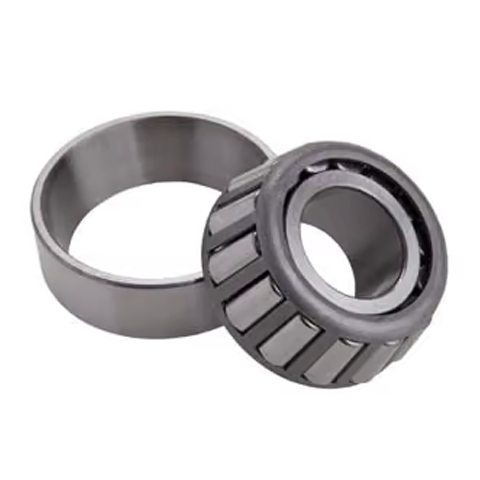
NTN NTN 4T-32004X Single Row Tapered Roller Bearing, D=20mm
NTN 4T-32004X Single Row Tapered Roller Bearing (Inside Dia - 20mm, Outside Dia - 42mm) SPECIFICATIONS Type of Product : Single Row Tapered Roller Bearing Inside Diameter (d) (mm) : 20 Outside Diameter D (mm) : 42 Width Dia mm : 15 Model No : 4T-32004X 1. Types, design features, and characteristics Tapered roller bearings are designed so the tapered vertex of the raceway surfaces of the inner and outer rings and rollers converge at one point on the centerline of the bearing (see Fig. 1).The tapered rollers are guided by the compound force of the inner and outer raceway surfaces which keep the rollers pressed up against the large rib on the inner ring.A large variety of these bearings, including single, double, and four row arrangements, are available in both metric and inch series. Each type and associated characteristics are shown in Table 1. For four-row tapered roller bearings, see section “C. Special application bearings.” Table 1 Tapered roller bearing types and characteristics Type Characteristics Single row taperedroller bearings (1) There are both metric and inch series adhering to the standards shown in the following table. Dimension series *Dimension series previously not covered by 3XX are regulated under JIS B 1512; dimensions previously missing from 3XX will henceforth use the bearing number. (2) In addition to the standard design, there are also medium contact angle and large contact angle types, denoted by the contact angle codes at the end of the part numbers (C and D, respectively). (3) Subunits Tapered roller bearings can be disassembled into parts: the inner ring, rollers, and cage (collectively known as the “CONE”) and the outer ring (known as the “CUP”). These are the bearing’s “subunits”. Subunit dimensions are standardized under ISO or ABMA standards, and unified subunits are interchangeable within each dimensional standard. However, high precision grade bearings are generally not interchangeable, and these subunits must be used by assembling only subunits with identical manufacturing numbers.Aside from any cautionary notes that may appear, the single row tapered roller bearings listed in the dimension tables have subunits standardized for both metric and inch systems (including J series). (Refer to Fig. 2) Single row taperedroller bearings (4) These bearings are constructed to have a high capacity for radial loads, axial loads, and combined loads. The larger the contact angle, the greater the axial load capacity. When a pure radial load is applied to a tapered roller bearing, an induced load in the axial direction is also generated, so these bearings are generally used in pairs.(5) Single row tapered roller bearings are separable, so both the inner and outer rings can be used with tight fits. (6) Tapered roller bearings are also manufactured with flanges attached to the outer rings. For more details, contact NTN Engineering. (Refer to Fig. 3) Duplex tapered roller bearings (1) When two single-row tapered roller bearings are to be used in combination, the bearing clearance and preload are adjusted by the inner ring spacer or the outer ring spacer (see Fig. 4).(2) A product number and a combination code are indicated on inner rings, outer rings, and spacers. Parts displaying the same number and code must be used in combination.(3) See A-96 Table 8.14 for the axial internal clearance. Double row taperedroller bearings (1) Back-to-back arrangement (using double row outer rings) and face-to-face arrangement (using double row inner rings) are both available. The assemblies have been adjusted so that each type's internal clearance values are fixed. Only parts with identical manufacturing numbers can be used and they must be assembled according to their code numbers. (Refer to Fig. 5)(2) See A-96 Table 8.14 for the axial internal clearance of double-row and duplex bearings. 2. Standard cage type In general, pressed cages (see Fig. 6) are used in tapered roller bearings. For large sized bearings, machined or pin type cages may also be used, while resin cages may also be used for smaller sized bearings. 3. Allowable misalignment In order to avoid edge loading and potential for premature failure, the maximum allowable misalignment based on bearing series can be found below.The allowable misalignment of combined bearings is influenced by the load center position, so please consult NTN Engineering.• Single row (standard) …………… 1/ 2 000• Single row (ULTAGE) …………… 1/ 600 4. Precautions If bearing load is light during operation, or if the ratio of axial to radial load for duplex and double row bearings exceeds the value of e, slipping may develop between the rollers and raceway surface, sometimes resulting in smearing. The mass of rollers and cages particularly tends to be large for large tapered roller bearings. For additional details, please contact NTN Engineering.In tapered roller bearings, the cage may protrude beyond the inner and/or outer ring side faces. Care should be taken when designing the housing and shaft to ensure contact with the cage does not occur.
$7.06
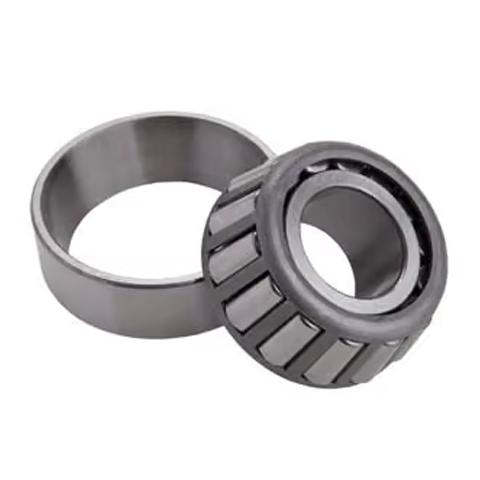
NTN NTN 4T-32005X Single Row Tapered Roller Bearing, D=25mm
NTN 4T-32005X Single Row Tapered Roller Bearing (Inside Dia - 25mm, Outside Dia - 47mm) SPECIFICATIONS Type of Product : Single Row Tapered Roller Bearing Inside Diameter (d) (mm) : 25 Outside Diameter D (mm) : 47 Width Dia mm : 15 Model No : 4T-32005X 1. Types, design features, and characteristics Tapered roller bearings are designed so the tapered vertex of the raceway surfaces of the inner and outer rings and rollers converge at one point on the centerline of the bearing (see Fig. 1).The tapered rollers are guided by the compound force of the inner and outer raceway surfaces which keep the rollers pressed up against the large rib on the inner ring.A large variety of these bearings, including single, double, and four row arrangements, are available in both metric and inch series. Each type and associated characteristics are shown in Table 1. For four-row tapered roller bearings, see section “C. Special application bearings.” Table 1 Tapered roller bearing types and characteristics Type Characteristics Single row taperedroller bearings (1) There are both metric and inch series adhering to the standards shown in the following table. Dimension series *Dimension series previously not covered by 3XX are regulated under JIS B 1512; dimensions previously missing from 3XX will henceforth use the bearing number. (2) In addition to the standard design, there are also medium contact angle and large contact angle types, denoted by the contact angle codes at the end of the part numbers (C and D, respectively). (3) Subunits Tapered roller bearings can be disassembled into parts: the inner ring, rollers, and cage (collectively known as the “CONE”) and the outer ring (known as the “CUP”). These are the bearing’s “subunits”. Subunit dimensions are standardized under ISO or ABMA standards, and unified subunits are interchangeable within each dimensional standard. However, high precision grade bearings are generally not interchangeable, and these subunits must be used by assembling only subunits with identical manufacturing numbers.Aside from any cautionary notes that may appear, the single row tapered roller bearings listed in the dimension tables have subunits standardized for both metric and inch systems (including J series). (Refer to Fig. 2) Single row taperedroller bearings (4) These bearings are constructed to have a high capacity for radial loads, axial loads, and combined loads. The larger the contact angle, the greater the axial load capacity. When a pure radial load is applied to a tapered roller bearing, an induced load in the axial direction is also generated, so these bearings are generally used in pairs.(5) Single row tapered roller bearings are separable, so both the inner and outer rings can be used with tight fits. (6) Tapered roller bearings are also manufactured with flanges attached to the outer rings. For more details, contact NTN Engineering. (Refer to Fig. 3) Duplex tapered roller bearings (1) When two single-row tapered roller bearings are to be used in combination, the bearing clearance and preload are adjusted by the inner ring spacer or the outer ring spacer (see Fig. 4).(2) A product number and a combination code are indicated on inner rings, outer rings, and spacers. Parts displaying the same number and code must be used in combination.(3) See A-96 Table 8.14 for the axial internal clearance. Double row taperedroller bearings (1) Back-to-back arrangement (using double row outer rings) and face-to-face arrangement (using double row inner rings) are both available. The assemblies have been adjusted so that each type's internal clearance values are fixed. Only parts with identical manufacturing numbers can be used and they must be assembled according to their code numbers. (Refer to Fig. 5)(2) See A-96 Table 8.14 for the axial internal clearance of double-row and duplex bearings. 2. Standard cage type In general, pressed cages (see Fig. 6) are used in tapered roller bearings. For large sized bearings, machined or pin type cages may also be used, while resin cages may also be used for smaller sized bearings. 3. Allowable misalignment In order to avoid edge loading and potential for premature failure, the maximum allowable misalignment based on bearing series can be found below.The allowable misalignment of combined bearings is influenced by the load center position, so please consult NTN Engineering.• Single row (standard) …………… 1/ 2 000• Single row (ULTAGE) …………… 1/ 600 4. Precautions If bearing load is light during operation, or if the ratio of axial to radial load for duplex and double row bearings exceeds the value of e, slipping may develop between the rollers and raceway surface, sometimes resulting in smearing. The mass of rollers and cages particularly tends to be large for large tapered roller bearings. For additional details, please contact NTN Engineering.In tapered roller bearings, the cage may protrude beyond the inner and/or outer ring side faces. Care should be taken when designing the housing and shaft to ensure contact with the cage does not occur.
$10.03
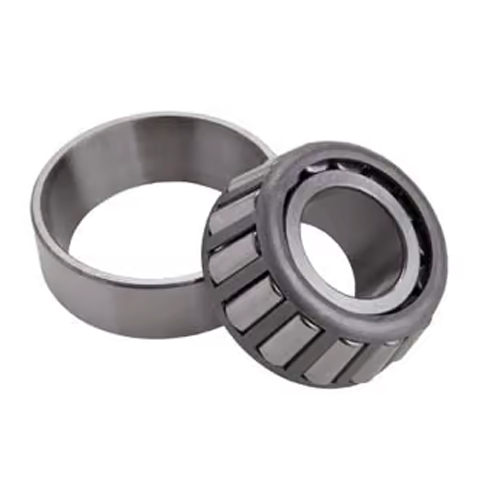
NTN NTN 4T-32006X Single Row Tapered Roller Bearing, D=30mm
NTN 4T-32006X Single Row Tapered Roller Bearing (Inside Dia - 30mm, Outside Dia - 55mm) SPECIFICATIONS Type of Product : Single Row Tapered Roller Bearing Inside Diameter (d) (mm) : 30 Outside Diameter D (mm) : 55 Width Dia mm : 17 Model No : 4T-32006X 1. Types, design features, and characteristics Tapered roller bearings are designed so the tapered vertex of the raceway surfaces of the inner and outer rings and rollers converge at one point on the centerline of the bearing (see Fig. 1).The tapered rollers are guided by the compound force of the inner and outer raceway surfaces which keep the rollers pressed up against the large rib on the inner ring.A large variety of these bearings, including single, double, and four row arrangements, are available in both metric and inch series. Each type and associated characteristics are shown in Table 1. For four-row tapered roller bearings, see section “C. Special application bearings.” Table 1 Tapered roller bearing types and characteristics Type Characteristics Single row taperedroller bearings (1) There are both metric and inch series adhering to the standards shown in the following table. Dimension series *Dimension series previously not covered by 3XX are regulated under JIS B 1512; dimensions previously missing from 3XX will henceforth use the bearing number. (2) In addition to the standard design, there are also medium contact angle and large contact angle types, denoted by the contact angle codes at the end of the part numbers (C and D, respectively). (3) Subunits Tapered roller bearings can be disassembled into parts: the inner ring, rollers, and cage (collectively known as the “CONE”) and the outer ring (known as the “CUP”). These are the bearing’s “subunits”. Subunit dimensions are standardized under ISO or ABMA standards, and unified subunits are interchangeable within each dimensional standard. However, high precision grade bearings are generally not interchangeable, and these subunits must be used by assembling only subunits with identical manufacturing numbers.Aside from any cautionary notes that may appear, the single row tapered roller bearings listed in the dimension tables have subunits standardized for both metric and inch systems (including J series). (Refer to Fig. 2) Single row taperedroller bearings (4) These bearings are constructed to have a high capacity for radial loads, axial loads, and combined loads. The larger the contact angle, the greater the axial load capacity. When a pure radial load is applied to a tapered roller bearing, an induced load in the axial direction is also generated, so these bearings are generally used in pairs.(5) Single row tapered roller bearings are separable, so both the inner and outer rings can be used with tight fits. (6) Tapered roller bearings are also manufactured with flanges attached to the outer rings. For more details, contact NTN Engineering. (Refer to Fig. 3) Duplex tapered roller bearings (1) When two single-row tapered roller bearings are to be used in combination, the bearing clearance and preload are adjusted by the inner ring spacer or the outer ring spacer (see Fig. 4).(2) A product number and a combination code are indicated on inner rings, outer rings, and spacers. Parts displaying the same number and code must be used in combination.(3) See A-96 Table 8.14 for the axial internal clearance. Double row taperedroller bearings (1) Back-to-back arrangement (using double row outer rings) and face-to-face arrangement (using double row inner rings) are both available. The assemblies have been adjusted so that each type's internal clearance values are fixed. Only parts with identical manufacturing numbers can be used and they must be assembled according to their code numbers. (Refer to Fig. 5)(2) See A-96 Table 8.14 for the axial internal clearance of double-row and duplex bearings. 2. Standard cage type In general, pressed cages (see Fig. 6) are used in tapered roller bearings. For large sized bearings, machined or pin type cages may also be used, while resin cages may also be used for smaller sized bearings. 3. Allowable misalignment In order to avoid edge loading and potential for premature failure, the maximum allowable misalignment based on bearing series can be found below.The allowable misalignment of combined bearings is influenced by the load center position, so please consult NTN Engineering.• Single row (standard) …………… 1/ 2 000• Single row (ULTAGE) …………… 1/ 600 4. Precautions If bearing load is light during operation, or if the ratio of axial to radial load for duplex and double row bearings exceeds the value of e, slipping may develop between the rollers and raceway surface, sometimes resulting in smearing. The mass of rollers and cages particularly tends to be large for large tapered roller bearings. For additional details, please contact NTN Engineering.In tapered roller bearings, the cage may protrude beyond the inner and/or outer ring side faces. Care should be taken when designing the housing and shaft to ensure contact with the cage does not occur.
$11.24
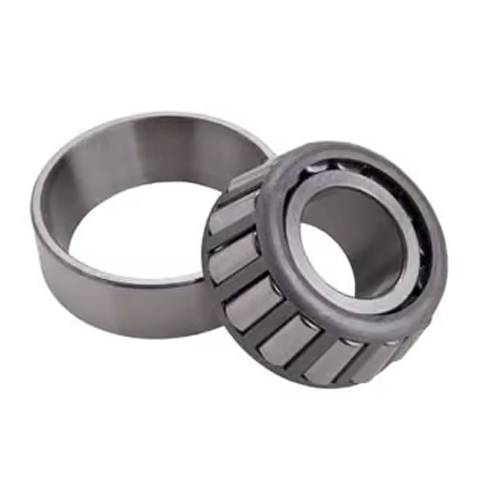
NTN NTN 4T-32008X Single Row Tapered Roller Bearing, D=40mm
NTN 4T-32008X Single Row Tapered Roller Bearing (Inside Dia - 40mm, Outside Dia - 68mm) SPECIFICATIONS Type of Product : Single Row Tapered Roller Bearing Inside Diameter (d) (mm) : 40 Outside Diameter D (mm) : 68 Width Dia mm : 19 Model No : 4T-32008X 1. Types, design features, and characteristics Tapered roller bearings are designed so the tapered vertex of the raceway surfaces of the inner and outer rings and rollers converge at one point on the centerline of the bearing (see Fig. 1).The tapered rollers are guided by the compound force of the inner and outer raceway surfaces which keep the rollers pressed up against the large rib on the inner ring.A large variety of these bearings, including single, double, and four row arrangements, are available in both metric and inch series. Each type and associated characteristics are shown in Table 1. For four-row tapered roller bearings, see section “C. Special application bearings.” Table 1 Tapered roller bearing types and characteristics Type Characteristics Single row taperedroller bearings (1) There are both metric and inch series adhering to the standards shown in the following table. Dimension series *Dimension series previously not covered by 3XX are regulated under JIS B 1512; dimensions previously missing from 3XX will henceforth use the bearing number. (2) In addition to the standard design, there are also medium contact angle and large contact angle types, denoted by the contact angle codes at the end of the part numbers (C and D, respectively). (3) Subunits Tapered roller bearings can be disassembled into parts: the inner ring, rollers, and cage (collectively known as the “CONE”) and the outer ring (known as the “CUP”). These are the bearing’s “subunits”. Subunit dimensions are standardized under ISO or ABMA standards, and unified subunits are interchangeable within each dimensional standard. However, high precision grade bearings are generally not interchangeable, and these subunits must be used by assembling only subunits with identical manufacturing numbers.Aside from any cautionary notes that may appear, the single row tapered roller bearings listed in the dimension tables have subunits standardized for both metric and inch systems (including J series). (Refer to Fig. 2) Single row taperedroller bearings (4) These bearings are constructed to have a high capacity for radial loads, axial loads, and combined loads. The larger the contact angle, the greater the axial load capacity. When a pure radial load is applied to a tapered roller bearing, an induced load in the axial direction is also generated, so these bearings are generally used in pairs.(5) Single row tapered roller bearings are separable, so both the inner and outer rings can be used with tight fits. (6) Tapered roller bearings are also manufactured with flanges attached to the outer rings. For more details, contact NTN Engineering. (Refer to Fig. 3) Duplex tapered roller bearings (1) When two single-row tapered roller bearings are to be used in combination, the bearing clearance and preload are adjusted by the inner ring spacer or the outer ring spacer (see Fig. 4).(2) A product number and a combination code are indicated on inner rings, outer rings, and spacers. Parts displaying the same number and code must be used in combination.(3) See A-96 Table 8.14 for the axial internal clearance. Double row taperedroller bearings (1) Back-to-back arrangement (using double row outer rings) and face-to-face arrangement (using double row inner rings) are both available. The assemblies have been adjusted so that each type's internal clearance values are fixed. Only parts with identical manufacturing numbers can be used and they must be assembled according to their code numbers. (Refer to Fig. 5)(2) See A-96 Table 8.14 for the axial internal clearance of double-row and duplex bearings. 2. Standard cage type In general, pressed cages (see Fig. 6) are used in tapered roller bearings. For large sized bearings, machined or pin type cages may also be used, while resin cages may also be used for smaller sized bearings. 3. Allowable misalignment In order to avoid edge loading and potential for premature failure, the maximum allowable misalignment based on bearing series can be found below.The allowable misalignment of combined bearings is influenced by the load center position, so please consult NTN Engineering.• Single row (standard) …………… 1/ 2 000• Single row (ULTAGE) …………… 1/ 600 4. Precautions If bearing load is light during operation, or if the ratio of axial to radial load for duplex and double row bearings exceeds the value of e, slipping may develop between the rollers and raceway surface, sometimes resulting in smearing. The mass of rollers and cages particularly tends to be large for large tapered roller bearings. For additional details, please contact NTN Engineering.In tapered roller bearings, the cage may protrude beyond the inner and/or outer ring side faces. Care should be taken when designing the housing and shaft to ensure contact with the cage does not occur.
$13.88
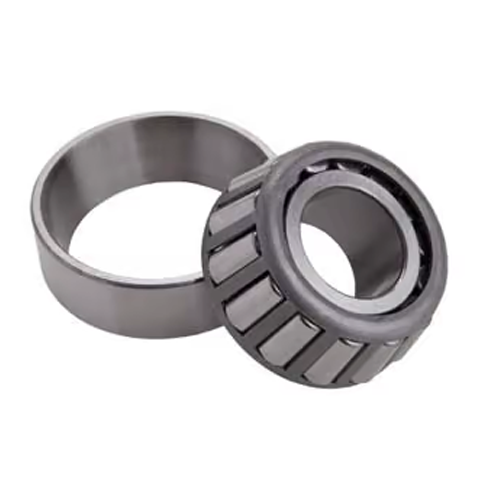
NTN NTN 4T-32010X Single Row Tapered Roller Bearing, D=50mm
NTN 4T-32010X Single Row Tapered Roller Bearing (Inside Dia - 50mm, Outside Dia - 80mm) SPECIFICATIONS Type of Product : Single Row Tapered Roller Bearing Inside Diameter (d) (mm) : 50 Outside Diameter D (mm) : 80 Width Dia mm : 21.64 Model No : 4T-32010X 1. Types, design features, and characteristics Tapered roller bearings are designed so the tapered vertex of the raceway surfaces of the inner and outer rings and rollers converge at one point on the centerline of the bearing (see Fig. 1).The tapered rollers are guided by the compound force of the inner and outer raceway surfaces which keep the rollers pressed up against the large rib on the inner ring.A large variety of these bearings, including single, double, and four row arrangements, are available in both metric and inch series. Each type and associated characteristics are shown in Table 1. For four-row tapered roller bearings, see section “C. Special application bearings.” Table 1 Tapered roller bearing types and characteristics Type Characteristics Single row taperedroller bearings (1) There are both metric and inch series adhering to the standards shown in the following table. Dimension series *Dimension series previously not covered by 3XX are regulated under JIS B 1512; dimensions previously missing from 3XX will henceforth use the bearing number. (2) In addition to the standard design, there are also medium contact angle and large contact angle types, denoted by the contact angle codes at the end of the part numbers (C and D, respectively). (3) Subunits Tapered roller bearings can be disassembled into parts: the inner ring, rollers, and cage (collectively known as the “CONE”) and the outer ring (known as the “CUP”). These are the bearing’s “subunits”. Subunit dimensions are standardized under ISO or ABMA standards, and unified subunits are interchangeable within each dimensional standard. However, high precision grade bearings are generally not interchangeable, and these subunits must be used by assembling only subunits with identical manufacturing numbers.Aside from any cautionary notes that may appear, the single row tapered roller bearings listed in the dimension tables have subunits standardized for both metric and inch systems (including J series). (Refer to Fig. 2) Single row taperedroller bearings (4) These bearings are constructed to have a high capacity for radial loads, axial loads, and combined loads. The larger the contact angle, the greater the axial load capacity. When a pure radial load is applied to a tapered roller bearing, an induced load in the axial direction is also generated, so these bearings are generally used in pairs.(5) Single row tapered roller bearings are separable, so both the inner and outer rings can be used with tight fits. (6) Tapered roller bearings are also manufactured with flanges attached to the outer rings. For more details, contact NTN Engineering. (Refer to Fig. 3) Duplex tapered roller bearings (1) When two single-row tapered roller bearings are to be used in combination, the bearing clearance and preload are adjusted by the inner ring spacer or the outer ring spacer (see Fig. 4).(2) A product number and a combination code are indicated on inner rings, outer rings, and spacers. Parts displaying the same number and code must be used in combination.(3) See A-96 Table 8.14 for the axial internal clearance. Double row taperedroller bearings (1) Back-to-back arrangement (using double row outer rings) and face-to-face arrangement (using double row inner rings) are both available. The assemblies have been adjusted so that each type's internal clearance values are fixed. Only parts with identical manufacturing numbers can be used and they must be assembled according to their code numbers. (Refer to Fig. 5)(2) See A-96 Table 8.14 for the axial internal clearance of double-row and duplex bearings. 2. Standard cage type In general, pressed cages (see Fig. 6) are used in tapered roller bearings. For large sized bearings, machined or pin type cages may also be used, while resin cages may also be used for smaller sized bearings. 3. Allowable misalignment In order to avoid edge loading and potential for premature failure, the maximum allowable misalignment based on bearing series can be found below.The allowable misalignment of combined bearings is influenced by the load center position, so please consult NTN Engineering.• Single row (standard) …………… 1/ 2 000• Single row (ULTAGE) …………… 1/ 600 4. Precautions If bearing load is light during operation, or if the ratio of axial to radial load for duplex and double row bearings exceeds the value of e, slipping may develop between the rollers and raceway surface, sometimes resulting in smearing. The mass of rollers and cages particularly tends to be large for large tapered roller bearings. For additional details, please contact NTN Engineering.In tapered roller bearings, the cage may protrude beyond the inner and/or outer ring side faces. Care should be taken when designing the housing and shaft to ensure contact with the cage does not occur.
$18.14
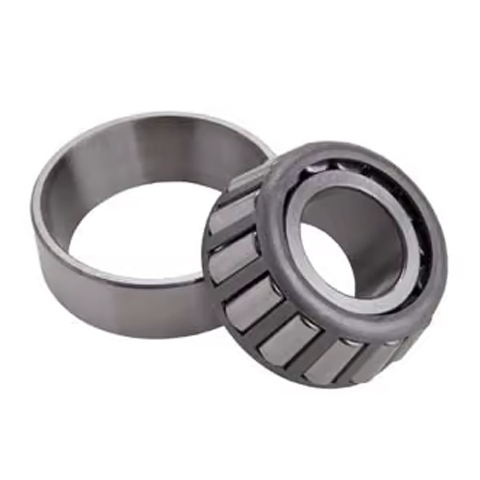
NTN NTN 4T-32011X Single Row Tapered Roller Bearing, D=55mm
NTN 4T-32011X Single Row Tapered Roller Bearing (Inside Dia - 55mm, Outside Dia - 90mm) SPECIFICATIONS Type of Product : Single Row Tapered Roller Bearing Inside Diameter (d) (mm) : 55 Outside Diameter D (mm) : 90 Width Dia mm : 23 Model No : 4T-32011X 1. Types, design features, and characteristics Tapered roller bearings are designed so the tapered vertex of the raceway surfaces of the inner and outer rings and rollers converge at one point on the centerline of the bearing (see Fig. 1).The tapered rollers are guided by the compound force of the inner and outer raceway surfaces which keep the rollers pressed up against the large rib on the inner ring.A large variety of these bearings, including single, double, and four row arrangements, are available in both metric and inch series. Each type and associated characteristics are shown in Table 1. For four-row tapered roller bearings, see section “C. Special application bearings.” Table 1 Tapered roller bearing types and characteristics Type Characteristics Single row taperedroller bearings (1) There are both metric and inch series adhering to the standards shown in the following table. Dimension series *Dimension series previously not covered by 3XX are regulated under JIS B 1512; dimensions previously missing from 3XX will henceforth use the bearing number. (2) In addition to the standard design, there are also medium contact angle and large contact angle types, denoted by the contact angle codes at the end of the part numbers (C and D, respectively). (3) Subunits Tapered roller bearings can be disassembled into parts: the inner ring, rollers, and cage (collectively known as the “CONE”) and the outer ring (known as the “CUP”). These are the bearing’s “subunits”. Subunit dimensions are standardized under ISO or ABMA standards, and unified subunits are interchangeable within each dimensional standard. However, high precision grade bearings are generally not interchangeable, and these subunits must be used by assembling only subunits with identical manufacturing numbers.Aside from any cautionary notes that may appear, the single row tapered roller bearings listed in the dimension tables have subunits standardized for both metric and inch systems (including J series). (Refer to Fig. 2) Single row taperedroller bearings (4) These bearings are constructed to have a high capacity for radial loads, axial loads, and combined loads. The larger the contact angle, the greater the axial load capacity. When a pure radial load is applied to a tapered roller bearing, an induced load in the axial direction is also generated, so these bearings are generally used in pairs.(5) Single row tapered roller bearings are separable, so both the inner and outer rings can be used with tight fits. (6) Tapered roller bearings are also manufactured with flanges attached to the outer rings. For more details, contact NTN Engineering. (Refer to Fig. 3) Duplex tapered roller bearings (1) When two single-row tapered roller bearings are to be used in combination, the bearing clearance and preload are adjusted by the inner ring spacer or the outer ring spacer (see Fig. 4).(2) A product number and a combination code are indicated on inner rings, outer rings, and spacers. Parts displaying the same number and code must be used in combination.(3) See A-96 Table 8.14 for the axial internal clearance. Double row taperedroller bearings (1) Back-to-back arrangement (using double row outer rings) and face-to-face arrangement (using double row inner rings) are both available. The assemblies have been adjusted so that each type's internal clearance values are fixed. Only parts with identical manufacturing numbers can be used and they must be assembled according to their code numbers. (Refer to Fig. 5)(2) See A-96 Table 8.14 for the axial internal clearance of double-row and duplex bearings. 2. Standard cage type In general, pressed cages (see Fig. 6) are used in tapered roller bearings. For large sized bearings, machined or pin type cages may also be used, while resin cages may also be used for smaller sized bearings. 3. Allowable misalignment In order to avoid edge loading and potential for premature failure, the maximum allowable misalignment based on bearing series can be found below.The allowable misalignment of combined bearings is influenced by the load center position, so please consult NTN Engineering.• Single row (standard) …………… 1/ 2 000• Single row (ULTAGE) …………… 1/ 600 4. Precautions If bearing load is light during operation, or if the ratio of axial to radial load for duplex and double row bearings exceeds the value of e, slipping may develop between the rollers and raceway surface, sometimes resulting in smearing. The mass of rollers and cages particularly tends to be large for large tapered roller bearings. For additional details, please contact NTN Engineering.In tapered roller bearings, the cage may protrude beyond the inner and/or outer ring side faces. Care should be taken when designing the housing and shaft to ensure contact with the cage does not occur.
$20.76
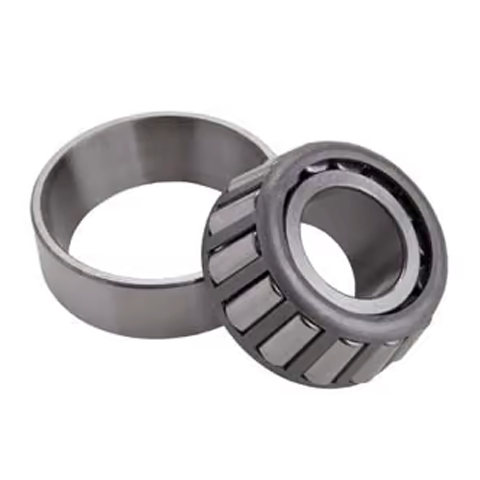
NTN NTN 4T-32204 Single Row Tapered Roller Bearing, D=20mm
NTN 4T-32204 Single Row Tapered Roller Bearing (Inside Dia - 20mm, Outside Dia - 47mm) SPECIFICATIONS Type of Product : Single Row Tapered Roller Bearing Inside Diameter (d) (mm) : 20 Outside Diameter D (mm) : 47 Width Dia mm : 18 Model No : 4T-32204 1. Types, design features, and characteristics Tapered roller bearings are designed so the tapered vertex of the raceway surfaces of the inner and outer rings and rollers converge at one point on the centerline of the bearing (see Fig. 1).The tapered rollers are guided by the compound force of the inner and outer raceway surfaces which keep the rollers pressed up against the large rib on the inner ring.A large variety of these bearings, including single, double, and four row arrangements, are available in both metric and inch series. Each type and associated characteristics are shown in Table 1. For four-row tapered roller bearings, see section “C. Special application bearings.” Table 1 Tapered roller bearing types and characteristics Type Characteristics Single row taperedroller bearings (1) There are both metric and inch series adhering to the standards shown in the following table. Dimension series *Dimension series previously not covered by 3XX are regulated under JIS B 1512; dimensions previously missing from 3XX will henceforth use the bearing number. (2) In addition to the standard design, there are also medium contact angle and large contact angle types, denoted by the contact angle codes at the end of the part numbers (C and D, respectively). (3) Subunits Tapered roller bearings can be disassembled into parts: the inner ring, rollers, and cage (collectively known as the “CONE”) and the outer ring (known as the “CUP”). These are the bearing’s “subunits”. Subunit dimensions are standardized under ISO or ABMA standards, and unified subunits are interchangeable within each dimensional standard. However, high precision grade bearings are generally not interchangeable, and these subunits must be used by assembling only subunits with identical manufacturing numbers.Aside from any cautionary notes that may appear, the single row tapered roller bearings listed in the dimension tables have subunits standardized for both metric and inch systems (including J series). (Refer to Fig. 2) Single row taperedroller bearings (4) These bearings are constructed to have a high capacity for radial loads, axial loads, and combined loads. The larger the contact angle, the greater the axial load capacity. When a pure radial load is applied to a tapered roller bearing, an induced load in the axial direction is also generated, so these bearings are generally used in pairs.(5) Single row tapered roller bearings are separable, so both the inner and outer rings can be used with tight fits. (6) Tapered roller bearings are also manufactured with flanges attached to the outer rings. For more details, contact NTN Engineering. (Refer to Fig. 3) Duplex tapered roller bearings (1) When two single-row tapered roller bearings are to be used in combination, the bearing clearance and preload are adjusted by the inner ring spacer or the outer ring spacer (see Fig. 4).(2) A product number and a combination code are indicated on inner rings, outer rings, and spacers. Parts displaying the same number and code must be used in combination.(3) See A-96 Table 8.14 for the axial internal clearance. Double row taperedroller bearings (1) Back-to-back arrangement (using double row outer rings) and face-to-face arrangement (using double row inner rings) are both available. The assemblies have been adjusted so that each type's internal clearance values are fixed. Only parts with identical manufacturing numbers can be used and they must be assembled according to their code numbers. (Refer to Fig. 5)(2) See A-96 Table 8.14 for the axial internal clearance of double-row and duplex bearings. 2. Standard cage type In general, pressed cages (see Fig. 6) are used in tapered roller bearings. For large sized bearings, machined or pin type cages may also be used, while resin cages may also be used for smaller sized bearings. 3. Allowable misalignment In order to avoid edge loading and potential for premature failure, the maximum allowable misalignment based on bearing series can be found below.The allowable misalignment of combined bearings is influenced by the load center position, so please consult NTN Engineering.• Single row (standard) …………… 1/ 2 000• Single row (ULTAGE) …………… 1/ 600 4. Precautions If bearing load is light during operation, or if the ratio of axial to radial load for duplex and double row bearings exceeds the value of e, slipping may develop between the rollers and raceway surface, sometimes resulting in smearing. The mass of rollers and cages particularly tends to be large for large tapered roller bearings. For additional details, please contact NTN Engineering.In tapered roller bearings, the cage may protrude beyond the inner and/or outer ring side faces. Care should be taken when designing the housing and shaft to ensure contact with the cage does not occur.
$7.73
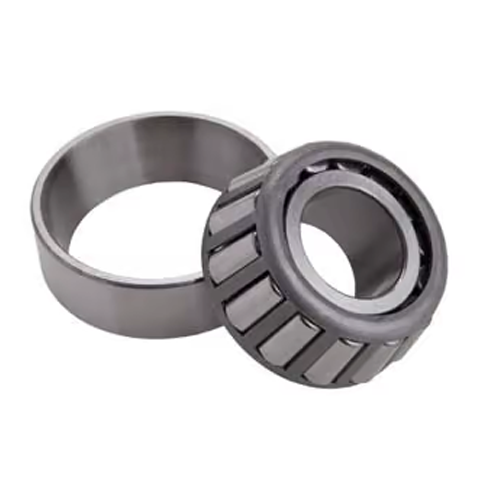
NTN NTN 4T-32205 Single Row Tapered Roller Bearing, D=25mm
NTN 4T-32205 Single Row Tapered Roller Bearing (Inside Dia - 25mm, Outside Dia - 52mm) SPECIFICATIONS Type of Product : Single Row Tapered Roller Bearing Inside Diameter (d) (mm) : 25 Outside Diameter D (mm) : 52 Width Dia mm : 18 Model No : 4T-32205 1. Types, design features, and characteristics Tapered roller bearings are designed so the tapered vertex of the raceway surfaces of the inner and outer rings and rollers converge at one point on the centerline of the bearing (see Fig. 1).The tapered rollers are guided by the compound force of the inner and outer raceway surfaces which keep the rollers pressed up against the large rib on the inner ring.A large variety of these bearings, including single, double, and four row arrangements, are available in both metric and inch series. Each type and associated characteristics are shown in Table 1. For four-row tapered roller bearings, see section “C. Special application bearings.” Table 1 Tapered roller bearing types and characteristics Type Characteristics Single row taperedroller bearings (1) There are both metric and inch series adhering to the standards shown in the following table. Dimension series *Dimension series previously not covered by 3XX are regulated under JIS B 1512; dimensions previously missing from 3XX will henceforth use the bearing number. (2) In addition to the standard design, there are also medium contact angle and large contact angle types, denoted by the contact angle codes at the end of the part numbers (C and D, respectively). (3) Subunits Tapered roller bearings can be disassembled into parts: the inner ring, rollers, and cage (collectively known as the “CONE”) and the outer ring (known as the “CUP”). These are the bearing’s “subunits”. Subunit dimensions are standardized under ISO or ABMA standards, and unified subunits are interchangeable within each dimensional standard. However, high precision grade bearings are generally not interchangeable, and these subunits must be used by assembling only subunits with identical manufacturing numbers.Aside from any cautionary notes that may appear, the single row tapered roller bearings listed in the dimension tables have subunits standardized for both metric and inch systems (including J series). (Refer to Fig. 2) Single row taperedroller bearings (4) These bearings are constructed to have a high capacity for radial loads, axial loads, and combined loads. The larger the contact angle, the greater the axial load capacity. When a pure radial load is applied to a tapered roller bearing, an induced load in the axial direction is also generated, so these bearings are generally used in pairs.(5) Single row tapered roller bearings are separable, so both the inner and outer rings can be used with tight fits. (6) Tapered roller bearings are also manufactured with flanges attached to the outer rings. For more details, contact NTN Engineering. (Refer to Fig. 3) Duplex tapered roller bearings (1) When two single-row tapered roller bearings are to be used in combination, the bearing clearance and preload are adjusted by the inner ring spacer or the outer ring spacer (see Fig. 4).(2) A product number and a combination code are indicated on inner rings, outer rings, and spacers. Parts displaying the same number and code must be used in combination.(3) See A-96 Table 8.14 for the axial internal clearance. Double row taperedroller bearings (1) Back-to-back arrangement (using double row outer rings) and face-to-face arrangement (using double row inner rings) are both available. The assemblies have been adjusted so that each type's internal clearance values are fixed. Only parts with identical manufacturing numbers can be used and they must be assembled according to their code numbers. (Refer to Fig. 5)(2) See A-96 Table 8.14 for the axial internal clearance of double-row and duplex bearings. 2. Standard cage type In general, pressed cages (see Fig. 6) are used in tapered roller bearings. For large sized bearings, machined or pin type cages may also be used, while resin cages may also be used for smaller sized bearings. 3. Allowable misalignment In order to avoid edge loading and potential for premature failure, the maximum allowable misalignment based on bearing series can be found below.The allowable misalignment of combined bearings is influenced by the load center position, so please consult NTN Engineering.• Single row (standard) …………… 1/ 2 000• Single row (ULTAGE) …………… 1/ 600 4. Precautions If bearing load is light during operation, or if the ratio of axial to radial load for duplex and double row bearings exceeds the value of e, slipping may develop between the rollers and raceway surface, sometimes resulting in smearing. The mass of rollers and cages particularly tends to be large for large tapered roller bearings. For additional details, please contact NTN Engineering.In tapered roller bearings, the cage may protrude beyond the inner and/or outer ring side faces. Care should be taken when designing the housing and shaft to ensure contact with the cage does not occur.
$18.35
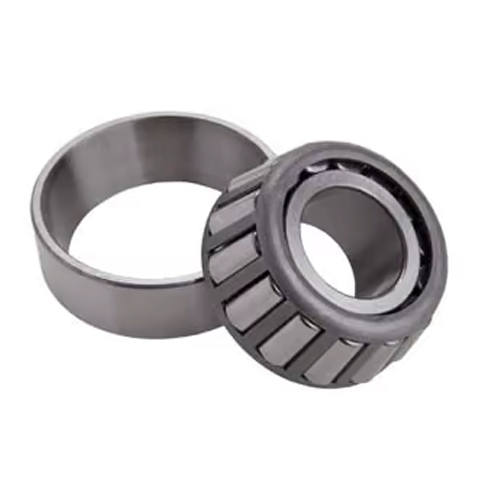
NTN NTN 4T-32207 Single Row Tapered Roller Bearing, D=35mm
NTN 4T-32207 Single Row Tapered Roller Bearing (Inside Dia - 35mm, Outside Dia - 72mm) SPECIFICATIONS Type of Product : Single Row Tapered Roller Bearing Inside Diameter (d) (mm) : 35 Outside Diameter D (mm) : 72 Width Dia mm : 23 Model No : 4T-32207 1. Types, design features, and characteristics Tapered roller bearings are designed so the tapered vertex of the raceway surfaces of the inner and outer rings and rollers converge at one point on the centerline of the bearing (see Fig. 1).The tapered rollers are guided by the compound force of the inner and outer raceway surfaces which keep the rollers pressed up against the large rib on the inner ring.A large variety of these bearings, including single, double, and four row arrangements, are available in both metric and inch series. Each type and associated characteristics are shown in Table 1. For four-row tapered roller bearings, see section “C. Special application bearings.” Table 1 Tapered roller bearing types and characteristics Type Characteristics Single row taperedroller bearings (1) There are both metric and inch series adhering to the standards shown in the following table. Dimension series *Dimension series previously not covered by 3XX are regulated under JIS B 1512; dimensions previously missing from 3XX will henceforth use the bearing number. (2) In addition to the standard design, there are also medium contact angle and large contact angle types, denoted by the contact angle codes at the end of the part numbers (C and D, respectively). (3) Subunits Tapered roller bearings can be disassembled into parts: the inner ring, rollers, and cage (collectively known as the “CONE”) and the outer ring (known as the “CUP”). These are the bearing’s “subunits”. Subunit dimensions are standardized under ISO or ABMA standards, and unified subunits are interchangeable within each dimensional standard. However, high precision grade bearings are generally not interchangeable, and these subunits must be used by assembling only subunits with identical manufacturing numbers.Aside from any cautionary notes that may appear, the single row tapered roller bearings listed in the dimension tables have subunits standardized for both metric and inch systems (including J series). (Refer to Fig. 2) Single row taperedroller bearings (4) These bearings are constructed to have a high capacity for radial loads, axial loads, and combined loads. The larger the contact angle, the greater the axial load capacity. When a pure radial load is applied to a tapered roller bearing, an induced load in the axial direction is also generated, so these bearings are generally used in pairs.(5) Single row tapered roller bearings are separable, so both the inner and outer rings can be used with tight fits. (6) Tapered roller bearings are also manufactured with flanges attached to the outer rings. For more details, contact NTN Engineering. (Refer to Fig. 3) Duplex tapered roller bearings (1) When two single-row tapered roller bearings are to be used in combination, the bearing clearance and preload are adjusted by the inner ring spacer or the outer ring spacer (see Fig. 4).(2) A product number and a combination code are indicated on inner rings, outer rings, and spacers. Parts displaying the same number and code must be used in combination.(3) See A-96 Table 8.14 for the axial internal clearance. Double row taperedroller bearings (1) Back-to-back arrangement (using double row outer rings) and face-to-face arrangement (using double row inner rings) are both available. The assemblies have been adjusted so that each type's internal clearance values are fixed. Only parts with identical manufacturing numbers can be used and they must be assembled according to their code numbers. (Refer to Fig. 5)(2) See A-96 Table 8.14 for the axial internal clearance of double-row and duplex bearings. 2. Standard cage type In general, pressed cages (see Fig. 6) are used in tapered roller bearings. For large sized bearings, machined or pin type cages may also be used, while resin cages may also be used for smaller sized bearings. 3. Allowable misalignment In order to avoid edge loading and potential for premature failure, the maximum allowable misalignment based on bearing series can be found below.The allowable misalignment of combined bearings is influenced by the load center position, so please consult NTN Engineering.• Single row (standard) …………… 1/ 2 000• Single row (ULTAGE) …………… 1/ 600 4. Precautions If bearing load is light during operation, or if the ratio of axial to radial load for duplex and double row bearings exceeds the value of e, slipping may develop between the rollers and raceway surface, sometimes resulting in smearing. The mass of rollers and cages particularly tends to be large for large tapered roller bearings. For additional details, please contact NTN Engineering.In tapered roller bearings, the cage may protrude beyond the inner and/or outer ring side faces. Care should be taken when designing the housing and shaft to ensure contact with the cage does not occur.
$18.22
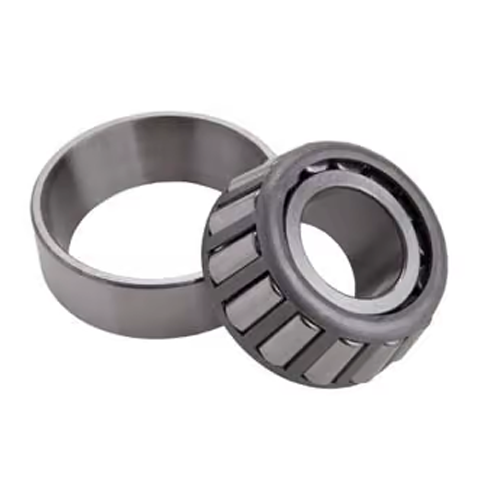
NTN NTN 4T-32208 Single Row Tapered Roller Bearing, D=40mm
NTN 4T-32208 Single Row Tapered Roller Bearing (Inside Dia - 40mm, Outside Dia - 80mm) SPECIFICATIONS Type of Product : Single Row Tapered Roller Bearing Inside Diameter (d) (mm) : 40 Outside Diameter D (mm) : 80 Width Dia mm : 23 Model No : 4T-32208 1. Types, design features, and characteristics Tapered roller bearings are designed so the tapered vertex of the raceway surfaces of the inner and outer rings and rollers converge at one point on the centerline of the bearing (see Fig. 1).The tapered rollers are guided by the compound force of the inner and outer raceway surfaces which keep the rollers pressed up against the large rib on the inner ring.A large variety of these bearings, including single, double, and four row arrangements, are available in both metric and inch series. Each type and associated characteristics are shown in Table 1. For four-row tapered roller bearings, see section “C. Special application bearings.” Table 1 Tapered roller bearing types and characteristics Type Characteristics Single row taperedroller bearings (1) There are both metric and inch series adhering to the standards shown in the following table. Dimension series *Dimension series previously not covered by 3XX are regulated under JIS B 1512; dimensions previously missing from 3XX will henceforth use the bearing number. (2) In addition to the standard design, there are also medium contact angle and large contact angle types, denoted by the contact angle codes at the end of the part numbers (C and D, respectively). (3) Subunits Tapered roller bearings can be disassembled into parts: the inner ring, rollers, and cage (collectively known as the “CONE”) and the outer ring (known as the “CUP”). These are the bearing’s “subunits”. Subunit dimensions are standardized under ISO or ABMA standards, and unified subunits are interchangeable within each dimensional standard. However, high precision grade bearings are generally not interchangeable, and these subunits must be used by assembling only subunits with identical manufacturing numbers.Aside from any cautionary notes that may appear, the single row tapered roller bearings listed in the dimension tables have subunits standardized for both metric and inch systems (including J series). (Refer to Fig. 2) Single row taperedroller bearings (4) These bearings are constructed to have a high capacity for radial loads, axial loads, and combined loads. The larger the contact angle, the greater the axial load capacity. When a pure radial load is applied to a tapered roller bearing, an induced load in the axial direction is also generated, so these bearings are generally used in pairs.(5) Single row tapered roller bearings are separable, so both the inner and outer rings can be used with tight fits. (6) Tapered roller bearings are also manufactured with flanges attached to the outer rings. For more details, contact NTN Engineering. (Refer to Fig. 3) Duplex tapered roller bearings (1) When two single-row tapered roller bearings are to be used in combination, the bearing clearance and preload are adjusted by the inner ring spacer or the outer ring spacer (see Fig. 4).(2) A product number and a combination code are indicated on inner rings, outer rings, and spacers. Parts displaying the same number and code must be used in combination.(3) See A-96 Table 8.14 for the axial internal clearance. Double row taperedroller bearings (1) Back-to-back arrangement (using double row outer rings) and face-to-face arrangement (using double row inner rings) are both available. The assemblies have been adjusted so that each type's internal clearance values are fixed. Only parts with identical manufacturing numbers can be used and they must be assembled according to their code numbers. (Refer to Fig. 5)(2) See A-96 Table 8.14 for the axial internal clearance of double-row and duplex bearings. 2. Standard cage type In general, pressed cages (see Fig. 6) are used in tapered roller bearings. For large sized bearings, machined or pin type cages may also be used, while resin cages may also be used for smaller sized bearings. 3. Allowable misalignment In order to avoid edge loading and potential for premature failure, the maximum allowable misalignment based on bearing series can be found below.The allowable misalignment of combined bearings is influenced by the load center position, so please consult NTN Engineering.• Single row (standard) …………… 1/ 2 000• Single row (ULTAGE) …………… 1/ 600 4. Precautions If bearing load is light during operation, or if the ratio of axial to radial load for duplex and double row bearings exceeds the value of e, slipping may develop between the rollers and raceway surface, sometimes resulting in smearing. The mass of rollers and cages particularly tends to be large for large tapered roller bearings. For additional details, please contact NTN Engineering.In tapered roller bearings, the cage may protrude beyond the inner and/or outer ring side faces. Care should be taken when designing the housing and shaft to ensure contact with the cage does not occur.
$19.27
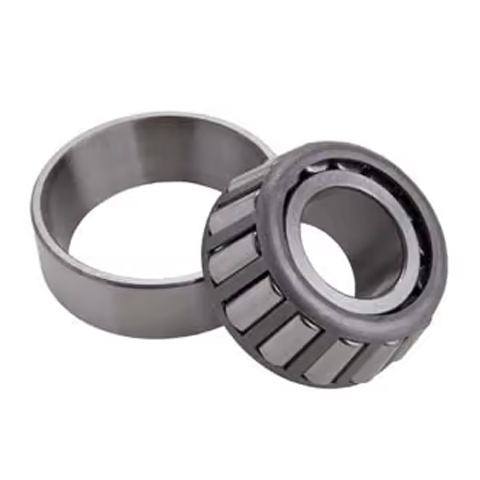
NTN NTN 4T-32209 Single Row Tapered Roller Bearing, D=45mm
NTN 4T-32209 Single Row Tapered Roller Bearing (Inside Dia - 45mm, Outside Dia - 85mm) SPECIFICATIONS Type of Product : Single Row Tapered Roller Bearing Inside Diameter (d) (mm) : 45 Outside Diameter D (mm) : 85 Width Dia mm : 23 Model No : 4T-32209 1. Types, design features, and characteristics Tapered roller bearings are designed so the tapered vertex of the raceway surfaces of the inner and outer rings and rollers converge at one point on the centerline of the bearing (see Fig. 1).The tapered rollers are guided by the compound force of the inner and outer raceway surfaces which keep the rollers pressed up against the large rib on the inner ring.A large variety of these bearings, including single, double, and four row arrangements, are available in both metric and inch series. Each type and associated characteristics are shown in Table 1. For four-row tapered roller bearings, see section “C. Special application bearings.” Table 1 Tapered roller bearing types and characteristics Type Characteristics Single row taperedroller bearings (1) There are both metric and inch series adhering to the standards shown in the following table. Dimension series *Dimension series previously not covered by 3XX are regulated under JIS B 1512; dimensions previously missing from 3XX will henceforth use the bearing number. (2) In addition to the standard design, there are also medium contact angle and large contact angle types, denoted by the contact angle codes at the end of the part numbers (C and D, respectively). (3) Subunits Tapered roller bearings can be disassembled into parts: the inner ring, rollers, and cage (collectively known as the “CONE”) and the outer ring (known as the “CUP”). These are the bearing’s “subunits”. Subunit dimensions are standardized under ISO or ABMA standards, and unified subunits are interchangeable within each dimensional standard. However, high precision grade bearings are generally not interchangeable, and these subunits must be used by assembling only subunits with identical manufacturing numbers.Aside from any cautionary notes that may appear, the single row tapered roller bearings listed in the dimension tables have subunits standardized for both metric and inch systems (including J series). (Refer to Fig. 2) Single row taperedroller bearings (4) These bearings are constructed to have a high capacity for radial loads, axial loads, and combined loads. The larger the contact angle, the greater the axial load capacity. When a pure radial load is applied to a tapered roller bearing, an induced load in the axial direction is also generated, so these bearings are generally used in pairs.(5) Single row tapered roller bearings are separable, so both the inner and outer rings can be used with tight fits. (6) Tapered roller bearings are also manufactured with flanges attached to the outer rings. For more details, contact NTN Engineering. (Refer to Fig. 3) Duplex tapered roller bearings (1) When two single-row tapered roller bearings are to be used in combination, the bearing clearance and preload are adjusted by the inner ring spacer or the outer ring spacer (see Fig. 4).(2) A product number and a combination code are indicated on inner rings, outer rings, and spacers. Parts displaying the same number and code must be used in combination.(3) See A-96 Table 8.14 for the axial internal clearance. Double row taperedroller bearings (1) Back-to-back arrangement (using double row outer rings) and face-to-face arrangement (using double row inner rings) are both available. The assemblies have been adjusted so that each type's internal clearance values are fixed. Only parts with identical manufacturing numbers can be used and they must be assembled according to their code numbers. (Refer to Fig. 5)(2) See A-96 Table 8.14 for the axial internal clearance of double-row and duplex bearings. 2. Standard cage type In general, pressed cages (see Fig. 6) are used in tapered roller bearings. For large sized bearings, machined or pin type cages may also be used, while resin cages may also be used for smaller sized bearings. 3. Allowable misalignment In order to avoid edge loading and potential for premature failure, the maximum allowable misalignment based on bearing series can be found below.The allowable misalignment of combined bearings is influenced by the load center position, so please consult NTN Engineering.• Single row (standard) …………… 1/ 2 000• Single row (ULTAGE) …………… 1/ 600 4. Precautions If bearing load is light during operation, or if the ratio of axial to radial load for duplex and double row bearings exceeds the value of e, slipping may develop between the rollers and raceway surface, sometimes resulting in smearing. The mass of rollers and cages particularly tends to be large for large tapered roller bearings. For additional details, please contact NTN Engineering.In tapered roller bearings, the cage may protrude beyond the inner and/or outer ring side faces. Care should be taken when designing the housing and shaft to ensure contact with the cage does not occur.
$21.57
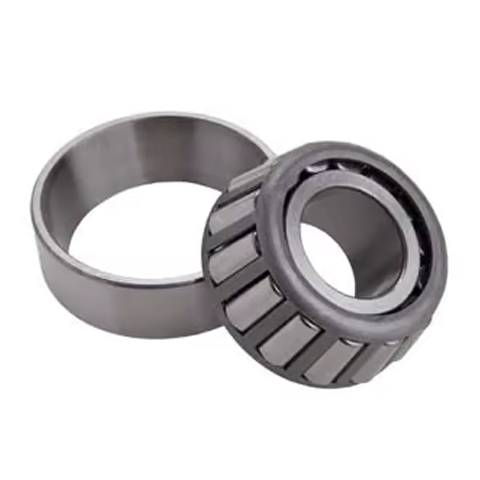
NTN NTN 4T-32211 Single Row Tapered Roller Bearing, D=55mm
NTN 4T-32211 Single Row Tapered Roller Bearing (Inside Dia - 55mm, Outside Dia - 100mm) SPECIFICATIONS Type of Product : Single Row Tapered Roller Bearing Inside Diameter (d) (mm) : 55 Outside Diameter D (mm) : 100 Width Dia mm : 27.06 Model No : 4T-32211 1. Types, design features, and characteristics Tapered roller bearings are designed so the tapered vertex of the raceway surfaces of the inner and outer rings and rollers converge at one point on the centerline of the bearing (see Fig. 1).The tapered rollers are guided by the compound force of the inner and outer raceway surfaces which keep the rollers pressed up against the large rib on the inner ring.A large variety of these bearings, including single, double, and four row arrangements, are available in both metric and inch series. Each type and associated characteristics are shown in Table 1. For four-row tapered roller bearings, see section “C. Special application bearings.” Table 1 Tapered roller bearing types and characteristics Type Characteristics Single row taperedroller bearings (1) There are both metric and inch series adhering to the standards shown in the following table. Dimension series *Dimension series previously not covered by 3XX are regulated under JIS B 1512; dimensions previously missing from 3XX will henceforth use the bearing number. (2) In addition to the standard design, there are also medium contact angle and large contact angle types, denoted by the contact angle codes at the end of the part numbers (C and D, respectively). (3) Subunits Tapered roller bearings can be disassembled into parts: the inner ring, rollers, and cage (collectively known as the “CONE”) and the outer ring (known as the “CUP”). These are the bearing’s “subunits”. Subunit dimensions are standardized under ISO or ABMA standards, and unified subunits are interchangeable within each dimensional standard. However, high precision grade bearings are generally not interchangeable, and these subunits must be used by assembling only subunits with identical manufacturing numbers.Aside from any cautionary notes that may appear, the single row tapered roller bearings listed in the dimension tables have subunits standardized for both metric and inch systems (including J series). (Refer to Fig. 2) Single row taperedroller bearings (4) These bearings are constructed to have a high capacity for radial loads, axial loads, and combined loads. The larger the contact angle, the greater the axial load capacity. When a pure radial load is applied to a tapered roller bearing, an induced load in the axial direction is also generated, so these bearings are generally used in pairs.(5) Single row tapered roller bearings are separable, so both the inner and outer rings can be used with tight fits. (6) Tapered roller bearings are also manufactured with flanges attached to the outer rings. For more details, contact NTN Engineering. (Refer to Fig. 3) Duplex tapered roller bearings (1) When two single-row tapered roller bearings are to be used in combination, the bearing clearance and preload are adjusted by the inner ring spacer or the outer ring spacer (see Fig. 4).(2) A product number and a combination code are indicated on inner rings, outer rings, and spacers. Parts displaying the same number and code must be used in combination.(3) See A-96 Table 8.14 for the axial internal clearance. Double row taperedroller bearings (1) Back-to-back arrangement (using double row outer rings) and face-to-face arrangement (using double row inner rings) are both available. The assemblies have been adjusted so that each type's internal clearance values are fixed. Only parts with identical manufacturing numbers can be used and they must be assembled according to their code numbers. (Refer to Fig. 5)(2) See A-96 Table 8.14 for the axial internal clearance of double-row and duplex bearings. 2. Standard cage type In general, pressed cages (see Fig. 6) are used in tapered roller bearings. For large sized bearings, machined or pin type cages may also be used, while resin cages may also be used for smaller sized bearings. 3. Allowable misalignment In order to avoid edge loading and potential for premature failure, the maximum allowable misalignment based on bearing series can be found below.The allowable misalignment of combined bearings is influenced by the load center position, so please consult NTN Engineering.• Single row (standard) …………… 1/ 2 000• Single row (ULTAGE) …………… 1/ 600 4. Precautions If bearing load is light during operation, or if the ratio of axial to radial load for duplex and double row bearings exceeds the value of e, slipping may develop between the rollers and raceway surface, sometimes resulting in smearing. The mass of rollers and cages particularly tends to be large for large tapered roller bearings. For additional details, please contact NTN Engineering.In tapered roller bearings, the cage may protrude beyond the inner and/or outer ring side faces. Care should be taken when designing the housing and shaft to ensure contact with the cage does not occur.
$30.77
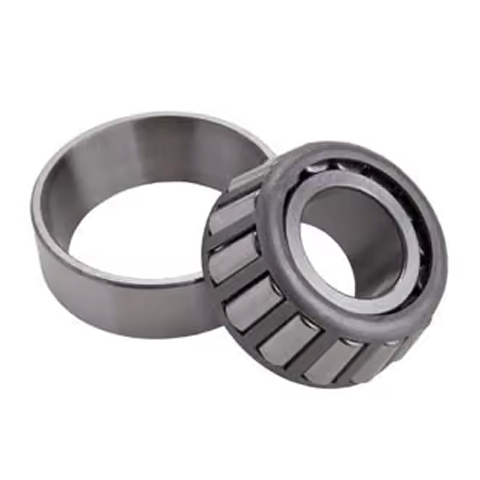
NTN NTN 4T-32304 Single Row Tapered Roller Bearing, D=20mm
NTN 4T-32304 Single Row Tapered Roller Bearing (Inside Dia - 20mm, Outside Dia - 52mm) SPECIFICATIONS Type of Product : Single Row Tapered Roller Bearing Inside Diameter (d) (mm) : 20 Outside Diameter D (mm) : 52 Width Dia mm : 21 Model No : 4T-32304 1. Types, design features, and characteristics Tapered roller bearings are designed so the tapered vertex of the raceway surfaces of the inner and outer rings and rollers converge at one point on the centerline of the bearing (see Fig. 1).The tapered rollers are guided by the compound force of the inner and outer raceway surfaces which keep the rollers pressed up against the large rib on the inner ring.A large variety of these bearings, including single, double, and four row arrangements, are available in both metric and inch series. Each type and associated characteristics are shown in Table 1. For four-row tapered roller bearings, see section “C. Special application bearings.” Table 1 Tapered roller bearing types and characteristics Type Characteristics Single row taperedroller bearings (1) There are both metric and inch series adhering to the standards shown in the following table. Dimension series *Dimension series previously not covered by 3XX are regulated under JIS B 1512; dimensions previously missing from 3XX will henceforth use the bearing number. (2) In addition to the standard design, there are also medium contact angle and large contact angle types, denoted by the contact angle codes at the end of the part numbers (C and D, respectively). (3) Subunits Tapered roller bearings can be disassembled into parts: the inner ring, rollers, and cage (collectively known as the “CONE”) and the outer ring (known as the “CUP”). These are the bearing’s “subunits”. Subunit dimensions are standardized under ISO or ABMA standards, and unified subunits are interchangeable within each dimensional standard. However, high precision grade bearings are generally not interchangeable, and these subunits must be used by assembling only subunits with identical manufacturing numbers.Aside from any cautionary notes that may appear, the single row tapered roller bearings listed in the dimension tables have subunits standardized for both metric and inch systems (including J series). (Refer to Fig. 2) Single row taperedroller bearings (4) These bearings are constructed to have a high capacity for radial loads, axial loads, and combined loads. The larger the contact angle, the greater the axial load capacity. When a pure radial load is applied to a tapered roller bearing, an induced load in the axial direction is also generated, so these bearings are generally used in pairs.(5) Single row tapered roller bearings are separable, so both the inner and outer rings can be used with tight fits. (6) Tapered roller bearings are also manufactured with flanges attached to the outer rings. For more details, contact NTN Engineering. (Refer to Fig. 3) Duplex tapered roller bearings (1) When two single-row tapered roller bearings are to be used in combination, the bearing clearance and preload are adjusted by the inner ring spacer or the outer ring spacer (see Fig. 4).(2) A product number and a combination code are indicated on inner rings, outer rings, and spacers. Parts displaying the same number and code must be used in combination.(3) See A-96 Table 8.14 for the axial internal clearance. Double row taperedroller bearings (1) Back-to-back arrangement (using double row outer rings) and face-to-face arrangement (using double row inner rings) are both available. The assemblies have been adjusted so that each type's internal clearance values are fixed. Only parts with identical manufacturing numbers can be used and they must be assembled according to their code numbers. (Refer to Fig. 5)(2) See A-96 Table 8.14 for the axial internal clearance of double-row and duplex bearings. 2. Standard cage type In general, pressed cages (see Fig. 6) are used in tapered roller bearings. For large sized bearings, machined or pin type cages may also be used, while resin cages may also be used for smaller sized bearings. 3. Allowable misalignment In order to avoid edge loading and potential for premature failure, the maximum allowable misalignment based on bearing series can be found below.The allowable misalignment of combined bearings is influenced by the load center position, so please consult NTN Engineering.• Single row (standard) …………… 1/ 2 000• Single row (ULTAGE) …………… 1/ 600 4. Precautions If bearing load is light during operation, or if the ratio of axial to radial load for duplex and double row bearings exceeds the value of e, slipping may develop between the rollers and raceway surface, sometimes resulting in smearing. The mass of rollers and cages particularly tends to be large for large tapered roller bearings. For additional details, please contact NTN Engineering.In tapered roller bearings, the cage may protrude beyond the inner and/or outer ring side faces. Care should be taken when designing the housing and shaft to ensure contact with the cage does not occur.
$18.01
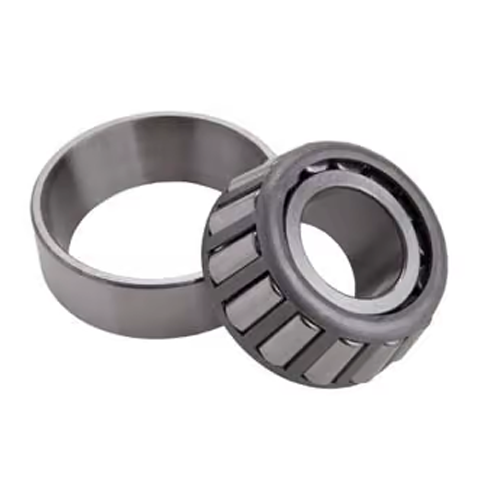
NTN NTN 4T-32305 Single Row Tapered Roller Bearing, D=25mm
NTN 4T-32305 Single Row Tapered Roller Bearing (Inside Dia - 25mm, Outside Dia - 62mm) SPECIFICATIONS Type of Product : Single Row Tapered Roller Bearing Inside Diameter (d) (mm) : 25 Outside Diameter D (mm) : 62 Width Dia mm : 24 Model No : 4T-32305 1. Types, design features, and characteristics Tapered roller bearings are designed so the tapered vertex of the raceway surfaces of the inner and outer rings and rollers converge at one point on the centerline of the bearing (see Fig. 1).The tapered rollers are guided by the compound force of the inner and outer raceway surfaces which keep the rollers pressed up against the large rib on the inner ring.A large variety of these bearings, including single, double, and four row arrangements, are available in both metric and inch series. Each type and associated characteristics are shown in Table 1. For four-row tapered roller bearings, see section “C. Special application bearings.” Table 1 Tapered roller bearing types and characteristics Type Characteristics Single row taperedroller bearings (1) There are both metric and inch series adhering to the standards shown in the following table. Dimension series *Dimension series previously not covered by 3XX are regulated under JIS B 1512; dimensions previously missing from 3XX will henceforth use the bearing number. (2) In addition to the standard design, there are also medium contact angle and large contact angle types, denoted by the contact angle codes at the end of the part numbers (C and D, respectively). (3) Subunits Tapered roller bearings can be disassembled into parts: the inner ring, rollers, and cage (collectively known as the “CONE”) and the outer ring (known as the “CUP”). These are the bearing’s “subunits”. Subunit dimensions are standardized under ISO or ABMA standards, and unified subunits are interchangeable within each dimensional standard. However, high precision grade bearings are generally not interchangeable, and these subunits must be used by assembling only subunits with identical manufacturing numbers.Aside from any cautionary notes that may appear, the single row tapered roller bearings listed in the dimension tables have subunits standardized for both metric and inch systems (including J series). (Refer to Fig. 2) Single row taperedroller bearings (4) These bearings are constructed to have a high capacity for radial loads, axial loads, and combined loads. The larger the contact angle, the greater the axial load capacity. When a pure radial load is applied to a tapered roller bearing, an induced load in the axial direction is also generated, so these bearings are generally used in pairs.(5) Single row tapered roller bearings are separable, so both the inner and outer rings can be used with tight fits. (6) Tapered roller bearings are also manufactured with flanges attached to the outer rings. For more details, contact NTN Engineering. (Refer to Fig. 3) Duplex tapered roller bearings (1) When two single-row tapered roller bearings are to be used in combination, the bearing clearance and preload are adjusted by the inner ring spacer or the outer ring spacer (see Fig. 4).(2) A product number and a combination code are indicated on inner rings, outer rings, and spacers. Parts displaying the same number and code must be used in combination.(3) See A-96 Table 8.14 for the axial internal clearance. Double row taperedroller bearings (1) Back-to-back arrangement (using double row outer rings) and face-to-face arrangement (using double row inner rings) are both available. The assemblies have been adjusted so that each type's internal clearance values are fixed. Only parts with identical manufacturing numbers can be used and they must be assembled according to their code numbers. (Refer to Fig. 5)(2) See A-96 Table 8.14 for the axial internal clearance of double-row and duplex bearings. 2. Standard cage type In general, pressed cages (see Fig. 6) are used in tapered roller bearings. For large sized bearings, machined or pin type cages may also be used, while resin cages may also be used for smaller sized bearings. 3. Allowable misalignment In order to avoid edge loading and potential for premature failure, the maximum allowable misalignment based on bearing series can be found below.The allowable misalignment of combined bearings is influenced by the load center position, so please consult NTN Engineering.• Single row (standard) …………… 1/ 2 000• Single row (ULTAGE) …………… 1/ 600 4. Precautions If bearing load is light during operation, or if the ratio of axial to radial load for duplex and double row bearings exceeds the value of e, slipping may develop between the rollers and raceway surface, sometimes resulting in smearing. The mass of rollers and cages particularly tends to be large for large tapered roller bearings. For additional details, please contact NTN Engineering.In tapered roller bearings, the cage may protrude beyond the inner and/or outer ring side faces. Care should be taken when designing the housing and shaft to ensure contact with the cage does not occur.
$20.06
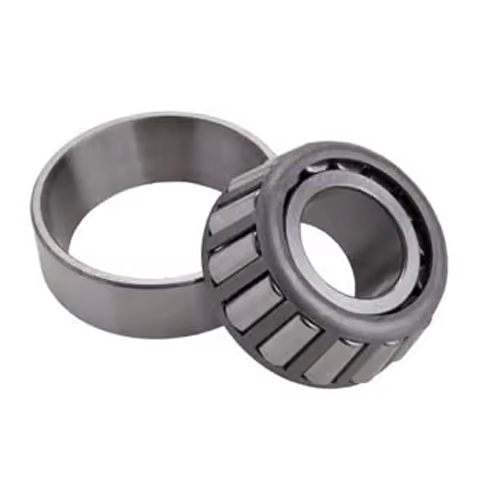
NTN NTN 4T-32306 Single Row Tapered Roller Bearing, D=30mm
NTN 4T-32306 Single Row Tapered Roller Bearing (Inside Dia - 30mm, Outside Dia - 72mm) SPECIFICATIONS Type of Product : Single Row Tapered Roller Bearing Inside Diameter (d) (mm) : 30 Outside Diameter D (mm) : 72 Width Dia mm : 27 Model No : 4T-32306 1. Types, design features, and characteristics Tapered roller bearings are designed so the tapered vertex of the raceway surfaces of the inner and outer rings and rollers converge at one point on the centerline of the bearing (see Fig. 1).The tapered rollers are guided by the compound force of the inner and outer raceway surfaces which keep the rollers pressed up against the large rib on the inner ring.A large variety of these bearings, including single, double, and four row arrangements, are available in both metric and inch series. Each type and associated characteristics are shown in Table 1. For four-row tapered roller bearings, see section “C. Special application bearings.” Table 1 Tapered roller bearing types and characteristics Type Characteristics Single row taperedroller bearings (1) There are both metric and inch series adhering to the standards shown in the following table. Dimension series *Dimension series previously not covered by 3XX are regulated under JIS B 1512; dimensions previously missing from 3XX will henceforth use the bearing number. (2) In addition to the standard design, there are also medium contact angle and large contact angle types, denoted by the contact angle codes at the end of the part numbers (C and D, respectively). (3) Subunits Tapered roller bearings can be disassembled into parts: the inner ring, rollers, and cage (collectively known as the “CONE”) and the outer ring (known as the “CUP”). These are the bearing’s “subunits”. Subunit dimensions are standardized under ISO or ABMA standards, and unified subunits are interchangeable within each dimensional standard. However, high precision grade bearings are generally not interchangeable, and these subunits must be used by assembling only subunits with identical manufacturing numbers.Aside from any cautionary notes that may appear, the single row tapered roller bearings listed in the dimension tables have subunits standardized for both metric and inch systems (including J series). (Refer to Fig. 2) Single row taperedroller bearings (4) These bearings are constructed to have a high capacity for radial loads, axial loads, and combined loads. The larger the contact angle, the greater the axial load capacity. When a pure radial load is applied to a tapered roller bearing, an induced load in the axial direction is also generated, so these bearings are generally used in pairs.(5) Single row tapered roller bearings are separable, so both the inner and outer rings can be used with tight fits. (6) Tapered roller bearings are also manufactured with flanges attached to the outer rings. For more details, contact NTN Engineering. (Refer to Fig. 3) Duplex tapered roller bearings (1) When two single-row tapered roller bearings are to be used in combination, the bearing clearance and preload are adjusted by the inner ring spacer or the outer ring spacer (see Fig. 4).(2) A product number and a combination code are indicated on inner rings, outer rings, and spacers. Parts displaying the same number and code must be used in combination.(3) See A-96 Table 8.14 for the axial internal clearance. Double row taperedroller bearings (1) Back-to-back arrangement (using double row outer rings) and face-to-face arrangement (using double row inner rings) are both available. The assemblies have been adjusted so that each type's internal clearance values are fixed. Only parts with identical manufacturing numbers can be used and they must be assembled according to their code numbers. (Refer to Fig. 5)(2) See A-96 Table 8.14 for the axial internal clearance of double-row and duplex bearings. 2. Standard cage type In general, pressed cages (see Fig. 6) are used in tapered roller bearings. For large sized bearings, machined or pin type cages may also be used, while resin cages may also be used for smaller sized bearings. 3. Allowable misalignment In order to avoid edge loading and potential for premature failure, the maximum allowable misalignment based on bearing series can be found below.The allowable misalignment of combined bearings is influenced by the load center position, so please consult NTN Engineering.• Single row (standard) …………… 1/ 2 000• Single row (ULTAGE) …………… 1/ 600 4. Precautions If bearing load is light during operation, or if the ratio of axial to radial load for duplex and double row bearings exceeds the value of e, slipping may develop between the rollers and raceway surface, sometimes resulting in smearing. The mass of rollers and cages particularly tends to be large for large tapered roller bearings. For additional details, please contact NTN Engineering.In tapered roller bearings, the cage may protrude beyond the inner and/or outer ring side faces. Care should be taken when designing the housing and shaft to ensure contact with the cage does not occur.
$23.92

NTN NTN 51102 Ball Thrust Bearing - Single-Direction, 15 mm
NTN 51102 Ball Thrust Bearing - Single-Direction, 15 mm Ball Thrust Bearing - Single-Direction, 15 mm Bore, 28 mm OD, 9 mm Width, Separable SPECIFICATIONS Bore Type Round Thrust Bearing Type Single-Direction Bore Diameter 15.000 mm, 0.5906 in Outside Diameter 28.000 mm, 1.1024 in Overall Width 9.000 mm, 0.3543 in Country of Origin JP Outside Diameter Design Straight Closure Type Open Separable or Banded Separable Configuration One Internal Clearance CN Precision Rating ISO Class 0 Static Load Capacity 3800 lbf Seal Material None Dynamic Load Capacity 2360 lbf Seal Type None Operating Temperature Range -40 to 250 ºF Maximum RPM 8800 rpm Bearing Material High Carbon Chrome Steel Cage Material Resin Cage Type Molded Fillet Radius 0.300 mm, 0.0118 in Series 511 Manufacturer UPC Number 4547359305852 Harmonization Code 8482.10.5008 Weight 0.046 lb Thrust Bearings Thrust bearings are designed primarily to support axial loads at contact angles between 30° and 90°. Similar to radial bearings, thrust bearing designs may incorporate balls or rollers as rolling elements.The configuration and characteristics of each type of bearing are given below.With thrust bearings, it is necessary to supply an axial preload in order to prevent slipping between the bearing’s rolling elements and raceways.For more detailed information, please refer to section “8.3 Bearing preload.” 1. Single direction thrust ball bearings As shown in Fig. 1, the steel balls of single direction thrust ball bearings are arranged between a pair of a pair of washers (shaft washer and housing washer), and the normal contact angle is 90°. Axial loads can be supported in only one direction, and radial loads cannot be accommodated. These bearings are not suitable for high speed operation.Table 1 lists the standard cage types for single direction thrust ball bearings 2. Thrust spherical roller bearings Just like spherical roller bearings, the center of the spherical surface for thrust spherical roller bearings is the point where the raceway surface of the housing raceway washer meets the center axis of the bearing. Since thrust spherical roller bearings incorporate barrel-shaped rollers as rolling elements, they also have self-aligning properties. (See Fig. 2) Under normal load conditions, the allowable misalignment is 1/60 to 1/30, although this will vary depending upon the bearing’s dimension series.These bearings use machined copper alloy cages and a guide sleeve for the cage is attached to the inner ring. These bearings have a high axial load capacity, and can accommodate some radial load when the ring is axially loaded. It is necessary to operate these bearings where the load condition meets Fr / Fa ≦ 0.55.The design for spherical thrust bearings is such that lubricant cannot enter the gap between the cage and the guide sleeve. Therefore, oil lubrication should be used, even in low speed operation. 3. Thrust cylindrical roller bearings Thrust bearings incorporating cylindrical rollers are available in single row, double row, triple row, and four row varieties. (See Fig. 3) NTN Engineering offers the 811, 812 and 893 series that conform to dimension series 11, 12 and 93 prescribed in JIS, as well as other special dimensions.While thrust cylindrical roller bearings are only able to receive axial loads, the axial loads can be heavy due to the high axial rigidity of the bearing. For series 811, 812, and 893, the dimension tables are listed section “E. Needle roller bearings.” Bearings with dimensions not listed in the dimension tables are also manufactured. Contact NTN Engineering for more information. 4. Thrust tapered roller bearings Although not listed in the dimension tables, tapered roller bearings like those in Fig. 4 are also manufactured. Contact NTN Engineering for more detailed information.
$5.74

NTN NTN 51103 Ball Thrust Bearing - Single-Direction, 17 mm
NTN 51103 Ball Thrust Bearing - Single-Direction, 17 mm Ball Thrust Bearing - Single-Direction, 17 mm Bore, 30 mm OD, 9 mm Width, Separable SPECIFICATIONS Bore Type Round Thrust Bearing Type Single-Direction Bore Diameter 17.000 mm, 0.6693 in Outside Diameter 1.1811 in, 30.000 mm Overall Width 9.000 mm, 0.3543 in Country of Origin JP Outside Diameter Design Straight Closure Type Open Separable or Banded Separable Configuration One Internal Clearance CN Precision Rating ISO Class 0 Static Load Capacity 4100 lbf Seal Material None Dynamic Load Capacity 2430 lbf Seal Type None Operating Temperature Range -40 to 250 ºF Maximum RPM 8500 rpm Bearing Material High Carbon Chrome Steel Cage Material Resin Cage Type Molded Fillet Radius 0.300 mm, 0.0118 in Series 511 Manufacturer UPC Number 4547359305869 Harmonization Code 8482.10.5008 Weight 0.049 lb Thrust Bearings Thrust bearings are designed primarily to support axial loads at contact angles between 30° and 90°. Similar to radial bearings, thrust bearing designs may incorporate balls or rollers as rolling elements.The configuration and characteristics of each type of bearing are given below.With thrust bearings, it is necessary to supply an axial preload in order to prevent slipping between the bearing’s rolling elements and raceways.For more detailed information, please refer to section “8.3 Bearing preload.” 1. Single direction thrust ball bearings As shown in Fig. 1, the steel balls of single direction thrust ball bearings are arranged between a pair of a pair of washers (shaft washer and housing washer), and the normal contact angle is 90°. Axial loads can be supported in only one direction, and radial loads cannot be accommodated. These bearings are not suitable for high speed operation.Table 1 lists the standard cage types for single direction thrust ball bearings 2. Thrust spherical roller bearings Just like spherical roller bearings, the center of the spherical surface for thrust spherical roller bearings is the point where the raceway surface of the housing raceway washer meets the center axis of the bearing. Since thrust spherical roller bearings incorporate barrel-shaped rollers as rolling elements, they also have self-aligning properties. (See Fig. 2) Under normal load conditions, the allowable misalignment is 1/60 to 1/30, although this will vary depending upon the bearing’s dimension series.These bearings use machined copper alloy cages and a guide sleeve for the cage is attached to the inner ring. These bearings have a high axial load capacity, and can accommodate some radial load when the ring is axially loaded. It is necessary to operate these bearings where the load condition meets Fr / Fa ≦ 0.55.The design for spherical thrust bearings is such that lubricant cannot enter the gap between the cage and the guide sleeve. Therefore, oil lubrication should be used, even in low speed operation. 3. Thrust cylindrical roller bearings Thrust bearings incorporating cylindrical rollers are available in single row, double row, triple row, and four row varieties. (See Fig. 3) NTN Engineering offers the 811, 812 and 893 series that conform to dimension series 11, 12 and 93 prescribed in JIS, as well as other special dimensions.While thrust cylindrical roller bearings are only able to receive axial loads, the axial loads can be heavy due to the high axial rigidity of the bearing. For series 811, 812, and 893, the dimension tables are listed section “E. Needle roller bearings.” Bearings with dimensions not listed in the dimension tables are also manufactured. Contact NTN Engineering for more information. 4. Thrust tapered roller bearings Although not listed in the dimension tables, tapered roller bearings like those in Fig. 4 are also manufactured. Contact NTN Engineering for more detailed information.
$5.82

NTN NTN 51105 Ball Thrust Bearing - Single-Direction, 25 mm
NTN 51105 Ball Thrust Bearing - Single-Direction, 25 mm Ball Thrust Bearing - Single-Direction, 25 mm Bore, 42 mm OD, 11 mm Width, Separable SPECIFICATIONS Bore Type Round Thrust Bearing Type Single-Direction Bore Diameter 0.9843 in, 25.000 mm Outside Diameter 42.000 mm, 1.6535 in Overall Width 11.000 mm, 0.4331 in Country of Origin JP Outside Diameter Design Straight Closure Type Open Separable or Banded Separable Configuration One Internal Clearance CN Precision Rating ISO Class 0 Static Load Capacity 8300 lbf Seal Material None Dynamic Load Capacity 4400 lbf Seal Type None Operating Temperature Range -40 to 250 ºF Maximum RPM 6500 rpm Bearing Material High Carbon Chrome Steel Cage Material Resin Cage Type Molded Fillet Radius 0.600 mm, 0.0236 in Series 511 Manufacturer UPC Number 4547359305890 Harmonization Code 8482.10.5008 Weight 0.115 lb Thrust Bearings Thrust bearings are designed primarily to support axial loads at contact angles between 30° and 90°. Similar to radial bearings, thrust bearing designs may incorporate balls or rollers as rolling elements.The configuration and characteristics of each type of bearing are given below.With thrust bearings, it is necessary to supply an axial preload in order to prevent slipping between the bearing’s rolling elements and raceways.For more detailed information, please refer to section “8.3 Bearing preload.” 1. Single direction thrust ball bearings As shown in Fig. 1, the steel balls of single direction thrust ball bearings are arranged between a pair of a pair of washers (shaft washer and housing washer), and the normal contact angle is 90°. Axial loads can be supported in only one direction, and radial loads cannot be accommodated. These bearings are not suitable for high speed operation.Table 1 lists the standard cage types for single direction thrust ball bearings 2. Thrust spherical roller bearings Just like spherical roller bearings, the center of the spherical surface for thrust spherical roller bearings is the point where the raceway surface of the housing raceway washer meets the center axis of the bearing. Since thrust spherical roller bearings incorporate barrel-shaped rollers as rolling elements, they also have self-aligning properties. (See Fig. 2) Under normal load conditions, the allowable misalignment is 1/60 to 1/30, although this will vary depending upon the bearing’s dimension series.These bearings use machined copper alloy cages and a guide sleeve for the cage is attached to the inner ring. These bearings have a high axial load capacity, and can accommodate some radial load when the ring is axially loaded. It is necessary to operate these bearings where the load condition meets Fr / Fa ≦ 0.55.The design for spherical thrust bearings is such that lubricant cannot enter the gap between the cage and the guide sleeve. Therefore, oil lubrication should be used, even in low speed operation. 3. Thrust cylindrical roller bearings Thrust bearings incorporating cylindrical rollers are available in single row, double row, triple row, and four row varieties. (See Fig. 3) NTN Engineering offers the 811, 812 and 893 series that conform to dimension series 11, 12 and 93 prescribed in JIS, as well as other special dimensions.While thrust cylindrical roller bearings are only able to receive axial loads, the axial loads can be heavy due to the high axial rigidity of the bearing. For series 811, 812, and 893, the dimension tables are listed section “E. Needle roller bearings.” Bearings with dimensions not listed in the dimension tables are also manufactured. Contact NTN Engineering for more information. 4. Thrust tapered roller bearings Although not listed in the dimension tables, tapered roller bearings like those in Fig. 4 are also manufactured. Contact NTN Engineering for more detailed information.
$6.47


