Products
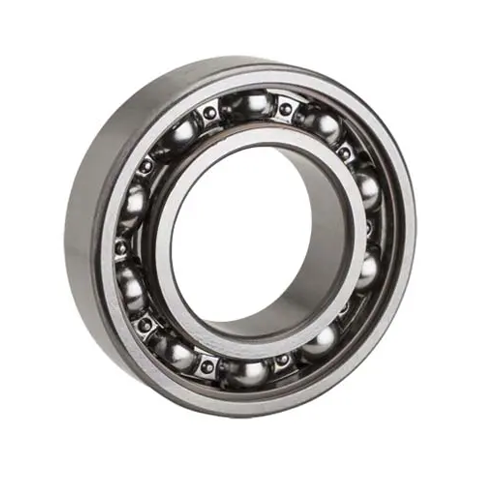
NTN NTN Deep Groove Ball Bearings, Single Row Radial Ball Bearings, 16015
Item # d D B r Static Load Rating Dynamic Load Rating 16015 2.9528 in 75.000 mm 4.5276 in 115.000 mm 0.5118 in 13.000 mm 0.0236 in 0.600 mm 5390 lbf 24000 N 24.00 kN 6200 lbf 27600 N 27.60 kN 1. Design features and characteristics Deep groove ball bearings are very widely used. A deep groove is formed on the inner and outer ring of the bearing enabling the bearing to sustain radial and axial loads in either direction as well as the complex loads which result from the combination of these forces. Deep groove ball bearings are suitable for high speed applications. When two or more deep groove ball bearings are used in combination and mounted adjacent to each other a duplex set (D2) should be used. Duplex bearings (D2) utilize controlled tolerances to more evenly distribute the loading between the individual bearing rows which improves the overall performance of the assembly. In addition to unsealed and unlubricated “open” bearings, NTN provides deep groove ball bearings that are pre-lubricated with grease and enclosed by seals or shields. See section “11. Lubrication” for a list of some of the greases which can be used. Table 1 shows the construction and special characteristics of various sealed deep groove ball bearings. Types and codes N Shielded type Shielded type Non-contact type ZZ Non-contact type LLB Contact type LLU Low torque type LLH Construction Metal shield plate is affixed to the outside ring; the inner ring incorporates a V-groove and labyrinth clearance. The outer ring incorporates synthetic rubber molded to a steel plate; seal edge is aligned with V-groove along inner ring surface with labyrinth clearance The outer ring incorporates synthetic rubber molded to a steel plate; seal edge contacts V-groove along inner ring surface Basic construction is the same as LLU type, but a specially designed lip on the edge of the seal prevents foreign matter penetration; low torque construction. Torque Small Small Higher Medium Dust proofing Good Better than ZZ-type Excellent Much better than LLB-type Water proofing Poor Poor Very good Good High speed capacity Same as open type Same as open type Limited by contact seals Much better than LLU-type Allowable temp. range Depends on lubricant −25 to 120°C −25 to 110°C −25 to 120°C
$30.29
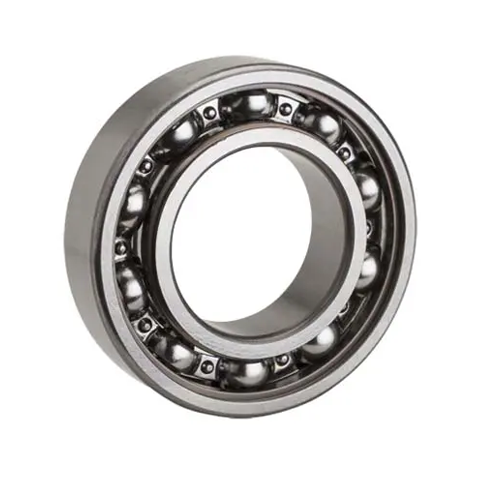
NTN NTN Deep Groove Ball Bearings, Single Row Radial Ball Bearings, 16016
Item # d D B r Static Load Rating Dynamic Load Rating 16016 3.1496 in 80.000 mm 4.9213 in 125.000 mm 0.3937 in 10.000 mm 0.0236 in 0.600 mm 5640 lbf 25100 N 25.10 kN 6310 lbf 28100 N 28.10 kN 1. Design features and characteristics Deep groove ball bearings are very widely used. A deep groove is formed on the inner and outer ring of the bearing enabling the bearing to sustain radial and axial loads in either direction as well as the complex loads which result from the combination of these forces. Deep groove ball bearings are suitable for high speed applications. When two or more deep groove ball bearings are used in combination and mounted adjacent to each other a duplex set (D2) should be used. Duplex bearings (D2) utilize controlled tolerances to more evenly distribute the loading between the individual bearing rows which improves the overall performance of the assembly. In addition to unsealed and unlubricated “open” bearings, NTN provides deep groove ball bearings that are pre-lubricated with grease and enclosed by seals or shields. See section “11. Lubrication” for a list of some of the greases which can be used. Table 1 shows the construction and special characteristics of various sealed deep groove ball bearings. Types and codes N Shielded type Shielded type Non-contact type ZZ Non-contact type LLB Contact type LLU Low torque type LLH Construction Metal shield plate is affixed to the outside ring; the inner ring incorporates a V-groove and labyrinth clearance. The outer ring incorporates synthetic rubber molded to a steel plate; seal edge is aligned with V-groove along inner ring surface with labyrinth clearance The outer ring incorporates synthetic rubber molded to a steel plate; seal edge contacts V-groove along inner ring surface Basic construction is the same as LLU type, but a specially designed lip on the edge of the seal prevents foreign matter penetration; low torque construction. Torque Small Small Higher Medium Dust proofing Good Better than ZZ-type Excellent Much better than LLB-type Water proofing Poor Poor Very good Good High speed capacity Same as open type Same as open type Limited by contact seals Much better than LLU-type Allowable temp. range Depends on lubricant −25 to 120°C −25 to 110°C −25 to 120°C
$35.32
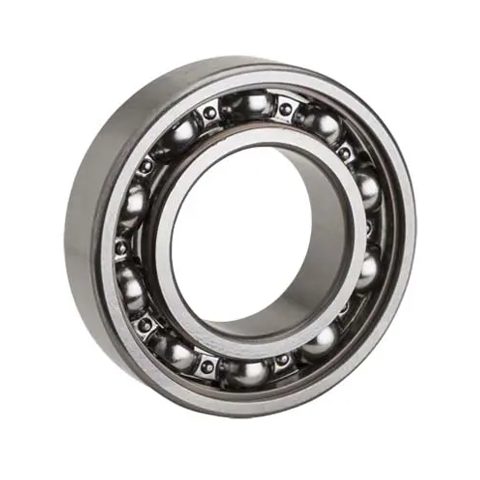
NTN NTN Deep Groove Ball Bearings, Single Row Radial Ball Bearings, 16017
Item # d D B r Static Load Rating Dynamic Load Rating 16017 3.3465 in 85.000 mm 5.1181 in 130.000 mm 0.5512 in 14.000 mm 0.0236 in 0.600 mm 5880 lbf 26200 N 26.20 kN 6450 lbf 28700 N 28.70 kN 1. Design features and characteristics Deep groove ball bearings are very widely used. A deep groove is formed on the inner and outer ring of the bearing enabling the bearing to sustain radial and axial loads in either direction as well as the complex loads which result from the combination of these forces. Deep groove ball bearings are suitable for high speed applications. When two or more deep groove ball bearings are used in combination and mounted adjacent to each other a duplex set (D2) should be used. Duplex bearings (D2) utilize controlled tolerances to more evenly distribute the loading between the individual bearing rows which improves the overall performance of the assembly. In addition to unsealed and unlubricated “open” bearings, NTN provides deep groove ball bearings that are pre-lubricated with grease and enclosed by seals or shields. See section “11. Lubrication” for a list of some of the greases which can be used. Table 1 shows the construction and special characteristics of various sealed deep groove ball bearings. Types and codes N Shielded type Shielded type Non-contact type ZZ Non-contact type LLB Contact type LLU Low torque type LLH Construction Metal shield plate is affixed to the outside ring; the inner ring incorporates a V-groove and labyrinth clearance. The outer ring incorporates synthetic rubber molded to a steel plate; seal edge is aligned with V-groove along inner ring surface with labyrinth clearance The outer ring incorporates synthetic rubber molded to a steel plate; seal edge contacts V-groove along inner ring surface Basic construction is the same as LLU type, but a specially designed lip on the edge of the seal prevents foreign matter penetration; low torque construction. Torque Small Small Higher Medium Dust proofing Good Better than ZZ-type Excellent Much better than LLB-type Water proofing Poor Poor Very good Good High speed capacity Same as open type Same as open type Limited by contact seals Much better than LLU-type Allowable temp. range Depends on lubricant −25 to 120°C −25 to 110°C −25 to 120°C
$42.02
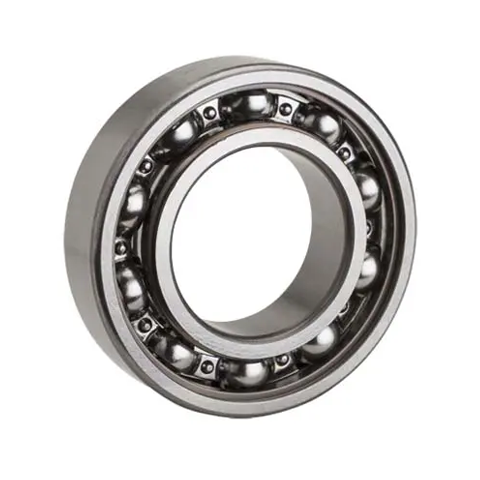
NTN NTN Deep Groove Ball Bearings, Single Row Radial Ball Bearings, 16018
Item # d D B r Static Load Rating Dynamic Load Rating 16018 3.5433 in 90.000 mm 5.5118 in 140.000 mm 0.6299 in 16.000 mm 0.0394 in 1.000 mm 7530 lbf 33500 N 33.50 kN 8310 lbf 37000 N 37.00 kN 1. Design features and characteristics Deep groove ball bearings are very widely used. A deep groove is formed on the inner and outer ring of the bearing enabling the bearing to sustain radial and axial loads in either direction as well as the complex loads which result from the combination of these forces. Deep groove ball bearings are suitable for high speed applications. When two or more deep groove ball bearings are used in combination and mounted adjacent to each other a duplex set (D2) should be used. Duplex bearings (D2) utilize controlled tolerances to more evenly distribute the loading between the individual bearing rows which improves the overall performance of the assembly. In addition to unsealed and unlubricated “open” bearings, NTN provides deep groove ball bearings that are pre-lubricated with grease and enclosed by seals or shields. See section “11. Lubrication” for a list of some of the greases which can be used. Table 1 shows the construction and special characteristics of various sealed deep groove ball bearings. Types and codes N Shielded type Shielded type Non-contact type ZZ Non-contact type LLB Contact type LLU Low torque type LLH Construction Metal shield plate is affixed to the outside ring; the inner ring incorporates a V-groove and labyrinth clearance. The outer ring incorporates synthetic rubber molded to a steel plate; seal edge is aligned with V-groove along inner ring surface with labyrinth clearance The outer ring incorporates synthetic rubber molded to a steel plate; seal edge contacts V-groove along inner ring surface Basic construction is the same as LLU type, but a specially designed lip on the edge of the seal prevents foreign matter penetration; low torque construction. Torque Small Small Higher Medium Dust proofing Good Better than ZZ-type Excellent Much better than LLB-type Water proofing Poor Poor Very good Good High speed capacity Same as open type Same as open type Limited by contact seals Much better than LLU-type Allowable temp. range Depends on lubricant −25 to 120°C −25 to 110°C −25 to 120°C
$49.15
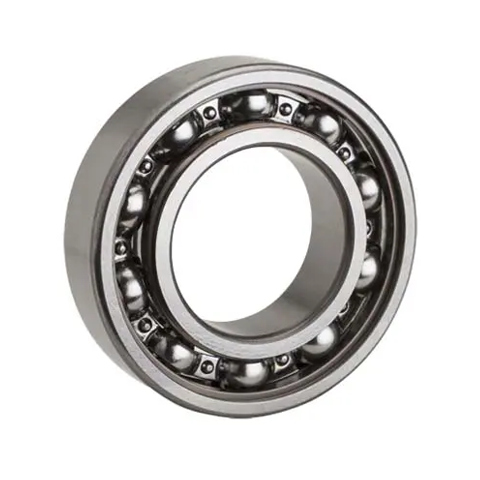
NTN NTN Deep Groove Ball Bearings, Single Row Radial Ball Bearings, 16019
Item # d D B r Static Load Rating Dynamic Load Rating 16019 3.7402 in 95.000 mm 5.7087 in 145.000 mm 0.6299 in 16.000 mm 0.0394 in 1.000 mm 7860 lbf 35000 N 35.00 kN 8540 lbf 38000 N 38.00 kN 1. Design features and characteristics Deep groove ball bearings are very widely used. A deep groove is formed on the inner and outer ring of the bearing enabling the bearing to sustain radial and axial loads in either direction as well as the complex loads which result from the combination of these forces. Deep groove ball bearings are suitable for high speed applications. When two or more deep groove ball bearings are used in combination and mounted adjacent to each other a duplex set (D2) should be used. Duplex bearings (D2) utilize controlled tolerances to more evenly distribute the loading between the individual bearing rows which improves the overall performance of the assembly. In addition to unsealed and unlubricated “open” bearings, NTN provides deep groove ball bearings that are pre-lubricated with grease and enclosed by seals or shields. See section “11. Lubrication” for a list of some of the greases which can be used. Table 1 shows the construction and special characteristics of various sealed deep groove ball bearings. Types and codes N Shielded type Shielded type Non-contact type ZZ Non-contact type LLB Contact type LLU Low torque type LLH Construction Metal shield plate is affixed to the outside ring; the inner ring incorporates a V-groove and labyrinth clearance. The outer ring incorporates synthetic rubber molded to a steel plate; seal edge is aligned with V-groove along inner ring surface with labyrinth clearance The outer ring incorporates synthetic rubber molded to a steel plate; seal edge contacts V-groove along inner ring surface Basic construction is the same as LLU type, but a specially designed lip on the edge of the seal prevents foreign matter penetration; low torque construction. Torque Small Small Higher Medium Dust proofing Good Better than ZZ-type Excellent Much better than LLB-type Water proofing Poor Poor Very good Good High speed capacity Same as open type Same as open type Limited by contact seals Much better than LLU-type Allowable temp. range Depends on lubricant −25 to 120°C −25 to 110°C −25 to 120°C
$54.72
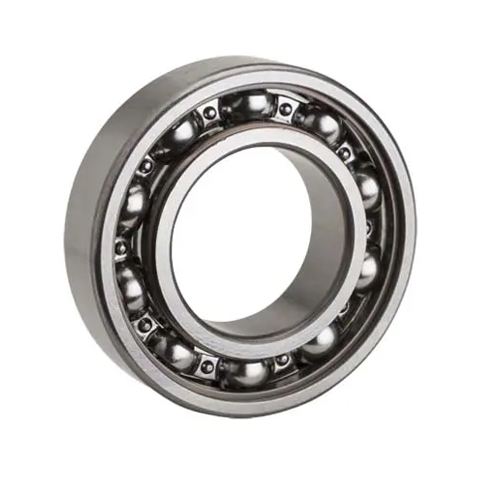
NTN NTN Deep Groove Ball Bearings, Single Row Radial Ball Bearings, 16020
Item # d D B r Static Load Rating Dynamic Load Rating 16020 3.9370 in 100.000 mm 5.9055 in 150.000 mm 0.6299 in 16.000 mm 0.0394 in 1.000 mm 8200 lbf 36500 N 36.50 kN 8760 lbf 39000 N 39.00 kN 1. Design features and characteristics Deep groove ball bearings are very widely used. A deep groove is formed on the inner and outer ring of the bearing enabling the bearing to sustain radial and axial loads in either direction as well as the complex loads which result from the combination of these forces. Deep groove ball bearings are suitable for high speed applications. When two or more deep groove ball bearings are used in combination and mounted adjacent to each other a duplex set (D2) should be used. Duplex bearings (D2) utilize controlled tolerances to more evenly distribute the loading between the individual bearing rows which improves the overall performance of the assembly. In addition to unsealed and unlubricated “open” bearings, NTN provides deep groove ball bearings that are pre-lubricated with grease and enclosed by seals or shields. See section “11. Lubrication” for a list of some of the greases which can be used. Table 1 shows the construction and special characteristics of various sealed deep groove ball bearings. Types and codes N Shielded type Shielded type Non-contact type ZZ Non-contact type LLB Contact type LLU Low torque type LLH Construction Metal shield plate is affixed to the outside ring; the inner ring incorporates a V-groove and labyrinth clearance. The outer ring incorporates synthetic rubber molded to a steel plate; seal edge is aligned with V-groove along inner ring surface with labyrinth clearance The outer ring incorporates synthetic rubber molded to a steel plate; seal edge contacts V-groove along inner ring surface Basic construction is the same as LLU type, but a specially designed lip on the edge of the seal prevents foreign matter penetration; low torque construction. Torque Small Small Higher Medium Dust proofing Good Better than ZZ-type Excellent Much better than LLB-type Water proofing Poor Poor Very good Good High speed capacity Same as open type Same as open type Limited by contact seals Much better than LLU-type Allowable temp. range Depends on lubricant −25 to 120°C −25 to 110°C −25 to 120°C
$61.87
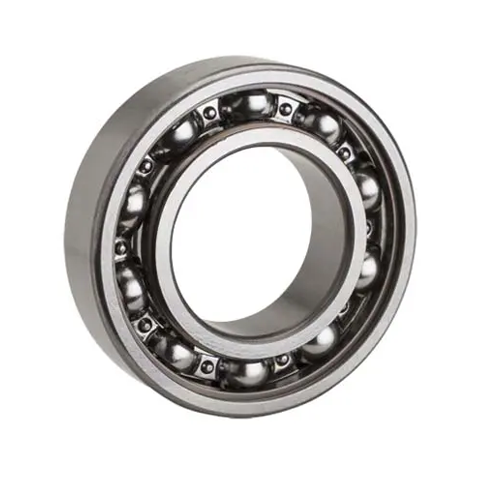
NTN NTN Deep Groove Ball Bearings, Single Row Radial Ball Bearings, 16021
Item # d D B r Static Load Rating Dynamic Load Rating 16021 4.1339 in 105.000 mm 6.2992 in 160.000 mm 0.7087 in 18.000 mm 0.0394 in 1.000 mm 11350 lbf 50500 N 50.50 kN 12920 lbf 57500 N 57.50 kN 1. Design features and characteristics Deep groove ball bearings are very widely used. A deep groove is formed on the inner and outer ring of the bearing enabling the bearing to sustain radial and axial loads in either direction as well as the complex loads which result from the combination of these forces. Deep groove ball bearings are suitable for high speed applications. When two or more deep groove ball bearings are used in combination and mounted adjacent to each other a duplex set (D2) should be used. Duplex bearings (D2) utilize controlled tolerances to more evenly distribute the loading between the individual bearing rows which improves the overall performance of the assembly. In addition to unsealed and unlubricated “open” bearings, NTN provides deep groove ball bearings that are pre-lubricated with grease and enclosed by seals or shields. See section “11. Lubrication” for a list of some of the greases which can be used. Table 1 shows the construction and special characteristics of various sealed deep groove ball bearings. Types and codes N Shielded type Shielded type Non-contact type ZZ Non-contact type LLB Contact type LLU Low torque type LLH Construction Metal shield plate is affixed to the outside ring; the inner ring incorporates a V-groove and labyrinth clearance. The outer ring incorporates synthetic rubber molded to a steel plate; seal edge is aligned with V-groove along inner ring surface with labyrinth clearance The outer ring incorporates synthetic rubber molded to a steel plate; seal edge contacts V-groove along inner ring surface Basic construction is the same as LLU type, but a specially designed lip on the edge of the seal prevents foreign matter penetration; low torque construction. Torque Small Small Higher Medium Dust proofing Good Better than ZZ-type Excellent Much better than LLB-type Water proofing Poor Poor Very good Good High speed capacity Same as open type Same as open type Limited by contact seals Much better than LLU-type Allowable temp. range Depends on lubricant −25 to 120°C −25 to 110°C −25 to 120°C
$67.57
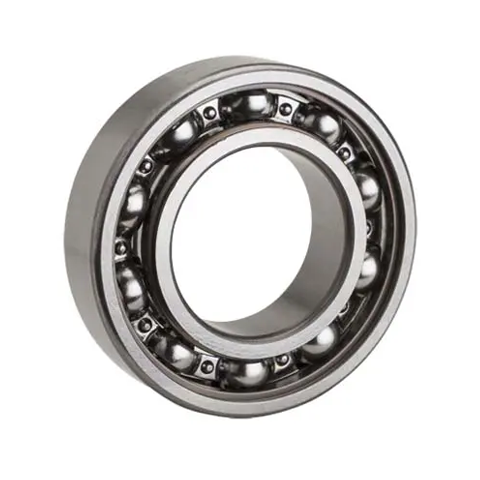
NTN NTN Deep Groove Ball Bearings, Single Row Radial Ball Bearings, 16022
Item # d D B r Static Load Rating Dynamic Load Rating 16022 4.3307 in 110.000 mm 6.6929 in 170.000 mm 0.7480 in 19.000 mm 0.0394 in 1.000 mm 12700 lbf 56500 N 56.50 kN 14270 lbf 63500 N 63.50 kN 1. Design features and characteristics Deep groove ball bearings are very widely used. A deep groove is formed on the inner and outer ring of the bearing enabling the bearing to sustain radial and axial loads in either direction as well as the complex loads which result from the combination of these forces. Deep groove ball bearings are suitable for high speed applications. When two or more deep groove ball bearings are used in combination and mounted adjacent to each other a duplex set (D2) should be used. Duplex bearings (D2) utilize controlled tolerances to more evenly distribute the loading between the individual bearing rows which improves the overall performance of the assembly. In addition to unsealed and unlubricated “open” bearings, NTN provides deep groove ball bearings that are pre-lubricated with grease and enclosed by seals or shields. See section “11. Lubrication” for a list of some of the greases which can be used. Table 1 shows the construction and special characteristics of various sealed deep groove ball bearings. Types and codes N Shielded type Shielded type Non-contact type ZZ Non-contact type LLB Contact type LLU Low torque type LLH Construction Metal shield plate is affixed to the outside ring; the inner ring incorporates a V-groove and labyrinth clearance. The outer ring incorporates synthetic rubber molded to a steel plate; seal edge is aligned with V-groove along inner ring surface with labyrinth clearance The outer ring incorporates synthetic rubber molded to a steel plate; seal edge contacts V-groove along inner ring surface Basic construction is the same as LLU type, but a specially designed lip on the edge of the seal prevents foreign matter penetration; low torque construction. Torque Small Small Higher Medium Dust proofing Good Better than ZZ-type Excellent Much better than LLB-type Water proofing Poor Poor Very good Good High speed capacity Same as open type Same as open type Limited by contact seals Much better than LLU-type Allowable temp. range Depends on lubricant −25 to 120°C −25 to 110°C −25 to 120°C
$71.47
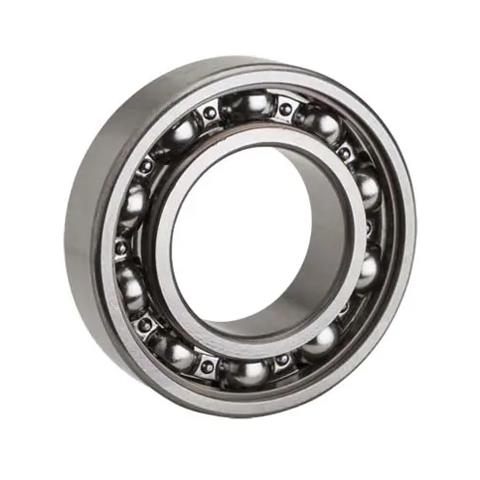
NTN NTN Deep Groove Ball Bearings, Single Row Radial Ball Bearings, 16024
Item # d D B r Static Load Rating Dynamic Load Rating 16024 4.7244 in 120.000 mm 7.0866 in 180.000 mm 0.7480 in 19.000 mm 0.0394 in 1.000 mm 14270 lbf 63500 N 63.50 kN 15730 lbf 70000 N 70.00 kN 1. Design features and characteristics Deep groove ball bearings are very widely used. A deep groove is formed on the inner and outer ring of the bearing enabling the bearing to sustain radial and axial loads in either direction as well as the complex loads which result from the combination of these forces. Deep groove ball bearings are suitable for high speed applications. When two or more deep groove ball bearings are used in combination and mounted adjacent to each other a duplex set (D2) should be used. Duplex bearings (D2) utilize controlled tolerances to more evenly distribute the loading between the individual bearing rows which improves the overall performance of the assembly. In addition to unsealed and unlubricated “open” bearings, NTN provides deep groove ball bearings that are pre-lubricated with grease and enclosed by seals or shields. See section “11. Lubrication” for a list of some of the greases which can be used. Table 1 shows the construction and special characteristics of various sealed deep groove ball bearings. Types and codes N Shielded type Shielded type Non-contact type ZZ Non-contact type LLB Contact type LLU Low torque type LLH Construction Metal shield plate is affixed to the outside ring; the inner ring incorporates a V-groove and labyrinth clearance. The outer ring incorporates synthetic rubber molded to a steel plate; seal edge is aligned with V-groove along inner ring surface with labyrinth clearance The outer ring incorporates synthetic rubber molded to a steel plate; seal edge contacts V-groove along inner ring surface Basic construction is the same as LLU type, but a specially designed lip on the edge of the seal prevents foreign matter penetration; low torque construction. Torque Small Small Higher Medium Dust proofing Good Better than ZZ-type Excellent Much better than LLB-type Water proofing Poor Poor Very good Good High speed capacity Same as open type Same as open type Limited by contact seals Much better than LLU-type Allowable temp. range Depends on lubricant −25 to 120°C −25 to 110°C −25 to 120°C
$108.79
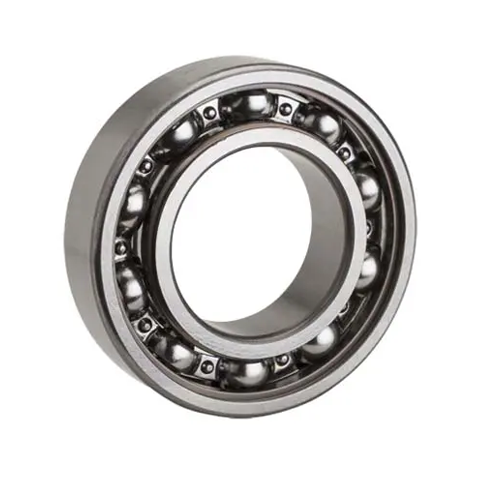
NTN NTN Deep Groove Ball Bearings, Single Row Radial Ball Bearings, 16026
Item # d D B r Static Load Rating Dynamic Load Rating 16026 5.1181 in 130.000 mm 7.8740 in 200.000 mm 0.8661 in 22.000 mm 0.0433 in 1.100 mm 17870 lbf 79500 N 79.50 kN 19890 lbf 88500 N 88.50 kN 1. Design features and characteristics Deep groove ball bearings are very widely used. A deep groove is formed on the inner and outer ring of the bearing enabling the bearing to sustain radial and axial loads in either direction as well as the complex loads which result from the combination of these forces. Deep groove ball bearings are suitable for high speed applications. When two or more deep groove ball bearings are used in combination and mounted adjacent to each other a duplex set (D2) should be used. Duplex bearings (D2) utilize controlled tolerances to more evenly distribute the loading between the individual bearing rows which improves the overall performance of the assembly. In addition to unsealed and unlubricated “open” bearings, NTN provides deep groove ball bearings that are pre-lubricated with grease and enclosed by seals or shields. See section “11. Lubrication” for a list of some of the greases which can be used. Table 1 shows the construction and special characteristics of various sealed deep groove ball bearings. Types and codes N Shielded type Shielded type Non-contact type ZZ Non-contact type LLB Contact type LLU Low torque type LLH Construction Metal shield plate is affixed to the outside ring; the inner ring incorporates a V-groove and labyrinth clearance. The outer ring incorporates synthetic rubber molded to a steel plate; seal edge is aligned with V-groove along inner ring surface with labyrinth clearance The outer ring incorporates synthetic rubber molded to a steel plate; seal edge contacts V-groove along inner ring surface Basic construction is the same as LLU type, but a specially designed lip on the edge of the seal prevents foreign matter penetration; low torque construction. Torque Small Small Higher Medium Dust proofing Good Better than ZZ-type Excellent Much better than LLB-type Water proofing Poor Poor Very good Good High speed capacity Same as open type Same as open type Limited by contact seals Much better than LLU-type Allowable temp. range Depends on lubricant −25 to 120°C −25 to 110°C −25 to 120°C
$156.32
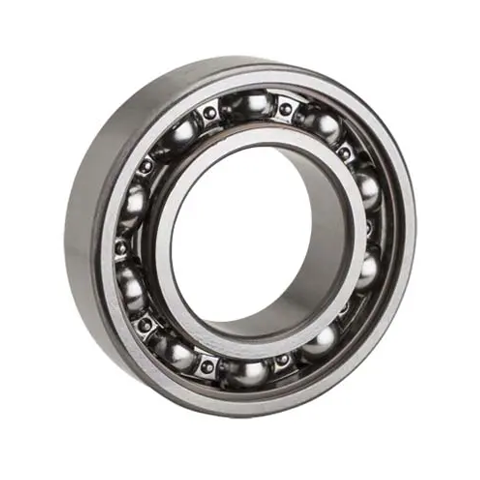
NTN NTN Deep Groove Ball Bearings, Single Row Radial Ball Bearings, 16028
Item # d D B r Static Load Rating Dynamic Load Rating 16028 5.5118 in 140.000 mm 8.2677 in 210.000 mm 0.8661 in 22.000 mm 0.0433 in 1.100 mm 19100 lbf 85000 N 85.00 kN 20450 lbf 91000 N 91.00 kN 1. Design features and characteristics Deep groove ball bearings are very widely used. A deep groove is formed on the inner and outer ring of the bearing enabling the bearing to sustain radial and axial loads in either direction as well as the complex loads which result from the combination of these forces. Deep groove ball bearings are suitable for high speed applications. When two or more deep groove ball bearings are used in combination and mounted adjacent to each other a duplex set (D2) should be used. Duplex bearings (D2) utilize controlled tolerances to more evenly distribute the loading between the individual bearing rows which improves the overall performance of the assembly. In addition to unsealed and unlubricated “open” bearings, NTN provides deep groove ball bearings that are pre-lubricated with grease and enclosed by seals or shields. See section “11. Lubrication” for a list of some of the greases which can be used. Table 1 shows the construction and special characteristics of various sealed deep groove ball bearings. Types and codes N Shielded type Shielded type Non-contact type ZZ Non-contact type LLB Contact type LLU Low torque type LLH Construction Metal shield plate is affixed to the outside ring; the inner ring incorporates a V-groove and labyrinth clearance. The outer ring incorporates synthetic rubber molded to a steel plate; seal edge is aligned with V-groove along inner ring surface with labyrinth clearance The outer ring incorporates synthetic rubber molded to a steel plate; seal edge contacts V-groove along inner ring surface Basic construction is the same as LLU type, but a specially designed lip on the edge of the seal prevents foreign matter penetration; low torque construction. Torque Small Small Higher Medium Dust proofing Good Better than ZZ-type Excellent Much better than LLB-type Water proofing Poor Poor Very good Good High speed capacity Same as open type Same as open type Limited by contact seals Much better than LLU-type Allowable temp. range Depends on lubricant −25 to 120°C −25 to 110°C −25 to 120°C
$180.19

NTN NTN Double Row Angular Contact Bearing , 5200
Item # d D B r Static Load Rating Dynamic Load Rating 5200 0.3937 in 10.000 mm 1.1811 in 30.000 mm 0.5630 in 14.300 mm 0.0236 in 0.600 mm 875 lbf 3900 N 3.90 kN 1610 lbf 7150 N 7.15 kN Angular Contact Ball Bearings 1. Design features and characteristics 1.1 Angular contact ball bearing Angular contact ball bearings are non-separable bearings with a defined contact angle in the radial direction relative to the straight line that runs through the point where each ball makes contact with the inner and outer rings (see Fig. 1). Table 1 provides information on contact angles and their designated codes. In addition to radial loads, angular contact ball bearings can accommodate single direction axial loads. Since an axial load is generated from a radial force, these bearings are generally used in pairs. Table 2 shows general angular contact ball bearing characteristics, Table 3 shows information on using duplex (side by side) angular contact ball bearings, and Table 4 shows information on multiple-row angular contact ball bearings. For bearings with a contact angle of 15° and bearing tolerance JIS Class 5 or higher, see special catalog “Precision rolling bearings (CAT. No. 2260/E)”. 1.2 Four-point angular contact ball bearings Four-point angular contact ball bearings have a contact angle of 30° and a split inner ring. As shown in Fig. 2, when the inner and outer rings receive a radial load, the ball contacts the inner and outer rings at four points. This construction enables a single bearing to accommodate axial loads from either direction, and when under a simple axial load or heavy axial load, the bearing relies on two contact points like ordinary bearings. 1.3 Double row angular contact ball bearings The structure of double row angular contact ball bearings is designed by arranging two single row angular contact bearings back-to-back in duplex (DB) to form a single bearing with a contact angle of 25°.These bearings are capable of accommodating radial loads, axial loads in either direction, and have a high capacity for moment loads.As shown in Fig. 4, sealed and shielded type double row angular contact ball bearings are also available. Standard loads vary from those of open type bearings.
$12.81

NTN NTN Double Row Angular Contact Bearing , 5201
Item # d D B r Static Load Rating Dynamic Load Rating 5201 0.4724 in 12.000 mm 1.2598 in 32.000 mm 0.6260 in 15.900 mm 0.0236 in 0.600 mm 1140 lbf 5050 N 5.05 kN 2060 lbf 9150 N 9.15 kN Angular Contact Ball Bearings 1. Design features and characteristics 1.1 Angular contact ball bearing Angular contact ball bearings are non-separable bearings with a defined contact angle in the radial direction relative to the straight line that runs through the point where each ball makes contact with the inner and outer rings (see Fig. 1). Table 1 provides information on contact angles and their designated codes. In addition to radial loads, angular contact ball bearings can accommodate single direction axial loads. Since an axial load is generated from a radial force, these bearings are generally used in pairs. Table 2 shows general angular contact ball bearing characteristics, Table 3 shows information on using duplex (side by side) angular contact ball bearings, and Table 4 shows information on multiple-row angular contact ball bearings. For bearings with a contact angle of 15° and bearing tolerance JIS Class 5 or higher, see special catalog “Precision rolling bearings (CAT. No. 2260/E)”. 1.2 Four-point angular contact ball bearings Four-point angular contact ball bearings have a contact angle of 30° and a split inner ring. As shown in Fig. 2, when the inner and outer rings receive a radial load, the ball contacts the inner and outer rings at four points. This construction enables a single bearing to accommodate axial loads from either direction, and when under a simple axial load or heavy axial load, the bearing relies on two contact points like ordinary bearings. 1.3 Double row angular contact ball bearings The structure of double row angular contact ball bearings is designed by arranging two single row angular contact bearings back-to-back in duplex (DB) to form a single bearing with a contact angle of 25°.These bearings are capable of accommodating radial loads, axial loads in either direction, and have a high capacity for moment loads.As shown in Fig. 4, sealed and shielded type double row angular contact ball bearings are also available. Standard loads vary from those of open type bearings.
$13.60

NTN NTN Double Row Angular Contact Bearing , 5204
Item # d D B r Static Load Rating Dynamic Load Rating 5204 0.7874 in 20.000 mm 1.8504 in 47.000 mm 0.8110 in 20.600 mm 0.0394 in 1.000 mm 2720 lbf 12100 N 12.10 kN 4250 lbf 19000 N 19.00 kN Angular Contact Ball Bearings 1. Design features and characteristics 1.1 Angular contact ball bearing Angular contact ball bearings are non-separable bearings with a defined contact angle in the radial direction relative to the straight line that runs through the point where each ball makes contact with the inner and outer rings (see Fig. 1). Table 1 provides information on contact angles and their designated codes. In addition to radial loads, angular contact ball bearings can accommodate single direction axial loads. Since an axial load is generated from a radial force, these bearings are generally used in pairs. Table 2 shows general angular contact ball bearing characteristics, Table 3 shows information on using duplex (side by side) angular contact ball bearings, and Table 4 shows information on multiple-row angular contact ball bearings. For bearings with a contact angle of 15° and bearing tolerance JIS Class 5 or higher, see special catalog “Precision rolling bearings (CAT. No. 2260/E)”. 1.2 Four-point angular contact ball bearings Four-point angular contact ball bearings have a contact angle of 30° and a split inner ring. As shown in Fig. 2, when the inner and outer rings receive a radial load, the ball contacts the inner and outer rings at four points. This construction enables a single bearing to accommodate axial loads from either direction, and when under a simple axial load or heavy axial load, the bearing relies on two contact points like ordinary bearings. 1.3 Double row angular contact ball bearings The structure of double row angular contact ball bearings is designed by arranging two single row angular contact bearings back-to-back in duplex (DB) to form a single bearing with a contact angle of 25°.These bearings are capable of accommodating radial loads, axial loads in either direction, and have a high capacity for moment loads.As shown in Fig. 4, sealed and shielded type double row angular contact ball bearings are also available. Standard loads vary from those of open type bearings.
$16.13

NTN NTN Double Row Angular Contact Bearing , 5214
Item # d D B r Static Load Rating Dynamic Load Rating 5214 2.7559 in 70.000 mm 4.9213 in 125.000 mm 1.5630 in 39.700 mm 0.0591 in 1.500 mm 18400 lbf 82000 N 82.00 kN 21100 lbf 94000 N 94.00 kN Angular Contact Ball Bearings 1. Design features and characteristics 1.1 Angular contact ball bearing Angular contact ball bearings are non-separable bearings with a defined contact angle in the radial direction relative to the straight line that runs through the point where each ball makes contact with the inner and outer rings (see Fig. 1). Table 1 provides information on contact angles and their designated codes. In addition to radial loads, angular contact ball bearings can accommodate single direction axial loads. Since an axial load is generated from a radial force, these bearings are generally used in pairs. Table 2 shows general angular contact ball bearing characteristics, Table 3 shows information on using duplex (side by side) angular contact ball bearings, and Table 4 shows information on multiple-row angular contact ball bearings. For bearings with a contact angle of 15° and bearing tolerance JIS Class 5 or higher, see special catalog “Precision rolling bearings (CAT. No. 2260/E)”. 1.2 Four-point angular contact ball bearings Four-point angular contact ball bearings have a contact angle of 30° and a split inner ring. As shown in Fig. 2, when the inner and outer rings receive a radial load, the ball contacts the inner and outer rings at four points. This construction enables a single bearing to accommodate axial loads from either direction, and when under a simple axial load or heavy axial load, the bearing relies on two contact points like ordinary bearings. 1.3 Double row angular contact ball bearings The structure of double row angular contact ball bearings is designed by arranging two single row angular contact bearings back-to-back in duplex (DB) to form a single bearing with a contact angle of 25°.These bearings are capable of accommodating radial loads, axial loads in either direction, and have a high capacity for moment loads.As shown in Fig. 4, sealed and shielded type double row angular contact ball bearings are also available. Standard loads vary from those of open type bearings.
$80.22

NTN NTN Double Row Angular Contact Bearing , 5215
Item # d D B r Static Load Rating Dynamic Load Rating 5215 2.9528 in 75.000 mm 5.1181 in 130.000 mm 1.6260 in 41.300 mm 0.0591 in 1.500 mm 18700 lbf 83000 N 83.00 kN 21000 lbf 93500 N 93.50 kN Angular Contact Ball Bearings 1. Design features and characteristics 1.1 Angular contact ball bearing Angular contact ball bearings are non-separable bearings with a defined contact angle in the radial direction relative to the straight line that runs through the point where each ball makes contact with the inner and outer rings (see Fig. 1). Table 1 provides information on contact angles and their designated codes. In addition to radial loads, angular contact ball bearings can accommodate single direction axial loads. Since an axial load is generated from a radial force, these bearings are generally used in pairs. Table 2 shows general angular contact ball bearing characteristics, Table 3 shows information on using duplex (side by side) angular contact ball bearings, and Table 4 shows information on multiple-row angular contact ball bearings. For bearings with a contact angle of 15° and bearing tolerance JIS Class 5 or higher, see special catalog “Precision rolling bearings (CAT. No. 2260/E)”. 1.2 Four-point angular contact ball bearings Four-point angular contact ball bearings have a contact angle of 30° and a split inner ring. As shown in Fig. 2, when the inner and outer rings receive a radial load, the ball contacts the inner and outer rings at four points. This construction enables a single bearing to accommodate axial loads from either direction, and when under a simple axial load or heavy axial load, the bearing relies on two contact points like ordinary bearings. 1.3 Double row angular contact ball bearings The structure of double row angular contact ball bearings is designed by arranging two single row angular contact bearings back-to-back in duplex (DB) to form a single bearing with a contact angle of 25°.These bearings are capable of accommodating radial loads, axial loads in either direction, and have a high capacity for moment loads.As shown in Fig. 4, sealed and shielded type double row angular contact ball bearings are also available. Standard loads vary from those of open type bearings.
$101.52

NTN NTN Double Row Angular Contact Bearing , 5216
Item # d D B r Static Load Rating Dynamic Load Rating 5216 3.1496 in 80.000 mm 5.5118 in 140.000 mm 1.7480 in 44.400 mm 0.0787 in 2.000 mm 20900 lbf 93000 N 93.00 kN 22300 lbf 99000 N 99.00 kN Angular Contact Ball Bearings 1. Design features and characteristics 1.1 Angular contact ball bearing Angular contact ball bearings are non-separable bearings with a defined contact angle in the radial direction relative to the straight line that runs through the point where each ball makes contact with the inner and outer rings (see Fig. 1). Table 1 provides information on contact angles and their designated codes. In addition to radial loads, angular contact ball bearings can accommodate single direction axial loads. Since an axial load is generated from a radial force, these bearings are generally used in pairs. Table 2 shows general angular contact ball bearing characteristics, Table 3 shows information on using duplex (side by side) angular contact ball bearings, and Table 4 shows information on multiple-row angular contact ball bearings. For bearings with a contact angle of 15° and bearing tolerance JIS Class 5 or higher, see special catalog “Precision rolling bearings (CAT. No. 2260/E)”. 1.2 Four-point angular contact ball bearings Four-point angular contact ball bearings have a contact angle of 30° and a split inner ring. As shown in Fig. 2, when the inner and outer rings receive a radial load, the ball contacts the inner and outer rings at four points. This construction enables a single bearing to accommodate axial loads from either direction, and when under a simple axial load or heavy axial load, the bearing relies on two contact points like ordinary bearings. 1.3 Double row angular contact ball bearings The structure of double row angular contact ball bearings is designed by arranging two single row angular contact bearings back-to-back in duplex (DB) to form a single bearing with a contact angle of 25°.These bearings are capable of accommodating radial loads, axial loads in either direction, and have a high capacity for moment loads.As shown in Fig. 4, sealed and shielded type double row angular contact ball bearings are also available. Standard loads vary from those of open type bearings.
$140.77

NTN NTN Double Row Angular Contact Bearing , 5302
Item # d D B r Static Load Rating Dynamic Load Rating 5302 0.5906 in 15.000 mm 1.6535 in 42.000 mm 0.7480 in 19.000 mm 0.0394 in 1.000 mm 2290 lbf 10200 N 10.20 kN 3950 lbf 17600 N 17.60 kN Angular Contact Ball Bearings 1. Design features and characteristics 1.1 Angular contact ball bearing Angular contact ball bearings are non-separable bearings with a defined contact angle in the radial direction relative to the straight line that runs through the point where each ball makes contact with the inner and outer rings (see Fig. 1). Table 1 provides information on contact angles and their designated codes. In addition to radial loads, angular contact ball bearings can accommodate single direction axial loads. Since an axial load is generated from a radial force, these bearings are generally used in pairs. Table 2 shows general angular contact ball bearing characteristics, Table 3 shows information on using duplex (side by side) angular contact ball bearings, and Table 4 shows information on multiple-row angular contact ball bearings. For bearings with a contact angle of 15° and bearing tolerance JIS Class 5 or higher, see special catalog “Precision rolling bearings (CAT. No. 2260/E)”. 1.2 Four-point angular contact ball bearings Four-point angular contact ball bearings have a contact angle of 30° and a split inner ring. As shown in Fig. 2, when the inner and outer rings receive a radial load, the ball contacts the inner and outer rings at four points. This construction enables a single bearing to accommodate axial loads from either direction, and when under a simple axial load or heavy axial load, the bearing relies on two contact points like ordinary bearings. 1.3 Double row angular contact ball bearings The structure of double row angular contact ball bearings is designed by arranging two single row angular contact bearings back-to-back in duplex (DB) to form a single bearing with a contact angle of 25°.These bearings are capable of accommodating radial loads, axial loads in either direction, and have a high capacity for moment loads.As shown in Fig. 4, sealed and shielded type double row angular contact ball bearings are also available. Standard loads vary from those of open type bearings.
$15.80

NTN NTN Double Row Angular Contact Bearing , 5303
Item # d D B r Static Load Rating Dynamic Load Rating 5303 0.6693 in 17.000 mm 1.8504 in 47.000 mm 0.8740 in 22.200 mm 0.0394 in 1.000 mm 2830 lbf 12600 N 12.60 kN 4700 lbf 21000 N 21.00 kN Angular Contact Ball Bearings 1. Design features and characteristics 1.1 Angular contact ball bearing Angular contact ball bearings are non-separable bearings with a defined contact angle in the radial direction relative to the straight line that runs through the point where each ball makes contact with the inner and outer rings (see Fig. 1). Table 1 provides information on contact angles and their designated codes. In addition to radial loads, angular contact ball bearings can accommodate single direction axial loads. Since an axial load is generated from a radial force, these bearings are generally used in pairs. Table 2 shows general angular contact ball bearing characteristics, Table 3 shows information on using duplex (side by side) angular contact ball bearings, and Table 4 shows information on multiple-row angular contact ball bearings. For bearings with a contact angle of 15° and bearing tolerance JIS Class 5 or higher, see special catalog “Precision rolling bearings (CAT. No. 2260/E)”. 1.2 Four-point angular contact ball bearings Four-point angular contact ball bearings have a contact angle of 30° and a split inner ring. As shown in Fig. 2, when the inner and outer rings receive a radial load, the ball contacts the inner and outer rings at four points. This construction enables a single bearing to accommodate axial loads from either direction, and when under a simple axial load or heavy axial load, the bearing relies on two contact points like ordinary bearings. 1.3 Double row angular contact ball bearings The structure of double row angular contact ball bearings is designed by arranging two single row angular contact bearings back-to-back in duplex (DB) to form a single bearing with a contact angle of 25°.These bearings are capable of accommodating radial loads, axial loads in either direction, and have a high capacity for moment loads.As shown in Fig. 4, sealed and shielded type double row angular contact ball bearings are also available. Standard loads vary from those of open type bearings.
$19.77

NTN NTN Double Row Angular Contact Bearing , 5304
Item # d D B r Static Load Rating Dynamic Load Rating 5304 0.7874 in 20.000 mm 2.0472 in 52.000 mm 0.8740 in 22.200 mm 0.0433 in 1.100 mm 3350 lbf 15000 N 15.00 kN 5550 lbf 24600 N 24.60 kN Angular Contact Ball Bearings 1. Design features and characteristics 1.1 Angular contact ball bearing Angular contact ball bearings are non-separable bearings with a defined contact angle in the radial direction relative to the straight line that runs through the point where each ball makes contact with the inner and outer rings (see Fig. 1). Table 1 provides information on contact angles and their designated codes. In addition to radial loads, angular contact ball bearings can accommodate single direction axial loads. Since an axial load is generated from a radial force, these bearings are generally used in pairs. Table 2 shows general angular contact ball bearing characteristics, Table 3 shows information on using duplex (side by side) angular contact ball bearings, and Table 4 shows information on multiple-row angular contact ball bearings. For bearings with a contact angle of 15° and bearing tolerance JIS Class 5 or higher, see special catalog “Precision rolling bearings (CAT. No. 2260/E)”. 1.2 Four-point angular contact ball bearings Four-point angular contact ball bearings have a contact angle of 30° and a split inner ring. As shown in Fig. 2, when the inner and outer rings receive a radial load, the ball contacts the inner and outer rings at four points. This construction enables a single bearing to accommodate axial loads from either direction, and when under a simple axial load or heavy axial load, the bearing relies on two contact points like ordinary bearings. 1.3 Double row angular contact ball bearings The structure of double row angular contact ball bearings is designed by arranging two single row angular contact bearings back-to-back in duplex (DB) to form a single bearing with a contact angle of 25°.These bearings are capable of accommodating radial loads, axial loads in either direction, and have a high capacity for moment loads.As shown in Fig. 4, sealed and shielded type double row angular contact ball bearings are also available. Standard loads vary from those of open type bearings.
$21.29

NTN NTN Double Row Angular Contact Bearing , 5305
Item # d D B r Static Load Rating Dynamic Load Rating 5305 0.9843 in 25.000 mm 2.4409 in 62.000 mm 1.0000 in 25.400 mm 0.0433 in 1.100 mm 4650 lbf 20700 N 20.70 kN 7300 lbf 32500 N 32.50 kN Angular Contact Ball Bearings 1. Design features and characteristics 1.1 Angular contact ball bearing Angular contact ball bearings are non-separable bearings with a defined contact angle in the radial direction relative to the straight line that runs through the point where each ball makes contact with the inner and outer rings (see Fig. 1). Table 1 provides information on contact angles and their designated codes. In addition to radial loads, angular contact ball bearings can accommodate single direction axial loads. Since an axial load is generated from a radial force, these bearings are generally used in pairs. Table 2 shows general angular contact ball bearing characteristics, Table 3 shows information on using duplex (side by side) angular contact ball bearings, and Table 4 shows information on multiple-row angular contact ball bearings. For bearings with a contact angle of 15° and bearing tolerance JIS Class 5 or higher, see special catalog “Precision rolling bearings (CAT. No. 2260/E)”. 1.2 Four-point angular contact ball bearings Four-point angular contact ball bearings have a contact angle of 30° and a split inner ring. As shown in Fig. 2, when the inner and outer rings receive a radial load, the ball contacts the inner and outer rings at four points. This construction enables a single bearing to accommodate axial loads from either direction, and when under a simple axial load or heavy axial load, the bearing relies on two contact points like ordinary bearings. 1.3 Double row angular contact ball bearings The structure of double row angular contact ball bearings is designed by arranging two single row angular contact bearings back-to-back in duplex (DB) to form a single bearing with a contact angle of 25°.These bearings are capable of accommodating radial loads, axial loads in either direction, and have a high capacity for moment loads.As shown in Fig. 4, sealed and shielded type double row angular contact ball bearings are also available. Standard loads vary from those of open type bearings.
$22.80

NTN NTN Double Row Angular Contact Bearing , 5306
Item # d D B r Static Load Rating Dynamic Load Rating 5306 1.1811 in 30.000 mm 2.8346 in 72.000 mm 1.1890 in 30.200 mm 0.0433 in 1.100 mm 6300 lbf 28100 N 28.10 kN 9100 lbf 40500 N 40.50 kN Angular Contact Ball Bearings 1. Design features and characteristics 1.1 Angular contact ball bearing Angular contact ball bearings are non-separable bearings with a defined contact angle in the radial direction relative to the straight line that runs through the point where each ball makes contact with the inner and outer rings (see Fig. 1). Table 1 provides information on contact angles and their designated codes. In addition to radial loads, angular contact ball bearings can accommodate single direction axial loads. Since an axial load is generated from a radial force, these bearings are generally used in pairs. Table 2 shows general angular contact ball bearing characteristics, Table 3 shows information on using duplex (side by side) angular contact ball bearings, and Table 4 shows information on multiple-row angular contact ball bearings. For bearings with a contact angle of 15° and bearing tolerance JIS Class 5 or higher, see special catalog “Precision rolling bearings (CAT. No. 2260/E)”. 1.2 Four-point angular contact ball bearings Four-point angular contact ball bearings have a contact angle of 30° and a split inner ring. As shown in Fig. 2, when the inner and outer rings receive a radial load, the ball contacts the inner and outer rings at four points. This construction enables a single bearing to accommodate axial loads from either direction, and when under a simple axial load or heavy axial load, the bearing relies on two contact points like ordinary bearings. 1.3 Double row angular contact ball bearings The structure of double row angular contact ball bearings is designed by arranging two single row angular contact bearings back-to-back in duplex (DB) to form a single bearing with a contact angle of 25°.These bearings are capable of accommodating radial loads, axial loads in either direction, and have a high capacity for moment loads.As shown in Fig. 4, sealed and shielded type double row angular contact ball bearings are also available. Standard loads vary from those of open type bearings.
$29.62

NTN NTN Double Row Angular Contact Bearing , 5310
Item # d D B r Static Load Rating Dynamic Load Rating 5310 1.9685 in 50.000 mm 4.3307 in 110.000 mm 1.7480 in 44.400 mm 0.0787 in 2.000 mm 13800 lbf 61500 N 61.50 kN 18300 lbf 81500 N 81.50 kN Angular Contact Ball Bearings 1. Design features and characteristics 1.1 Angular contact ball bearing Angular contact ball bearings are non-separable bearings with a defined contact angle in the radial direction relative to the straight line that runs through the point where each ball makes contact with the inner and outer rings (see Fig. 1). Table 1 provides information on contact angles and their designated codes. In addition to radial loads, angular contact ball bearings can accommodate single direction axial loads. Since an axial load is generated from a radial force, these bearings are generally used in pairs. Table 2 shows general angular contact ball bearing characteristics, Table 3 shows information on using duplex (side by side) angular contact ball bearings, and Table 4 shows information on multiple-row angular contact ball bearings. For bearings with a contact angle of 15° and bearing tolerance JIS Class 5 or higher, see special catalog “Precision rolling bearings (CAT. No. 2260/E)”. 1.2 Four-point angular contact ball bearings Four-point angular contact ball bearings have a contact angle of 30° and a split inner ring. As shown in Fig. 2, when the inner and outer rings receive a radial load, the ball contacts the inner and outer rings at four points. This construction enables a single bearing to accommodate axial loads from either direction, and when under a simple axial load or heavy axial load, the bearing relies on two contact points like ordinary bearings. 1.3 Double row angular contact ball bearings The structure of double row angular contact ball bearings is designed by arranging two single row angular contact bearings back-to-back in duplex (DB) to form a single bearing with a contact angle of 25°.These bearings are capable of accommodating radial loads, axial loads in either direction, and have a high capacity for moment loads.As shown in Fig. 4, sealed and shielded type double row angular contact ball bearings are also available. Standard loads vary from those of open type bearings.
$63.01

NTN NTN Double Row Angular Contact Bearing , 5311
Item # d D B r Static Load Rating Dynamic Load Rating 5311 2.1654 in 55.000 mm 4.7244 in 120.000 mm 1.9370 in 49.200 mm 0.0787 in 2.000 mm 16400 lbf 73000 N 73.00 kN 21400 lbf 95000 N 95.00 kN Angular Contact Ball Bearings 1. Design features and characteristics 1.1 Angular contact ball bearing Angular contact ball bearings are non-separable bearings with a defined contact angle in the radial direction relative to the straight line that runs through the point where each ball makes contact with the inner and outer rings (see Fig. 1). Table 1 provides information on contact angles and their designated codes. In addition to radial loads, angular contact ball bearings can accommodate single direction axial loads. Since an axial load is generated from a radial force, these bearings are generally used in pairs. Table 2 shows general angular contact ball bearing characteristics, Table 3 shows information on using duplex (side by side) angular contact ball bearings, and Table 4 shows information on multiple-row angular contact ball bearings. For bearings with a contact angle of 15° and bearing tolerance JIS Class 5 or higher, see special catalog “Precision rolling bearings (CAT. No. 2260/E)”. 1.2 Four-point angular contact ball bearings Four-point angular contact ball bearings have a contact angle of 30° and a split inner ring. As shown in Fig. 2, when the inner and outer rings receive a radial load, the ball contacts the inner and outer rings at four points. This construction enables a single bearing to accommodate axial loads from either direction, and when under a simple axial load or heavy axial load, the bearing relies on two contact points like ordinary bearings. 1.3 Double row angular contact ball bearings The structure of double row angular contact ball bearings is designed by arranging two single row angular contact bearings back-to-back in duplex (DB) to form a single bearing with a contact angle of 25°.These bearings are capable of accommodating radial loads, axial loads in either direction, and have a high capacity for moment loads.As shown in Fig. 4, sealed and shielded type double row angular contact ball bearings are also available. Standard loads vary from those of open type bearings.
$80.13

NTN NTN Double Row Angular Contact Bearing , 5312
Item # d D B r Static Load Rating Dynamic Load Rating 5312 2.3622 in 60.000 mm 5.1181 in 130.000 mm 2.1260 in 54.000 mm 0.0827 in 2.100 mm 22100 lbf 98500 N 98.50 kN 28100 lbf 125000 N 125.00 kN Angular Contact Ball Bearings 1. Design features and characteristics 1.1 Angular contact ball bearing Angular contact ball bearings are non-separable bearings with a defined contact angle in the radial direction relative to the straight line that runs through the point where each ball makes contact with the inner and outer rings (see Fig. 1). Table 1 provides information on contact angles and their designated codes. In addition to radial loads, angular contact ball bearings can accommodate single direction axial loads. Since an axial load is generated from a radial force, these bearings are generally used in pairs. Table 2 shows general angular contact ball bearing characteristics, Table 3 shows information on using duplex (side by side) angular contact ball bearings, and Table 4 shows information on multiple-row angular contact ball bearings. For bearings with a contact angle of 15° and bearing tolerance JIS Class 5 or higher, see special catalog “Precision rolling bearings (CAT. No. 2260/E)”. 1.2 Four-point angular contact ball bearings Four-point angular contact ball bearings have a contact angle of 30° and a split inner ring. As shown in Fig. 2, when the inner and outer rings receive a radial load, the ball contacts the inner and outer rings at four points. This construction enables a single bearing to accommodate axial loads from either direction, and when under a simple axial load or heavy axial load, the bearing relies on two contact points like ordinary bearings. 1.3 Double row angular contact ball bearings The structure of double row angular contact ball bearings is designed by arranging two single row angular contact bearings back-to-back in duplex (DB) to form a single bearing with a contact angle of 25°.These bearings are capable of accommodating radial loads, axial loads in either direction, and have a high capacity for moment loads.As shown in Fig. 4, sealed and shielded type double row angular contact ball bearings are also available. Standard loads vary from those of open type bearings.
$102.89

NTN NTN Double Row Angular Contact Bearing , 5314
Item # d D B r Static Load Rating Dynamic Load Rating 5314 2.7559 in 70.000 mm 5.9055 in 150.000 mm 2.5000 in 63.500 mm 0.0827 in 2.100 mm 28800 lbf 128000 N 128.00 kN 35500 lbf 159000 N 159.00 kN Angular Contact Ball Bearings 1. Design features and characteristics 1.1 Angular contact ball bearing Angular contact ball bearings are non-separable bearings with a defined contact angle in the radial direction relative to the straight line that runs through the point where each ball makes contact with the inner and outer rings (see Fig. 1). Table 1 provides information on contact angles and their designated codes. In addition to radial loads, angular contact ball bearings can accommodate single direction axial loads. Since an axial load is generated from a radial force, these bearings are generally used in pairs. Table 2 shows general angular contact ball bearing characteristics, Table 3 shows information on using duplex (side by side) angular contact ball bearings, and Table 4 shows information on multiple-row angular contact ball bearings. For bearings with a contact angle of 15° and bearing tolerance JIS Class 5 or higher, see special catalog “Precision rolling bearings (CAT. No. 2260/E)”. 1.2 Four-point angular contact ball bearings Four-point angular contact ball bearings have a contact angle of 30° and a split inner ring. As shown in Fig. 2, when the inner and outer rings receive a radial load, the ball contacts the inner and outer rings at four points. This construction enables a single bearing to accommodate axial loads from either direction, and when under a simple axial load or heavy axial load, the bearing relies on two contact points like ordinary bearings. 1.3 Double row angular contact ball bearings The structure of double row angular contact ball bearings is designed by arranging two single row angular contact bearings back-to-back in duplex (DB) to form a single bearing with a contact angle of 25°.These bearings are capable of accommodating radial loads, axial loads in either direction, and have a high capacity for moment loads.As shown in Fig. 4, sealed and shielded type double row angular contact ball bearings are also available. Standard loads vary from those of open type bearings.
$196.59
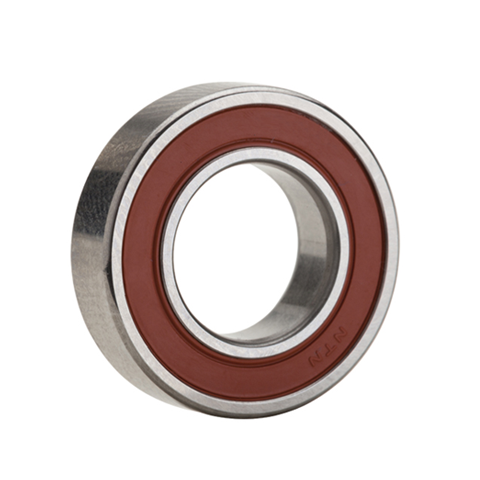
NTN NTN Inner Dia 10 mm Deep Groove Ball Bearings 6000LLU
NTN Inner Dia 10 mm Deep Groove Ball Bearing 6000LLU SPECIFICATIONS Type of Product : Deep Groove Ball Bearing Model No : 6000LLU Width : 8 mm Inner Diameter : 10 mm 1. Design features and characteristics Deep groove ball bearings are very widely used. A deep groove is formed on the inner and outer ring of the bearing enabling the bearing to sustain radial and axial loads in either direction as well as the complex loads which result from the combination of these forces. Deep groove ball bearings are suitable for high speed applications. When two or more deep groove ball bearings are used in combination and mounted adjacent to each other a duplex set (D2) should be used. Duplex bearings (D2) utilize controlled tolerances to more evenly distribute the loading between the individual bearing rows which improves the overall performance of the assembly. In addition to unsealed and unlubricated “open” bearings, NTN provides deep groove ball bearings that are pre-lubricated with grease and enclosed by seals or shields. See section “11. Lubrication” for a list of some of the greases which can be used. Table 1 shows the construction and special characteristics of various sealed deep groove ball bearings. Types and codes N Shielded type Shielded type Non-contact type ZZ Non-contact type LLB Contact type LLU Low torque type LLH Construction Metal shield plate is affixed to the outside ring; the inner ring incorporates a V-groove and labyrinth clearance. The outer ring incorporates synthetic rubber molded to a steel plate; seal edge is aligned with V-groove along inner ring surface with labyrinth clearance The outer ring incorporates synthetic rubber molded to a steel plate; seal edge contacts V-groove along inner ring surface Basic construction is the same as LLU type, but a specially designed lip on the edge of the seal prevents foreign matter penetration; low torque construction. Torque Small Small Higher Medium Dust proofing Good Better than ZZ-type Excellent Much better than LLB-type Water proofing Poor Poor Very good Good High speed capacity Same as open type Same as open type Limited by contact seals Much better than LLU-type Allowable temp. range Depends on lubricant −25 to 120°C −25 to 110°C −25 to 120°C
$3.59
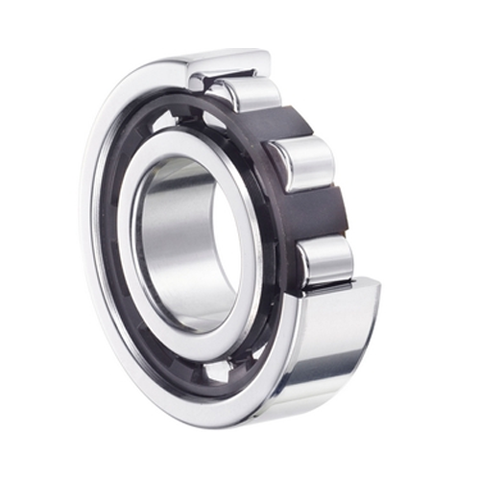
NTN NTN N213 Cylindrical Roller Bearing - D=65
NTN N213 Cylindrical Roller Bearing (Inside Dia - 65mm, Outside Dia - 120mm) Features Type of Product : Cylindrical Roller Bearing Inside Diameter (d) (mm) : 65 Outside Diameter D (mm) : 120 Width Dia mm : 23 Model No : N213 1. Types, design features, and characteristics Cylindrical roller bearings can accommodate heavy radial loads due to the line contact formed between their rolling elements and raceways. These bearings are also suitable for high speed applications since the rollers are guided by either inner or outer ring ribs. Cylindrical roller bearings are separable, allowing them to be easily installed and disassembled even when interference fits are required.Among the various types of cylindrical roller bearings, E type and EA type have a high load capacity while maintaining standard boundary dimensions. HT type has a large axial load capacity, and HL type provides extended fatigue life in poor lubrication conditions. Multiple row bearing arrangements are also available.For extremely heavy load applications, the non-separable full complement SL type bearing offers special advantages. For SL type and four- row cylindrical roller bearings, see section “C. Special application bearings.”Table 1 shows the various types and characteristics of single row cylindrical roller bearings. Table 2 shows the characteristics of non-standard type cylindrical roller bearings. Table 1 Cylindrical roller bearing types and characteristics Type code Design Characteristics NU type N type -NU type outer rings have two ribs. The outer ring, roller, and cage assembly can be separated from the inner ring. N type inner rings have two ribs. The inner ring, roller, and cage assembly can be separated from the outer ring.-Unable to accommodate any axial loading. -This is widely used as the floating side bearing in a fixed-float arrangement. NJ type NF type -NJ type has two ribs on the outer ring, a single rib on the inner ring; NF type has a single rib on the outer ring, and two ribs on the inner ring.-Can receive single direction axial loads. -When there is no distinction between the fixed side and floating side bearing, these types can be used as a pair in close proximity. NUP type NH type (NJ+HJ) -NUP type has a collar ring attached to the ribless side of the inner ring; NH type is NJ type with an L type collar ring attached. All of these collar rings are separable, and therefore it is necessary to fix the inner ring axially. -Can accommodate axial loads in either direction. -Widely used as the shaft’s fixed-side bearing Table 2 Non-standard type cylindrical roller bearing characteristics Designation Characteristics E type and EA type Cylindrical roller bearing -Boundary dimensions are the same as the standard type, but the diameter, length and number of the rollers have been increased, resulting in higher load capacity. -Identified by the addition of “E” to the end of the basic roller number. -Enables compact design due increased load rating. -Rollers’ inscribed circle diameter differs from the standard type rollers and therefore cannot be interchanged. -EA type bearings are ULTAGE series1). Note: In the dimension tables, both E type and EA type are listed. Cylindrical roller bearing for axial loads (HT type) -Can accommodate larger axial loads than the standard type due to improved geometry of the rib roller end surface. -Please consult NTN Engineering concerning necessary considerations, such as load, lubricant, and installation conditions. Double-row cylindrical roller bearing -NN type and NNU type are available. -Widely used for applications requiring thin-walled bearings, such the main shafts of machine tools, rolling machine rollers, and in printing equipment. -Internal radial clearance is adjusted for the spindle of machine tools by pressing the tapered bore of the inner ring on a tapered shaft. Remarks: For precision bearings for machine tools, see precision rolling bearings 2. Standard cage type Table 3 shows the standard cage types for cylindrical roller bearings. The basic load ratings listed in the dimension charts correspond to use of the standard cages listed in Table 3. The basic load ratings listed in the dimension tables are for standard configurations. These ratings can change when a different cage type and number of rolling elements is utilized. Note: 1. Within the same bearing series, cage type is constant regardless of the cylindrical roller bearing type (NJ, NUP, N, NF).2. For high speed and other special applications, machined cages can be manufactured when necessary. Consult NTN Engineering.3. Among EA type bearings that use resin cages as standard, certain varieties use pressed cages. Consult NTN Engineering.4. Although machined cages are the standard for two-row cylindrical roller bearings, resin cages may also be used in some of these bearings for machine tool applications.
$68.40
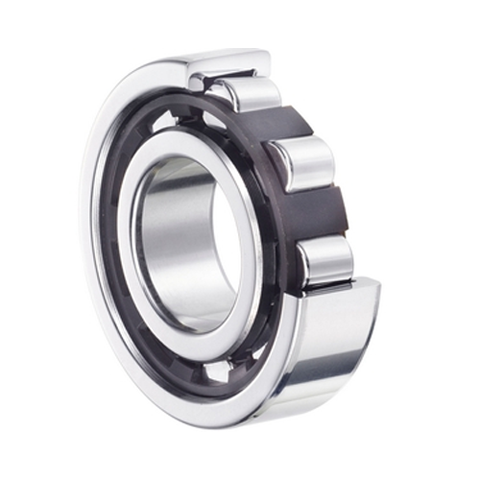
NTN NTN N214C3 Cylindrical Roller Bearing - D=70
NTN N214C3 Cylindrical Roller Bearing (Inside Dia - 70mm, Outside Dia - 125mm) Features Type of Product : Cylindrical Roller Bearing Inside Diameter (d) (mm) : 70 Outside Diameter D (mm) : 125 Width Dia mm : 24 Model No : N214C3 1. Types, design features, and characteristics Cylindrical roller bearings can accommodate heavy radial loads due to the line contact formed between their rolling elements and raceways. These bearings are also suitable for high speed applications since the rollers are guided by either inner or outer ring ribs. Cylindrical roller bearings are separable, allowing them to be easily installed and disassembled even when interference fits are required.Among the various types of cylindrical roller bearings, E type and EA type have a high load capacity while maintaining standard boundary dimensions. HT type has a large axial load capacity, and HL type provides extended fatigue life in poor lubrication conditions. Multiple row bearing arrangements are also available.For extremely heavy load applications, the non-separable full complement SL type bearing offers special advantages. For SL type and four- row cylindrical roller bearings, see section “C. Special application bearings.”Table 1 shows the various types and characteristics of single row cylindrical roller bearings. Table 2 shows the characteristics of non-standard type cylindrical roller bearings. Table 1 Cylindrical roller bearing types and characteristics Type code Design Characteristics NU type N type -NU type outer rings have two ribs. The outer ring, roller, and cage assembly can be separated from the inner ring. N type inner rings have two ribs. The inner ring, roller, and cage assembly can be separated from the outer ring.-Unable to accommodate any axial loading. -This is widely used as the floating side bearing in a fixed-float arrangement. NJ type NF type -NJ type has two ribs on the outer ring, a single rib on the inner ring; NF type has a single rib on the outer ring, and two ribs on the inner ring.-Can receive single direction axial loads. -When there is no distinction between the fixed side and floating side bearing, these types can be used as a pair in close proximity. NUP type NH type (NJ+HJ) -NUP type has a collar ring attached to the ribless side of the inner ring; NH type is NJ type with an L type collar ring attached. All of these collar rings are separable, and therefore it is necessary to fix the inner ring axially. -Can accommodate axial loads in either direction. -Widely used as the shaft’s fixed-side bearing Table 2 Non-standard type cylindrical roller bearing characteristics Designation Characteristics E type and EA type Cylindrical roller bearing -Boundary dimensions are the same as the standard type, but the diameter, length and number of the rollers have been increased, resulting in higher load capacity. -Identified by the addition of “E” to the end of the basic roller number. -Enables compact design due increased load rating. -Rollers’ inscribed circle diameter differs from the standard type rollers and therefore cannot be interchanged. -EA type bearings are ULTAGE series1). Note: In the dimension tables, both E type and EA type are listed. Cylindrical roller bearing for axial loads (HT type) -Can accommodate larger axial loads than the standard type due to improved geometry of the rib roller end surface. -Please consult NTN Engineering concerning necessary considerations, such as load, lubricant, and installation conditions. Double-row cylindrical roller bearing -NN type and NNU type are available. -Widely used for applications requiring thin-walled bearings, such the main shafts of machine tools, rolling machine rollers, and in printing equipment. -Internal radial clearance is adjusted for the spindle of machine tools by pressing the tapered bore of the inner ring on a tapered shaft. Remarks: For precision bearings for machine tools, see precision rolling bearings 2. Standard cage type Table 3 shows the standard cage types for cylindrical roller bearings. The basic load ratings listed in the dimension charts correspond to use of the standard cages listed in Table 3. The basic load ratings listed in the dimension tables are for standard configurations. These ratings can change when a different cage type and number of rolling elements is utilized. Note: 1. Within the same bearing series, cage type is constant regardless of the cylindrical roller bearing type (NJ, NUP, N, NF).2. For high speed and other special applications, machined cages can be manufactured when necessary. Consult NTN Engineering.3. Among EA type bearings that use resin cages as standard, certain varieties use pressed cages. Consult NTN Engineering.4. Although machined cages are the standard for two-row cylindrical roller bearings, resin cages may also be used in some of these bearings for machine tool applications.
$75.83
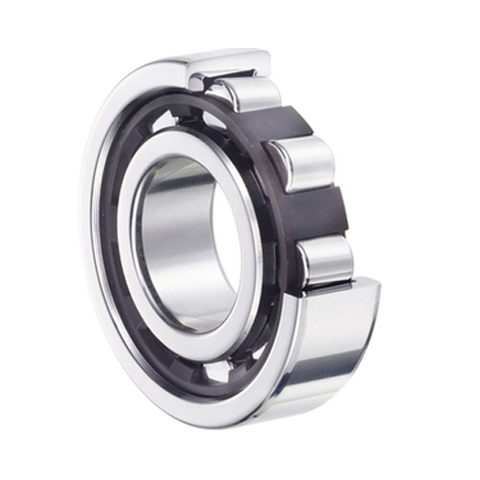
NTN NTN N217 Cylindrical Roller Bearing - D=85
NTN N217 Cylindrical Roller Bearing (Inside Dia - 85mm, Outside Dia - 150mm) Features Type of Product : Cylindrical Roller Bearing Inside Diameter (d) (mm) : 85 Outside Diameter D (mm) : 150 Width Dia mm : 28 Model No : N217 1. Types, design features, and characteristics Cylindrical roller bearings can accommodate heavy radial loads due to the line contact formed between their rolling elements and raceways. These bearings are also suitable for high speed applications since the rollers are guided by either inner or outer ring ribs. Cylindrical roller bearings are separable, allowing them to be easily installed and disassembled even when interference fits are required.Among the various types of cylindrical roller bearings, E type and EA type have a high load capacity while maintaining standard boundary dimensions. HT type has a large axial load capacity, and HL type provides extended fatigue life in poor lubrication conditions. Multiple row bearing arrangements are also available.For extremely heavy load applications, the non-separable full complement SL type bearing offers special advantages. For SL type and four- row cylindrical roller bearings, see section “C. Special application bearings.”Table 1 shows the various types and characteristics of single row cylindrical roller bearings. Table 2 shows the characteristics of non-standard type cylindrical roller bearings. Table 1 Cylindrical roller bearing types and characteristics Type code Design Characteristics NU type N type -NU type outer rings have two ribs. The outer ring, roller, and cage assembly can be separated from the inner ring. N type inner rings have two ribs. The inner ring, roller, and cage assembly can be separated from the outer ring.-Unable to accommodate any axial loading. -This is widely used as the floating side bearing in a fixed-float arrangement. NJ type NF type -NJ type has two ribs on the outer ring, a single rib on the inner ring; NF type has a single rib on the outer ring, and two ribs on the inner ring.-Can receive single direction axial loads. -When there is no distinction between the fixed side and floating side bearing, these types can be used as a pair in close proximity. NUP type NH type (NJ+HJ) -NUP type has a collar ring attached to the ribless side of the inner ring; NH type is NJ type with an L type collar ring attached. All of these collar rings are separable, and therefore it is necessary to fix the inner ring axially. -Can accommodate axial loads in either direction. -Widely used as the shaft’s fixed-side bearing Table 2 Non-standard type cylindrical roller bearing characteristics Designation Characteristics E type and EA type Cylindrical roller bearing -Boundary dimensions are the same as the standard type, but the diameter, length and number of the rollers have been increased, resulting in higher load capacity. -Identified by the addition of “E” to the end of the basic roller number. -Enables compact design due increased load rating. -Rollers’ inscribed circle diameter differs from the standard type rollers and therefore cannot be interchanged. -EA type bearings are ULTAGE series1). Note: In the dimension tables, both E type and EA type are listed. Cylindrical roller bearing for axial loads (HT type) -Can accommodate larger axial loads than the standard type due to improved geometry of the rib roller end surface. -Please consult NTN Engineering concerning necessary considerations, such as load, lubricant, and installation conditions. Double-row cylindrical roller bearing -NN type and NNU type are available. -Widely used for applications requiring thin-walled bearings, such the main shafts of machine tools, rolling machine rollers, and in printing equipment. -Internal radial clearance is adjusted for the spindle of machine tools by pressing the tapered bore of the inner ring on a tapered shaft. Remarks: For precision bearings for machine tools, see precision rolling bearings 2. Standard cage type Table 3 shows the standard cage types for cylindrical roller bearings. The basic load ratings listed in the dimension charts correspond to use of the standard cages listed in Table 3. The basic load ratings listed in the dimension tables are for standard configurations. These ratings can change when a different cage type and number of rolling elements is utilized. Note: 1. Within the same bearing series, cage type is constant regardless of the cylindrical roller bearing type (NJ, NUP, N, NF).2. For high speed and other special applications, machined cages can be manufactured when necessary. Consult NTN Engineering.3. Among EA type bearings that use resin cages as standard, certain varieties use pressed cages. Consult NTN Engineering.4. Although machined cages are the standard for two-row cylindrical roller bearings, resin cages may also be used in some of these bearings for machine tool applications.
$98.66
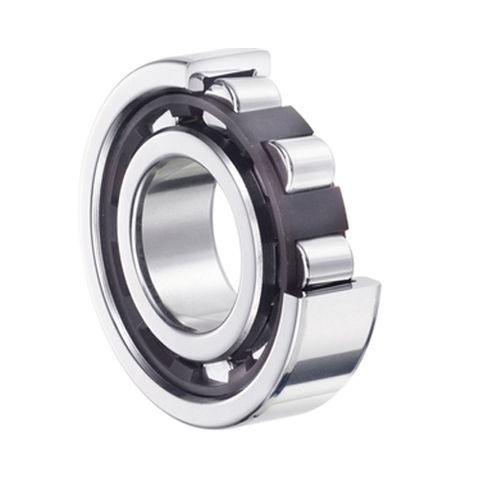
NTN NTN N308 Cylindrical Roller Bearing - D=40
NTN N308 Cylindrical Roller Bearing (Inside Dia - 40mm, Outside Dia - 90mm) Features Type of Product : Cylindrical Roller Bearing Inside Diameter (d) (mm) : 40 Outside Diameter D (mm) : 90 Width Dia mm : 23 Model No : N308 1. Types, design features, and characteristics Cylindrical roller bearings can accommodate heavy radial loads due to the line contact formed between their rolling elements and raceways. These bearings are also suitable for high speed applications since the rollers are guided by either inner or outer ring ribs. Cylindrical roller bearings are separable, allowing them to be easily installed and disassembled even when interference fits are required.Among the various types of cylindrical roller bearings, E type and EA type have a high load capacity while maintaining standard boundary dimensions. HT type has a large axial load capacity, and HL type provides extended fatigue life in poor lubrication conditions. Multiple row bearing arrangements are also available.For extremely heavy load applications, the non-separable full complement SL type bearing offers special advantages. For SL type and four- row cylindrical roller bearings, see section “C. Special application bearings.”Table 1 shows the various types and characteristics of single row cylindrical roller bearings. Table 2 shows the characteristics of non-standard type cylindrical roller bearings. Table 1 Cylindrical roller bearing types and characteristics Type code Design Characteristics NU type N type -NU type outer rings have two ribs. The outer ring, roller, and cage assembly can be separated from the inner ring. N type inner rings have two ribs. The inner ring, roller, and cage assembly can be separated from the outer ring.-Unable to accommodate any axial loading. -This is widely used as the floating side bearing in a fixed-float arrangement. NJ type NF type -NJ type has two ribs on the outer ring, a single rib on the inner ring; NF type has a single rib on the outer ring, and two ribs on the inner ring.-Can receive single direction axial loads. -When there is no distinction between the fixed side and floating side bearing, these types can be used as a pair in close proximity. NUP type NH type (NJ+HJ) -NUP type has a collar ring attached to the ribless side of the inner ring; NH type is NJ type with an L type collar ring attached. All of these collar rings are separable, and therefore it is necessary to fix the inner ring axially. -Can accommodate axial loads in either direction. -Widely used as the shaft’s fixed-side bearing Table 2 Non-standard type cylindrical roller bearing characteristics Designation Characteristics E type and EA type Cylindrical roller bearing -Boundary dimensions are the same as the standard type, but the diameter, length and number of the rollers have been increased, resulting in higher load capacity. -Identified by the addition of “E” to the end of the basic roller number. -Enables compact design due increased load rating. -Rollers’ inscribed circle diameter differs from the standard type rollers and therefore cannot be interchanged. -EA type bearings are ULTAGE series1). Note: In the dimension tables, both E type and EA type are listed. Cylindrical roller bearing for axial loads (HT type) -Can accommodate larger axial loads than the standard type due to improved geometry of the rib roller end surface. -Please consult NTN Engineering concerning necessary considerations, such as load, lubricant, and installation conditions. Double-row cylindrical roller bearing -NN type and NNU type are available. -Widely used for applications requiring thin-walled bearings, such the main shafts of machine tools, rolling machine rollers, and in printing equipment. -Internal radial clearance is adjusted for the spindle of machine tools by pressing the tapered bore of the inner ring on a tapered shaft. Remarks: For precision bearings for machine tools, see precision rolling bearings 2. Standard cage type Table 3 shows the standard cage types for cylindrical roller bearings. The basic load ratings listed in the dimension charts correspond to use of the standard cages listed in Table 3. The basic load ratings listed in the dimension tables are for standard configurations. These ratings can change when a different cage type and number of rolling elements is utilized. Note: 1. Within the same bearing series, cage type is constant regardless of the cylindrical roller bearing type (NJ, NUP, N, NF).2. For high speed and other special applications, machined cages can be manufactured when necessary. Consult NTN Engineering.3. Among EA type bearings that use resin cages as standard, certain varieties use pressed cages. Consult NTN Engineering.4. Although machined cages are the standard for two-row cylindrical roller bearings, resin cages may also be used in some of these bearings for machine tool applications.
$38.23
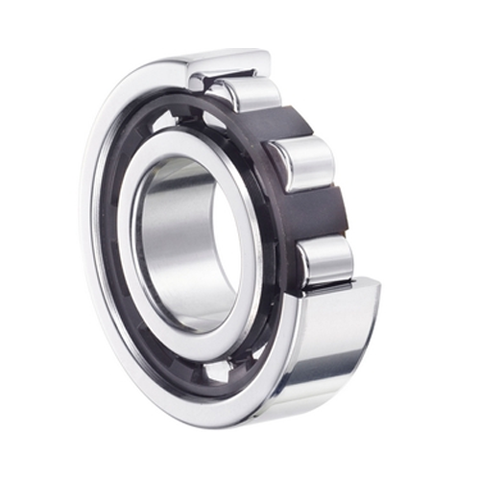
NTN NTN N312C3 Cylindrical Roller Bearing - D=60
NTN N312C3 Cylindrical Roller Bearing (Inside Dia - 60mm, Outside Dia - 130mm) Features Type of Product : Cylindrical Roller Bearing Inside Diameter (d) (mm) : 60 Outside Diameter D (mm) : 130 Width Dia mm : 31 Model No : N312C3 1. Types, design features, and characteristics Cylindrical roller bearings can accommodate heavy radial loads due to the line contact formed between their rolling elements and raceways. These bearings are also suitable for high speed applications since the rollers are guided by either inner or outer ring ribs. Cylindrical roller bearings are separable, allowing them to be easily installed and disassembled even when interference fits are required.Among the various types of cylindrical roller bearings, E type and EA type have a high load capacity while maintaining standard boundary dimensions. HT type has a large axial load capacity, and HL type provides extended fatigue life in poor lubrication conditions. Multiple row bearing arrangements are also available.For extremely heavy load applications, the non-separable full complement SL type bearing offers special advantages. For SL type and four- row cylindrical roller bearings, see section “C. Special application bearings.”Table 1 shows the various types and characteristics of single row cylindrical roller bearings. Table 2 shows the characteristics of non-standard type cylindrical roller bearings. Table 1 Cylindrical roller bearing types and characteristics Type code Design Characteristics NU type N type -NU type outer rings have two ribs. The outer ring, roller, and cage assembly can be separated from the inner ring. N type inner rings have two ribs. The inner ring, roller, and cage assembly can be separated from the outer ring.-Unable to accommodate any axial loading. -This is widely used as the floating side bearing in a fixed-float arrangement. NJ type NF type -NJ type has two ribs on the outer ring, a single rib on the inner ring; NF type has a single rib on the outer ring, and two ribs on the inner ring.-Can receive single direction axial loads. -When there is no distinction between the fixed side and floating side bearing, these types can be used as a pair in close proximity. NUP type NH type (NJ+HJ) -NUP type has a collar ring attached to the ribless side of the inner ring; NH type is NJ type with an L type collar ring attached. All of these collar rings are separable, and therefore it is necessary to fix the inner ring axially. -Can accommodate axial loads in either direction. -Widely used as the shaft’s fixed-side bearing Table 2 Non-standard type cylindrical roller bearing characteristics Designation Characteristics E type and EA type Cylindrical roller bearing -Boundary dimensions are the same as the standard type, but the diameter, length and number of the rollers have been increased, resulting in higher load capacity. -Identified by the addition of “E” to the end of the basic roller number. -Enables compact design due increased load rating. -Rollers’ inscribed circle diameter differs from the standard type rollers and therefore cannot be interchanged. -EA type bearings are ULTAGE series1). Note: In the dimension tables, both E type and EA type are listed. Cylindrical roller bearing for axial loads (HT type) -Can accommodate larger axial loads than the standard type due to improved geometry of the rib roller end surface. -Please consult NTN Engineering concerning necessary considerations, such as load, lubricant, and installation conditions. Double-row cylindrical roller bearing -NN type and NNU type are available. -Widely used for applications requiring thin-walled bearings, such the main shafts of machine tools, rolling machine rollers, and in printing equipment. -Internal radial clearance is adjusted for the spindle of machine tools by pressing the tapered bore of the inner ring on a tapered shaft. Remarks: For precision bearings for machine tools, see precision rolling bearings 2. Standard cage type Table 3 shows the standard cage types for cylindrical roller bearings. The basic load ratings listed in the dimension charts correspond to use of the standard cages listed in Table 3. The basic load ratings listed in the dimension tables are for standard configurations. These ratings can change when a different cage type and number of rolling elements is utilized. Note: 1. Within the same bearing series, cage type is constant regardless of the cylindrical roller bearing type (NJ, NUP, N, NF).2. For high speed and other special applications, machined cages can be manufactured when necessary. Consult NTN Engineering.3. Among EA type bearings that use resin cages as standard, certain varieties use pressed cages. Consult NTN Engineering.4. Although machined cages are the standard for two-row cylindrical roller bearings, resin cages may also be used in some of these bearings for machine tool applications.
$75.89
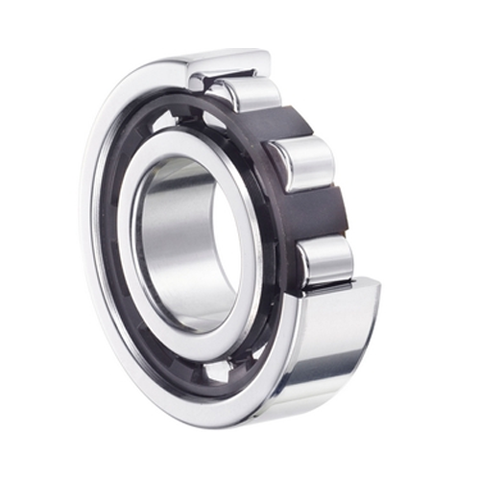
NTN NTN NF204 Cylindrical Roller Bearing - D=20
NTN Inner Dia 20 mm Cylindrical Roller Bearing Single Row NF204 Features Type of Product : Cylindrical Roller Bearing Single Row Inner Diameter : 20 mm Model No : NF204 Width : 14 mm 1. Types, design features, and characteristics Cylindrical roller bearings can accommodate heavy radial loads due to the line contact formed between their rolling elements and raceways. These bearings are also suitable for high speed applications since the rollers are guided by either inner or outer ring ribs. Cylindrical roller bearings are separable, allowing them to be easily installed and disassembled even when interference fits are required.Among the various types of cylindrical roller bearings, E type and EA type have a high load capacity while maintaining standard boundary dimensions. HT type has a large axial load capacity, and HL type provides extended fatigue life in poor lubrication conditions. Multiple row bearing arrangements are also available.For extremely heavy load applications, the non-separable full complement SL type bearing offers special advantages. For SL type and four- row cylindrical roller bearings, see section “C. Special application bearings.”Table 1 shows the various types and characteristics of single row cylindrical roller bearings. Table 2 shows the characteristics of non-standard type cylindrical roller bearings. Table 1 Cylindrical roller bearing types and characteristics Type code Design Characteristics NU type N type -NU type outer rings have two ribs. The outer ring, roller, and cage assembly can be separated from the inner ring. N type inner rings have two ribs. The inner ring, roller, and cage assembly can be separated from the outer ring.-Unable to accommodate any axial loading. -This is widely used as the floating side bearing in a fixed-float arrangement. NJ type NF type -NJ type has two ribs on the outer ring, a single rib on the inner ring; NF type has a single rib on the outer ring, and two ribs on the inner ring.-Can receive single direction axial loads. -When there is no distinction between the fixed side and floating side bearing, these types can be used as a pair in close proximity. NUP type NH type (NJ+HJ) -NUP type has a collar ring attached to the ribless side of the inner ring; NH type is NJ type with an L type collar ring attached. All of these collar rings are separable, and therefore it is necessary to fix the inner ring axially. -Can accommodate axial loads in either direction. -Widely used as the shaft’s fixed-side bearing Table 2 Non-standard type cylindrical roller bearing characteristics Designation Characteristics E type and EA type Cylindrical roller bearing -Boundary dimensions are the same as the standard type, but the diameter, length and number of the rollers have been increased, resulting in higher load capacity. -Identified by the addition of “E” to the end of the basic roller number. -Enables compact design due increased load rating. -Rollers’ inscribed circle diameter differs from the standard type rollers and therefore cannot be interchanged. -EA type bearings are ULTAGE series1). Note: In the dimension tables, both E type and EA type are listed. Cylindrical roller bearing for axial loads (HT type) -Can accommodate larger axial loads than the standard type due to improved geometry of the rib roller end surface. -Please consult NTN Engineering concerning necessary considerations, such as load, lubricant, and installation conditions. Double-row cylindrical roller bearing -NN type and NNU type are available. -Widely used for applications requiring thin-walled bearings, such the main shafts of machine tools, rolling machine rollers, and in printing equipment. -Internal radial clearance is adjusted for the spindle of machine tools by pressing the tapered bore of the inner ring on a tapered shaft. Remarks: For precision bearings for machine tools, see precision rolling bearings 2. Standard cage type Table 3 shows the standard cage types for cylindrical roller bearings. The basic load ratings listed in the dimension charts correspond to use of the standard cages listed in Table 3. The basic load ratings listed in the dimension tables are for standard configurations. These ratings can change when a different cage type and number of rolling elements is utilized. Note: 1. Within the same bearing series, cage type is constant regardless of the cylindrical roller bearing type (NJ, NUP, N, NF).2. For high speed and other special applications, machined cages can be manufactured when necessary. Consult NTN Engineering.3. Among EA type bearings that use resin cages as standard, certain varieties use pressed cages. Consult NTN Engineering.4. Although machined cages are the standard for two-row cylindrical roller bearings, resin cages may also be used in some of these bearings for machine tool applications.
$15.18

NTN NTN Self-Aligning Ball Bearing , 2213
Item # d D B r Static Load Rating Dynamic Load Rating 2213 2.5591 in 65.000 mm 4.7244 in 120.000 mm 1.2205 in 31.000 mm 0.0591 in 1.500 mm 3700 lbf 16400 N 16.40 kN 9800 lbf 43500 N 43.50 kN 1. Design features and characteristics The outer ring raceway of self-aligning ball bearings forms a spherical surface whose center is common to the bearing center. The inner ring of the bearing has two raceways.The balls, cage, and inner ring of these bearings are capable of shifting in order to compensate for a certain degree of misalignment with the outer rings. As a result, the bearing is able to align itself and compensate for shaft / housing finishing unevenness, bearing fitting error, and other sources of misalignment as shown in Fig. 1.Since axial load capacity is limited, self- aligning ball bearing are not suitable for applications with heavy axial loads. It is recommended to use an adapter on a self-aligning ball bearing with a tapered bore inner diameter for ease of installation and disassembly. These bearings and adapters are often used on drive shaft applications. 2. Standard cage type All bearing series are equipped with a pressed cage, except 2321S and 2322S, which are equipped with a machined cage.Self-Aligning Ball BearingsIt is recommended to use an adapter on a self-aligning ball bearing with a tapered bore inner diameter for ease of installation and disassembly. These bearings and adapters are often used on drive shaft applications. Table 1 Standard cage types of spherical ball bearings 3. Ball protrusion Bearings with part numbers listed in Table 2 below have balls which protrude slightly from the bearing face as illustrated in Fig. 2. The total width dimensions are shown in Table 2. 4. Allowable misalignment angle The allowable misalignment angle can be determined by the following function. This degree of allowable misalignment may be limited by the design of mating components around the bearing.Normal load ....................... 1/15 5. Precautions for using self-aligning ball bearings Self-aligning ball bearings are unable to support large axial loads and therefore axial loading shall be limited.Please consider using self-aligning roller bearings when a large axial load is to be applied.
$53.15

NTN NTN Self-Aligning Ball Bearing , 2214
Item # d D B r Static Load Rating Dynamic Load Rating 2214 2.7559 in 70.000 mm 4.9213 in 125.000 mm 1.2205 in 31.000 mm 0.0591 in 1.500 mm 3850 lbf 17100 N 17.10 kN 9900 lbf 44000 N 44.00 kN 1. Design features and characteristics The outer ring raceway of self-aligning ball bearings forms a spherical surface whose center is common to the bearing center. The inner ring of the bearing has two raceways.The balls, cage, and inner ring of these bearings are capable of shifting in order to compensate for a certain degree of misalignment with the outer rings. As a result, the bearing is able to align itself and compensate for shaft / housing finishing unevenness, bearing fitting error, and other sources of misalignment as shown in Fig. 1.Since axial load capacity is limited, self- aligning ball bearing are not suitable for applications with heavy axial loads. It is recommended to use an adapter on a self-aligning ball bearing with a tapered bore inner diameter for ease of installation and disassembly. These bearings and adapters are often used on drive shaft applications. 2. Standard cage type All bearing series are equipped with a pressed cage, except 2321S and 2322S, which are equipped with a machined cage.Self-Aligning Ball BearingsIt is recommended to use an adapter on a self-aligning ball bearing with a tapered bore inner diameter for ease of installation and disassembly. These bearings and adapters are often used on drive shaft applications. Table 1 Standard cage types of spherical ball bearings 3. Ball protrusion Bearings with part numbers listed in Table 2 below have balls which protrude slightly from the bearing face as illustrated in Fig. 2. The total width dimensions are shown in Table 2. 4. Allowable misalignment angle The allowable misalignment angle can be determined by the following function. This degree of allowable misalignment may be limited by the design of mating components around the bearing.Normal load ....................... 1/15 5. Precautions for using self-aligning ball bearings Self-aligning ball bearings are unable to support large axial loads and therefore axial loading shall be limited.Please consider using self-aligning roller bearings when a large axial load is to be applied.
$61.57

NTN NTN Self-Aligning Ball Bearing , 2215
Item # d D B r Static Load Rating Dynamic Load Rating 2215 2.9528 in 75.000 mm 5.1181 in 130.000 mm 1.2205 in 31.000 mm 0.0591 in 1.500 mm 4000 lbf 17800 N 17.80 kN 10000 lbf 44500 N 44.50 kN 1. Design features and characteristics The outer ring raceway of self-aligning ball bearings forms a spherical surface whose center is common to the bearing center. The inner ring of the bearing has two raceways.The balls, cage, and inner ring of these bearings are capable of shifting in order to compensate for a certain degree of misalignment with the outer rings. As a result, the bearing is able to align itself and compensate for shaft / housing finishing unevenness, bearing fitting error, and other sources of misalignment as shown in Fig. 1.Since axial load capacity is limited, self- aligning ball bearing are not suitable for applications with heavy axial loads. It is recommended to use an adapter on a self-aligning ball bearing with a tapered bore inner diameter for ease of installation and disassembly. These bearings and adapters are often used on drive shaft applications. 2. Standard cage type All bearing series are equipped with a pressed cage, except 2321S and 2322S, which are equipped with a machined cage.Self-Aligning Ball BearingsIt is recommended to use an adapter on a self-aligning ball bearing with a tapered bore inner diameter for ease of installation and disassembly. These bearings and adapters are often used on drive shaft applications. Table 1 Standard cage types of spherical ball bearings 3. Ball protrusion Bearings with part numbers listed in Table 2 below have balls which protrude slightly from the bearing face as illustrated in Fig. 2. The total width dimensions are shown in Table 2. 4. Allowable misalignment angle The allowable misalignment angle can be determined by the following function. This degree of allowable misalignment may be limited by the design of mating components around the bearing.Normal load ....................... 1/15 5. Precautions for using self-aligning ball bearings Self-aligning ball bearings are unable to support large axial loads and therefore axial loading shall be limited.Please consider using self-aligning roller bearings when a large axial load is to be applied.
$70.79

NTN NTN Self-Aligning Ball Bearing , 2216
Item # d D B r Static Load Rating Dynamic Load Rating 2216 3.1496 in 80.000 mm 5.5118 in 140.000 mm 1.2992 in 33.000 mm 0.0787 in 2.000 mm 4450 lbf 19900 N 19.90 kN 11000 lbf 49000 N 49.00 kN 1. Design features and characteristics The outer ring raceway of self-aligning ball bearings forms a spherical surface whose center is common to the bearing center. The inner ring of the bearing has two raceways.The balls, cage, and inner ring of these bearings are capable of shifting in order to compensate for a certain degree of misalignment with the outer rings. As a result, the bearing is able to align itself and compensate for shaft / housing finishing unevenness, bearing fitting error, and other sources of misalignment as shown in Fig. 1.Since axial load capacity is limited, self- aligning ball bearing are not suitable for applications with heavy axial loads. It is recommended to use an adapter on a self-aligning ball bearing with a tapered bore inner diameter for ease of installation and disassembly. These bearings and adapters are often used on drive shaft applications. 2. Standard cage type All bearing series are equipped with a pressed cage, except 2321S and 2322S, which are equipped with a machined cage.Self-Aligning Ball BearingsIt is recommended to use an adapter on a self-aligning ball bearing with a tapered bore inner diameter for ease of installation and disassembly. These bearings and adapters are often used on drive shaft applications. Table 1 Standard cage types of spherical ball bearings 3. Ball protrusion Bearings with part numbers listed in Table 2 below have balls which protrude slightly from the bearing face as illustrated in Fig. 2. The total width dimensions are shown in Table 2. 4. Allowable misalignment angle The allowable misalignment angle can be determined by the following function. This degree of allowable misalignment may be limited by the design of mating components around the bearing.Normal load ....................... 1/15 5. Precautions for using self-aligning ball bearings Self-aligning ball bearings are unable to support large axial loads and therefore axial loading shall be limited.Please consider using self-aligning roller bearings when a large axial load is to be applied.
$84.80

NTN NTN Self-Aligning Ball Bearing , 2217
Item # d D B r Static Load Rating Dynamic Load Rating 2217 3.3465 in 85.000 mm 5.9055 in 150.000 mm 1.4173 in 36.000 mm 0.0787 in 2.000 mm 5300 lbf 23600 N 23.60 kN 13200 lbf 58500 N 58.50 kN 1. Design features and characteristics The outer ring raceway of self-aligning ball bearings forms a spherical surface whose center is common to the bearing center. The inner ring of the bearing has two raceways.The balls, cage, and inner ring of these bearings are capable of shifting in order to compensate for a certain degree of misalignment with the outer rings. As a result, the bearing is able to align itself and compensate for shaft / housing finishing unevenness, bearing fitting error, and other sources of misalignment as shown in Fig. 1.Since axial load capacity is limited, self- aligning ball bearing are not suitable for applications with heavy axial loads. It is recommended to use an adapter on a self-aligning ball bearing with a tapered bore inner diameter for ease of installation and disassembly. These bearings and adapters are often used on drive shaft applications. 2. Standard cage type All bearing series are equipped with a pressed cage, except 2321S and 2322S, which are equipped with a machined cage.Self-Aligning Ball BearingsIt is recommended to use an adapter on a self-aligning ball bearing with a tapered bore inner diameter for ease of installation and disassembly. These bearings and adapters are often used on drive shaft applications. Table 1 Standard cage types of spherical ball bearings 3. Ball protrusion Bearings with part numbers listed in Table 2 below have balls which protrude slightly from the bearing face as illustrated in Fig. 2. The total width dimensions are shown in Table 2. 4. Allowable misalignment angle The allowable misalignment angle can be determined by the following function. This degree of allowable misalignment may be limited by the design of mating components around the bearing.Normal load ....................... 1/15 5. Precautions for using self-aligning ball bearings Self-aligning ball bearings are unable to support large axial loads and therefore axial loading shall be limited.Please consider using self-aligning roller bearings when a large axial load is to be applied.
$109.89

NTN NTN Self-Aligning Ball Bearing , 2218
Item # d D B r Static Load Rating Dynamic Load Rating 2218 3.5433 in 90.000 mm 6.2992 in 160.000 mm 1.5748 in 40.000 mm 0.0787 in 2.000 mm 6450 lbf 28700 N 28.70 kN 15800 lbf 70500 N 70.50 kN 1. Design features and characteristics The outer ring raceway of self-aligning ball bearings forms a spherical surface whose center is common to the bearing center. The inner ring of the bearing has two raceways.The balls, cage, and inner ring of these bearings are capable of shifting in order to compensate for a certain degree of misalignment with the outer rings. As a result, the bearing is able to align itself and compensate for shaft / housing finishing unevenness, bearing fitting error, and other sources of misalignment as shown in Fig. 1.Since axial load capacity is limited, self- aligning ball bearing are not suitable for applications with heavy axial loads. It is recommended to use an adapter on a self-aligning ball bearing with a tapered bore inner diameter for ease of installation and disassembly. These bearings and adapters are often used on drive shaft applications. 2. Standard cage type All bearing series are equipped with a pressed cage, except 2321S and 2322S, which are equipped with a machined cage.Self-Aligning Ball BearingsIt is recommended to use an adapter on a self-aligning ball bearing with a tapered bore inner diameter for ease of installation and disassembly. These bearings and adapters are often used on drive shaft applications. Table 1 Standard cage types of spherical ball bearings 3. Ball protrusion Bearings with part numbers listed in Table 2 below have balls which protrude slightly from the bearing face as illustrated in Fig. 2. The total width dimensions are shown in Table 2. 4. Allowable misalignment angle The allowable misalignment angle can be determined by the following function. This degree of allowable misalignment may be limited by the design of mating components around the bearing.Normal load ....................... 1/15 5. Precautions for using self-aligning ball bearings Self-aligning ball bearings are unable to support large axial loads and therefore axial loading shall be limited.Please consider using self-aligning roller bearings when a large axial load is to be applied.
$142.76

NTN NTN Self-Aligning Ball Bearing , 2219
Item # d D B r Static Load Rating Dynamic Load Rating 2219 3.7402 in 95.000 mm 6.6929 in 170.000 mm 1.6929 in 43.000 mm 0.0827 in 2.100 mm 7750 lbf 34500 N 34.50 kN 18900 lbf 84000 N 84.00 kN 1. Design features and characteristics The outer ring raceway of self-aligning ball bearings forms a spherical surface whose center is common to the bearing center. The inner ring of the bearing has two raceways.The balls, cage, and inner ring of these bearings are capable of shifting in order to compensate for a certain degree of misalignment with the outer rings. As a result, the bearing is able to align itself and compensate for shaft / housing finishing unevenness, bearing fitting error, and other sources of misalignment as shown in Fig. 1.Since axial load capacity is limited, self- aligning ball bearing are not suitable for applications with heavy axial loads. It is recommended to use an adapter on a self-aligning ball bearing with a tapered bore inner diameter for ease of installation and disassembly. These bearings and adapters are often used on drive shaft applications. 2. Standard cage type All bearing series are equipped with a pressed cage, except 2321S and 2322S, which are equipped with a machined cage.Self-Aligning Ball BearingsIt is recommended to use an adapter on a self-aligning ball bearing with a tapered bore inner diameter for ease of installation and disassembly. These bearings and adapters are often used on drive shaft applications. Table 1 Standard cage types of spherical ball bearings 3. Ball protrusion Bearings with part numbers listed in Table 2 below have balls which protrude slightly from the bearing face as illustrated in Fig. 2. The total width dimensions are shown in Table 2. 4. Allowable misalignment angle The allowable misalignment angle can be determined by the following function. This degree of allowable misalignment may be limited by the design of mating components around the bearing.Normal load ....................... 1/15 5. Precautions for using self-aligning ball bearings Self-aligning ball bearings are unable to support large axial loads and therefore axial loading shall be limited.Please consider using self-aligning roller bearings when a large axial load is to be applied.
$193.21

NTN NTN Self-Aligning Ball Bearing , 2220
Item # d D B r Static Load Rating Dynamic Load Rating 2220 3.9370 in 100.000 mm 7.0866 in 180.000 mm 1.8110 in 46.000 mm 0.0827 in 2.100 mm 8650 lbf 38500 N 38.50 kN 21200 lbf 94500 N 94.50 kN 1. Design features and characteristics The outer ring raceway of self-aligning ball bearings forms a spherical surface whose center is common to the bearing center. The inner ring of the bearing has two raceways.The balls, cage, and inner ring of these bearings are capable of shifting in order to compensate for a certain degree of misalignment with the outer rings. As a result, the bearing is able to align itself and compensate for shaft / housing finishing unevenness, bearing fitting error, and other sources of misalignment as shown in Fig. 1.Since axial load capacity is limited, self- aligning ball bearing are not suitable for applications with heavy axial loads. It is recommended to use an adapter on a self-aligning ball bearing with a tapered bore inner diameter for ease of installation and disassembly. These bearings and adapters are often used on drive shaft applications. 2. Standard cage type All bearing series are equipped with a pressed cage, except 2321S and 2322S, which are equipped with a machined cage.Self-Aligning Ball BearingsIt is recommended to use an adapter on a self-aligning ball bearing with a tapered bore inner diameter for ease of installation and disassembly. These bearings and adapters are often used on drive shaft applications. Table 1 Standard cage types of spherical ball bearings 3. Ball protrusion Bearings with part numbers listed in Table 2 below have balls which protrude slightly from the bearing face as illustrated in Fig. 2. The total width dimensions are shown in Table 2. 4. Allowable misalignment angle The allowable misalignment angle can be determined by the following function. This degree of allowable misalignment may be limited by the design of mating components around the bearing.Normal load ....................... 1/15 5. Precautions for using self-aligning ball bearings Self-aligning ball bearings are unable to support large axial loads and therefore axial loading shall be limited.Please consider using self-aligning roller bearings when a large axial load is to be applied.
$205.68

NTN NTN Self-Aligning Ball Bearing , 2300
Item # d D B r Static Load Rating Dynamic Load Rating 2300 0.3937 in 10.000 mm 1.3780 in 35.000 mm 0.6693 in 17.000 mm 0.0236 in 0.600 mm 450 lbf 2010 N 2.01 kN 2070 lbf 9200 N 9.20 kN 1. Design features and characteristics The outer ring raceway of self-aligning ball bearings forms a spherical surface whose center is common to the bearing center. The inner ring of the bearing has two raceways.The balls, cage, and inner ring of these bearings are capable of shifting in order to compensate for a certain degree of misalignment with the outer rings. As a result, the bearing is able to align itself and compensate for shaft / housing finishing unevenness, bearing fitting error, and other sources of misalignment as shown in Fig. 1.Since axial load capacity is limited, self- aligning ball bearing are not suitable for applications with heavy axial loads. It is recommended to use an adapter on a self-aligning ball bearing with a tapered bore inner diameter for ease of installation and disassembly. These bearings and adapters are often used on drive shaft applications. 2. Standard cage type All bearing series are equipped with a pressed cage, except 2321S and 2322S, which are equipped with a machined cage.Self-Aligning Ball BearingsIt is recommended to use an adapter on a self-aligning ball bearing with a tapered bore inner diameter for ease of installation and disassembly. These bearings and adapters are often used on drive shaft applications. Table 1 Standard cage types of spherical ball bearings 3. Ball protrusion Bearings with part numbers listed in Table 2 below have balls which protrude slightly from the bearing face as illustrated in Fig. 2. The total width dimensions are shown in Table 2. 4. Allowable misalignment angle The allowable misalignment angle can be determined by the following function. This degree of allowable misalignment may be limited by the design of mating components around the bearing.Normal load ....................... 1/15 5. Precautions for using self-aligning ball bearings Self-aligning ball bearings are unable to support large axial loads and therefore axial loading shall be limited.Please consider using self-aligning roller bearings when a large axial load is to be applied.
$11.41

NTN NTN Self-Aligning Ball Bearing , 2301
Item # d D B r Static Load Rating Dynamic Load Rating 2301 0.4724 in 12.000 mm 1.4567 in 37.000 mm 0.6693 in 17.000 mm 0.0394 in 1.000 mm 615 lbf 2730 N 2.73 kN 272 lbf 1210 N 1.21 kN 1. Design features and characteristics The outer ring raceway of self-aligning ball bearings forms a spherical surface whose center is common to the bearing center. The inner ring of the bearing has two raceways.The balls, cage, and inner ring of these bearings are capable of shifting in order to compensate for a certain degree of misalignment with the outer rings. As a result, the bearing is able to align itself and compensate for shaft / housing finishing unevenness, bearing fitting error, and other sources of misalignment as shown in Fig. 1.Since axial load capacity is limited, self- aligning ball bearing are not suitable for applications with heavy axial loads. It is recommended to use an adapter on a self-aligning ball bearing with a tapered bore inner diameter for ease of installation and disassembly. These bearings and adapters are often used on drive shaft applications. 2. Standard cage type All bearing series are equipped with a pressed cage, except 2321S and 2322S, which are equipped with a machined cage.Self-Aligning Ball BearingsIt is recommended to use an adapter on a self-aligning ball bearing with a tapered bore inner diameter for ease of installation and disassembly. These bearings and adapters are often used on drive shaft applications. Table 1 Standard cage types of spherical ball bearings 3. Ball protrusion Bearings with part numbers listed in Table 2 below have balls which protrude slightly from the bearing face as illustrated in Fig. 2. The total width dimensions are shown in Table 2. 4. Allowable misalignment angle The allowable misalignment angle can be determined by the following function. This degree of allowable misalignment may be limited by the design of mating components around the bearing.Normal load ....................... 1/15 5. Precautions for using self-aligning ball bearings Self-aligning ball bearings are unable to support large axial loads and therefore axial loading shall be limited.Please consider using self-aligning roller bearings when a large axial load is to be applied.
$11.41

NTN NTN Self-Aligning Ball Bearing , 2302
Item # d D B r Static Load Rating Dynamic Load Rating 2302 0.5906 in 15.000 mm 1.6535 in 42.000 mm 0.6693 in 17.000 mm 0.0394 in 1.000 mm 655 lbf 2910 N 2.91 kN 2770 lbf 12300 N 12.30 kN 1. Design features and characteristics The outer ring raceway of self-aligning ball bearings forms a spherical surface whose center is common to the bearing center. The inner ring of the bearing has two raceways.The balls, cage, and inner ring of these bearings are capable of shifting in order to compensate for a certain degree of misalignment with the outer rings. As a result, the bearing is able to align itself and compensate for shaft / housing finishing unevenness, bearing fitting error, and other sources of misalignment as shown in Fig. 1.Since axial load capacity is limited, self- aligning ball bearing are not suitable for applications with heavy axial loads. It is recommended to use an adapter on a self-aligning ball bearing with a tapered bore inner diameter for ease of installation and disassembly. These bearings and adapters are often used on drive shaft applications. 2. Standard cage type All bearing series are equipped with a pressed cage, except 2321S and 2322S, which are equipped with a machined cage.Self-Aligning Ball BearingsIt is recommended to use an adapter on a self-aligning ball bearing with a tapered bore inner diameter for ease of installation and disassembly. These bearings and adapters are often used on drive shaft applications. Table 1 Standard cage types of spherical ball bearings 3. Ball protrusion Bearings with part numbers listed in Table 2 below have balls which protrude slightly from the bearing face as illustrated in Fig. 2. The total width dimensions are shown in Table 2. 4. Allowable misalignment angle The allowable misalignment angle can be determined by the following function. This degree of allowable misalignment may be limited by the design of mating components around the bearing.Normal load ....................... 1/15 5. Precautions for using self-aligning ball bearings Self-aligning ball bearings are unable to support large axial loads and therefore axial loading shall be limited.Please consider using self-aligning roller bearings when a large axial load is to be applied.
$11.41

NTN NTN Self-Aligning Ball Bearing , 2303
Item # d D B r Static Load Rating Dynamic Load Rating 2303 0.6693 in 17.000 mm 1.8504 in 47.000 mm 0.7480 in 19.000 mm 0.0394 in 1.000 mm 800 lbf 3550 N 3.55 kN 3300 lbf 14700 N 14.70 kN 1. Design features and characteristics The outer ring raceway of self-aligning ball bearings forms a spherical surface whose center is common to the bearing center. The inner ring of the bearing has two raceways.The balls, cage, and inner ring of these bearings are capable of shifting in order to compensate for a certain degree of misalignment with the outer rings. As a result, the bearing is able to align itself and compensate for shaft / housing finishing unevenness, bearing fitting error, and other sources of misalignment as shown in Fig. 1.Since axial load capacity is limited, self- aligning ball bearing are not suitable for applications with heavy axial loads. It is recommended to use an adapter on a self-aligning ball bearing with a tapered bore inner diameter for ease of installation and disassembly. These bearings and adapters are often used on drive shaft applications. 2. Standard cage type All bearing series are equipped with a pressed cage, except 2321S and 2322S, which are equipped with a machined cage.Self-Aligning Ball BearingsIt is recommended to use an adapter on a self-aligning ball bearing with a tapered bore inner diameter for ease of installation and disassembly. These bearings and adapters are often used on drive shaft applications. Table 1 Standard cage types of spherical ball bearings 3. Ball protrusion Bearings with part numbers listed in Table 2 below have balls which protrude slightly from the bearing face as illustrated in Fig. 2. The total width dimensions are shown in Table 2. 4. Allowable misalignment angle The allowable misalignment angle can be determined by the following function. This degree of allowable misalignment may be limited by the design of mating components around the bearing.Normal load ....................... 1/15 5. Precautions for using self-aligning ball bearings Self-aligning ball bearings are unable to support large axial loads and therefore axial loading shall be limited.Please consider using self-aligning roller bearings when a large axial load is to be applied.
$12.27

NTN NTN Self-Aligning Ball Bearing , 2304
Item # d D B r Static Load Rating Dynamic Load Rating 2304 0.7874 in 20.000 mm 2.0472 in 52.000 mm 0.8268 in 21.000 mm 0.0433 in 1.100 mm 1060 lbf 4700 N 4.70 kN 4150 lbf 18500 N 18.50 kN 1. Design features and characteristics The outer ring raceway of self-aligning ball bearings forms a spherical surface whose center is common to the bearing center. The inner ring of the bearing has two raceways.The balls, cage, and inner ring of these bearings are capable of shifting in order to compensate for a certain degree of misalignment with the outer rings. As a result, the bearing is able to align itself and compensate for shaft / housing finishing unevenness, bearing fitting error, and other sources of misalignment as shown in Fig. 1.Since axial load capacity is limited, self- aligning ball bearing are not suitable for applications with heavy axial loads. It is recommended to use an adapter on a self-aligning ball bearing with a tapered bore inner diameter for ease of installation and disassembly. These bearings and adapters are often used on drive shaft applications. 2. Standard cage type All bearing series are equipped with a pressed cage, except 2321S and 2322S, which are equipped with a machined cage.Self-Aligning Ball BearingsIt is recommended to use an adapter on a self-aligning ball bearing with a tapered bore inner diameter for ease of installation and disassembly. These bearings and adapters are often used on drive shaft applications. Table 1 Standard cage types of spherical ball bearings 3. Ball protrusion Bearings with part numbers listed in Table 2 below have balls which protrude slightly from the bearing face as illustrated in Fig. 2. The total width dimensions are shown in Table 2. 4. Allowable misalignment angle The allowable misalignment angle can be determined by the following function. This degree of allowable misalignment may be limited by the design of mating components around the bearing.Normal load ....................... 1/15 5. Precautions for using self-aligning ball bearings Self-aligning ball bearings are unable to support large axial loads and therefore axial loading shall be limited.Please consider using self-aligning roller bearings when a large axial load is to be applied.
$14.73

NTN NTN Self-Aligning Ball Bearing , 2305
Item # d D B r Static Load Rating Dynamic Load Rating 2305 0.9843 in 25.000 mm 2.4409 in 62.000 mm 0.9449 in 24.000 mm 0.0433 in 1.100 mm 1480 lbf 6600 N 6.60 kN 5600 lbf 24900 N 24.90 kN 1. Design features and characteristics The outer ring raceway of self-aligning ball bearings forms a spherical surface whose center is common to the bearing center. The inner ring of the bearing has two raceways.The balls, cage, and inner ring of these bearings are capable of shifting in order to compensate for a certain degree of misalignment with the outer rings. As a result, the bearing is able to align itself and compensate for shaft / housing finishing unevenness, bearing fitting error, and other sources of misalignment as shown in Fig. 1.Since axial load capacity is limited, self- aligning ball bearing are not suitable for applications with heavy axial loads. It is recommended to use an adapter on a self-aligning ball bearing with a tapered bore inner diameter for ease of installation and disassembly. These bearings and adapters are often used on drive shaft applications. 2. Standard cage type All bearing series are equipped with a pressed cage, except 2321S and 2322S, which are equipped with a machined cage.Self-Aligning Ball BearingsIt is recommended to use an adapter on a self-aligning ball bearing with a tapered bore inner diameter for ease of installation and disassembly. These bearings and adapters are often used on drive shaft applications. Table 1 Standard cage types of spherical ball bearings 3. Ball protrusion Bearings with part numbers listed in Table 2 below have balls which protrude slightly from the bearing face as illustrated in Fig. 2. The total width dimensions are shown in Table 2. 4. Allowable misalignment angle The allowable misalignment angle can be determined by the following function. This degree of allowable misalignment may be limited by the design of mating components around the bearing.Normal load ....................... 1/15 5. Precautions for using self-aligning ball bearings Self-aligning ball bearings are unable to support large axial loads and therefore axial loading shall be limited.Please consider using self-aligning roller bearings when a large axial load is to be applied.
$19.88

NTN NTN Self-Aligning Ball Bearing , 2306
Item # d D B r Static Load Rating Dynamic Load Rating 2306 1.1811 in 30.000 mm 2.8346 in 72.000 mm 1.0630 in 27.000 mm 0.0433 in 1.100 mm 1970 lbf 8750 N 8.75 kN 7200 lbf 32000 N 32.00 kN 1. Design features and characteristics The outer ring raceway of self-aligning ball bearings forms a spherical surface whose center is common to the bearing center. The inner ring of the bearing has two raceways.The balls, cage, and inner ring of these bearings are capable of shifting in order to compensate for a certain degree of misalignment with the outer rings. As a result, the bearing is able to align itself and compensate for shaft / housing finishing unevenness, bearing fitting error, and other sources of misalignment as shown in Fig. 1.Since axial load capacity is limited, self- aligning ball bearing are not suitable for applications with heavy axial loads. It is recommended to use an adapter on a self-aligning ball bearing with a tapered bore inner diameter for ease of installation and disassembly. These bearings and adapters are often used on drive shaft applications. 2. Standard cage type All bearing series are equipped with a pressed cage, except 2321S and 2322S, which are equipped with a machined cage.Self-Aligning Ball BearingsIt is recommended to use an adapter on a self-aligning ball bearing with a tapered bore inner diameter for ease of installation and disassembly. These bearings and adapters are often used on drive shaft applications. Table 1 Standard cage types of spherical ball bearings 3. Ball protrusion Bearings with part numbers listed in Table 2 below have balls which protrude slightly from the bearing face as illustrated in Fig. 2. The total width dimensions are shown in Table 2. 4. Allowable misalignment angle The allowable misalignment angle can be determined by the following function. This degree of allowable misalignment may be limited by the design of mating components around the bearing.Normal load ....................... 1/15 5. Precautions for using self-aligning ball bearings Self-aligning ball bearings are unable to support large axial loads and therefore axial loading shall be limited.Please consider using self-aligning roller bearings when a large axial load is to be applied.
$24.07


